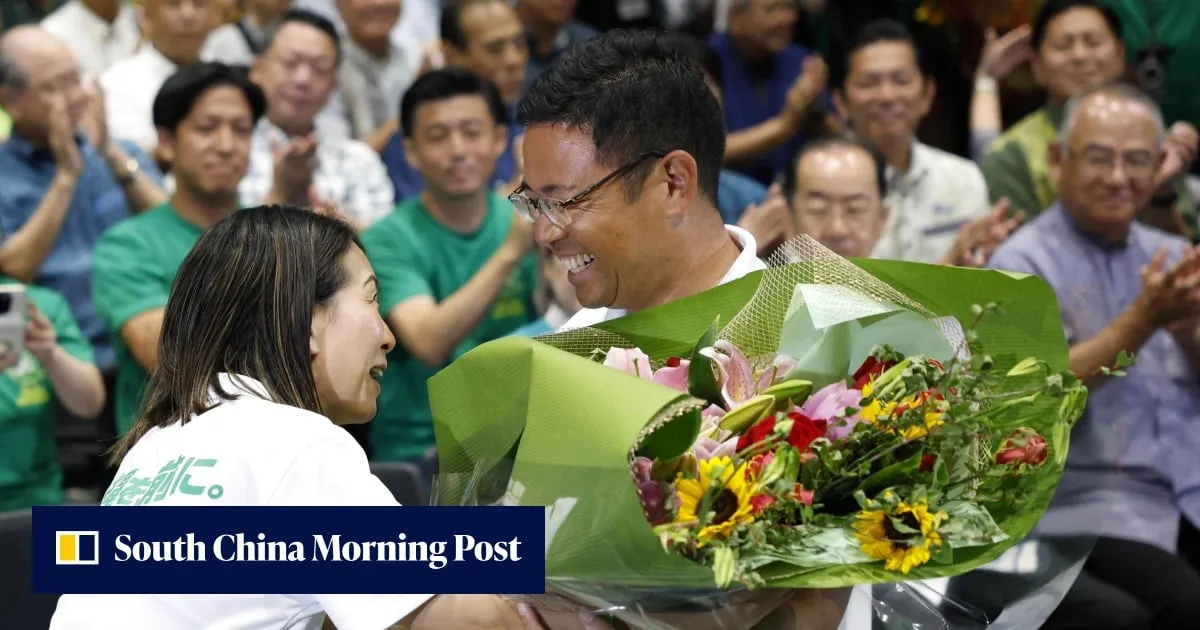
The leadership change in Okinawa could deal a quiet blow to Beijing’s attempts to leverage local opposition to remilitarisation and the Japan-military-alliance" class="entity-link entity-topic" data-entity-id="205004" data-entity-type="topic">US-Japan military alliance, according to analysts.They added that the shift would compel Chinese academics and state media to recalibrate their messaging and approach towards the strategically vital Japanese prefecture.Genta Koja, the 42-year-old backed by Japan’s ruling Liberal Democratic Party to become Okinawa’s new governor, defeated incumbent Denny Tamaki on Sunday. This brought an end to eight years of Tamaki’s leadership, characterised by vocal pacifism and active regional diplomacy with Chinese cities that historically maintained ties with Okinawa.For Beijing, which has long cultivated relationships with Okinawan leaders who challenge Tokyo’s defence policies, Koja’s win represents the loss of a sympathetic subnational partner.Analysts said the election result served as a reality check for China’s external messaging, requiring it to adjust its approach towards Okinawan voters who were prioritising bread-and-butter issues over opposition to American military bases.Okinawa prefecture is made up of around 40 inhabited islands and has a population of 1.5 million. It hosts roughly 70 per cent of all US military facilities in Japan despite accounting for less than 1 per cent of the country’s land area.The United States seized Okinawa from Japan after World War II. Washington returned administrative control of the islands to Tokyo in 1972, but it has maintained a substantial military presence that serves as a crucial node in checking Beijing’s regional ambitions.
SRCSouth China Morning Post
LANGEN
LEANCenter-Right
WORDS237
ENT10
WED · 2026-09-16 · 03:00 GMTBRIEF NSR-2026-0916-111599
NSR-2026-0916-111599Analysis·EN·Political Strategy
How will the Okinawa governor’s race result reshape China’s local messaging?
Genta Koja, backed by Japan's Liberal Democratic Party, has been elected the new governor of Okinawa, defeating incumbent Denny Tamaki. This leadership change is expected to impact China's messaging towards the prefecture, as analysts suggest it will force Chinese academics and state media to adjust their approach.
Alyssa ChenSouth China Morning PostFiled 2026-09-16 · 03:00 GMTLean · Center-RightRead · 1 min
South China Morning PostFIG 01
Reading time
1min
Word count
237words
Sources cited
2cited
Entities identified
10entities
Quality score
100%
§ 01
Briefing Summary
AI-generatedNEWSAR · AI
Genta Koja, backed by Japan's Liberal Democratic Party, has been elected the new governor of Okinawa, defeating incumbent Denny Tamaki. This leadership change is expected to impact China's messaging towards the prefecture, as analysts suggest it will force Chinese academics and state media to adjust their approach. For years, Beijing had leveraged local opposition to remilitarization and the US-Japan military alliance, often finding a sympathetic ear in Tamaki's administration. Koja's victory, however, indicates a shift in Okinawan voter priorities towards economic issues over opposition to US military bases. Okinawa, a strategically vital prefecture, hosts a significant portion of US military facilities in Japan.
Confidence 0.90Sources 2Claims 5Entities 10
§ 02
Article analysis
Model · rule-basedFraming
Political Strategy
Diplomatic
Tone
Measured
AI-assessed
CalmNeutralAlarmist
Factuality
0.60 / 1.00
Mixed
LowHigh
Sources cited
2
Limited
FewMany
§ 03
Key claims
5 extracted01
Okinawa hosts 70% of US military facilities in Japan despite being less than 1% of Japan's land area.
statistic
Confidence
1.00
02
Genta Koja, backed by the LDP, defeated incumbent Denny Tamaki to become Okinawa's new governor.
factual
Confidence
1.00
03
Koja's win represents a loss for Beijing, which cultivated relationships with leaders challenging Tokyo's defense policies.
factualanalysts
Confidence
0.80
04
Okinawan voters are prioritizing 'bread-and-butter' issues over opposition to American military bases.
factualanalysts
Confidence
0.70
05
The Okinawa governor's race result could impact Beijing's messaging regarding remilitarisation and the US-Japan military alliance.
predictionanalysts
Confidence
0.70
§ 04
Full report
1 min read · 237 words§ 05
Entities
10 identifiedKey playerOppositionContextPositiveNeutralNegative
Organizations1
Locations4
§ 06
Keywords & salience
8 termsokinawa governor's race
1.00
china messaging
0.90
us-japan military alliance
0.80
remilitarisation
0.70
pacifism
0.60
us military facilities
0.50
bread-and-butter issues
0.50
beijing's regional ambitions
0.40
§ 07
Topic connections
Interactive graph Network visualization showing 15 related topics
View Full Graph Person Organization Location Event|Click node to navigate|Edge numbers = shared articles