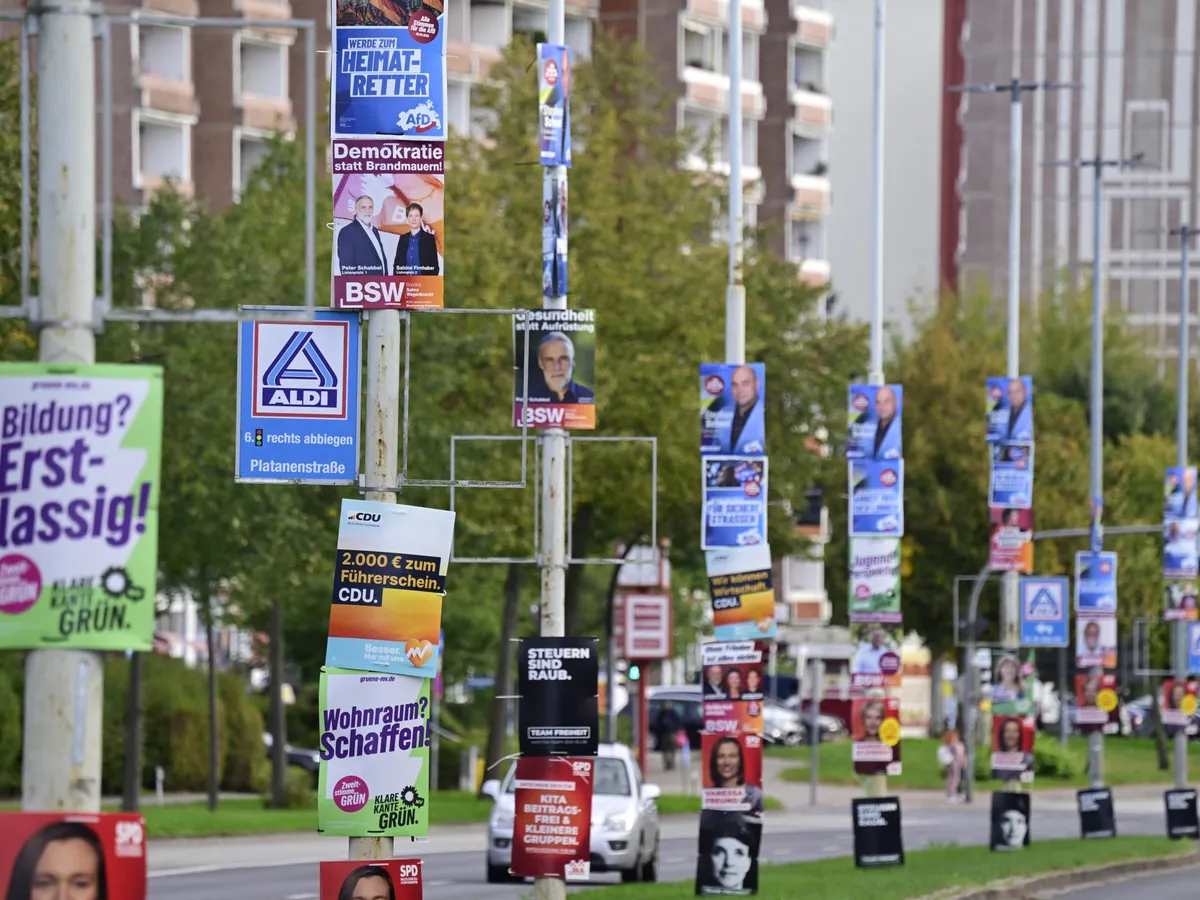
Germany’s Berlin, Mecklenburg-Western Pomerania states head to pollsFar-right AfD defeated German chancellor’s CDU in recent Saxony-Anhalt state election, casting doubt on his future.Voters in two German states will go to the polls on Sunday, as far-right and far-left gains threaten to affect the political standing of Chancellor Friedrich Merz.Merz, according to a report by the AFP news agency, has scheduled a crisis meeting of his Christian Democratic Union party (CDU), skipped this week’s UN General Assembly meeting in New York, and cleared his calendar to deal with potential aftershocks from the votes in Berlin and the state of Mecklenburg-Western Pomerania.Recommended Stories list of 3 itemslist 1 of 3Tens of thousands march across Germany to protest against far-right AfDlist 2 of 3AfD is rising, but it can still be stoppedlist 3 of 3Germany’s AfD wins in key state: Is far-right on cusp of national rule?end of listPressure on Merz has been mounting after the far-right Germany" class="entity-link entity-organization" data-entity-id="3089" data-entity-type="organization">Alternative for Germany (AfD) delivered a major defeat to his CDU party two weeks ago in the key state of Saxony-Anhalt. The AfD fell just short of an absolute majority, which would have allowed it to govern on its own.And after just 16 months in power, Merz’s approval ratings have plunged to about 14 percent, the latest polls suggest, as he struggles to push through promised economic and social welfare reforms with his centre-left coalition partners, the Social Democratic Party (SPD), raising doubts among fellow party members whether he can continue to lead.About 2.5 million people are eligible to vote in the capital, Berlin, and nearly 1.3 million in the northeastern coastal state of Mecklenburg-Western Pomerania. Polling booths open at 8am local time and will close at 6pm.AfD’s main candidate for the Mecklenburg-Western Pomerania state election, Leif-Erik Holm, attends an election campaign event in Schwerin, Mecklenburg-Western Pomerania, northeastern Germany, on September 19, 2026 [Danny Gohlke/AFP]In Mecklenburg-Western Pomerania, Merz’s party is an onlooker to the main battle between the SPD’s popular state premier Manuela Schwesig and the AfD’s lead candidate, former radio presenter Leif-Erik Holm.
SRCAl Jazeera
LANGEN
LEANCenter
WORDS338
ENT12
SUN · 2026-09-20 · 05:42 GMTBRIEF NSR-2026-0920-112635
NSR-2026-0920-112635News Report·EN·Political Strategy
Germany’s Berlin, Mecklenburg-Western Pomerania states head to polls
Voters in Germany's Berlin and Mecklenburg-Western Pomerania states are heading to the polls on Sunday, with approximately 3.8 million eligible voters participating. These elections are significant as they occur in the wake of the far-right Alternative for Germany (AfD) party's recent defeat of Chancellor Friedrich Merz's Christian Democratic Union (CDU) in Saxony-Anhalt.
By AFP and ReutersAl JazeeraFiled 2026-09-20 · 05:42 GMTLean · CenterRead · 2 min
Al JazeeraFIG 01
Reading time
2min
Word count
338words
Sources cited
2cited
Entities identified
12entities
Quality score
100%
§ 01
Briefing Summary
AI-generatedNEWSAR · AI
Voters in Germany's Berlin and Mecklenburg-Western Pomerania states are heading to the polls on Sunday, with approximately 3.8 million eligible voters participating. These elections are significant as they occur in the wake of the far-right Alternative for Germany (AfD) party's recent defeat of Chancellor Friedrich Merz's Christian Democratic Union (CDU) in Saxony-Anhalt. The results could impact Merz's political standing, with his approval ratings reportedly at 14 percent and internal party doubts about his leadership. In Mecklenburg-Western Pomerania, the contest is primarily between the Social Democratic Party's state premier and the AfD's lead candidate. Merz has canceled his UN General Assembly attendance and scheduled a crisis meeting for his party to address potential consequences of these votes.
Confidence 0.90Sources 2Claims 5Entities 12
§ 02
Article analysis
Model · rule-basedFraming
Political Strategy
Conflict
Tone
Mixed Tone
AI-assessed
CalmNeutralAlarmist
Factuality
0.70 / 1.00
Factual
LowHigh
Sources cited
2
Limited
FewMany
§ 03
Key claims
5 extracted01
Voters in Berlin and Mecklenburg-Western Pomerania, Germany, are heading to the polls on Sunday.
factual
Confidence
1.00
02
In Mecklenburg-Western Pomerania, the main battle is between the SPD's Manuela Schwesig and the AfD's Leif-Erik Holm.
factual
Confidence
0.90
03
Merz has scheduled a crisis meeting of his CDU party and skipped the UN General Assembly.
factualAFP news agency
Confidence
0.90
04
Far-right AfD defeated Chancellor Friedrich Merz's CDU in the recent Saxony-Anhalt state election.
factual
Confidence
0.90
05
Merz's approval ratings have plunged to about 14 percent after 16 months in power.
statisticlatest polls
Confidence
0.80
§ 04
Full report
2 min read · 338 words§ 05
Entities
12 identifiedKey playerOppositionContextPositiveNeutralNegative
People3
Organizations3
Locations4
§ 06
Keywords & salience
10 termsfar-right afd
1.00
german state elections
1.00
chancellor friedrich merz
0.90
cdu party
0.80
political standing
0.70
election results
0.60
approval ratings
0.50
coalition partners
0.40
economic reforms
0.40
social welfare reforms
0.40
§ 07
Topic connections
Interactive graph Network visualization showing 51 related topics
View Full Graph Person Organization Location Event|Click node to navigate|Edge numbers = shared articles