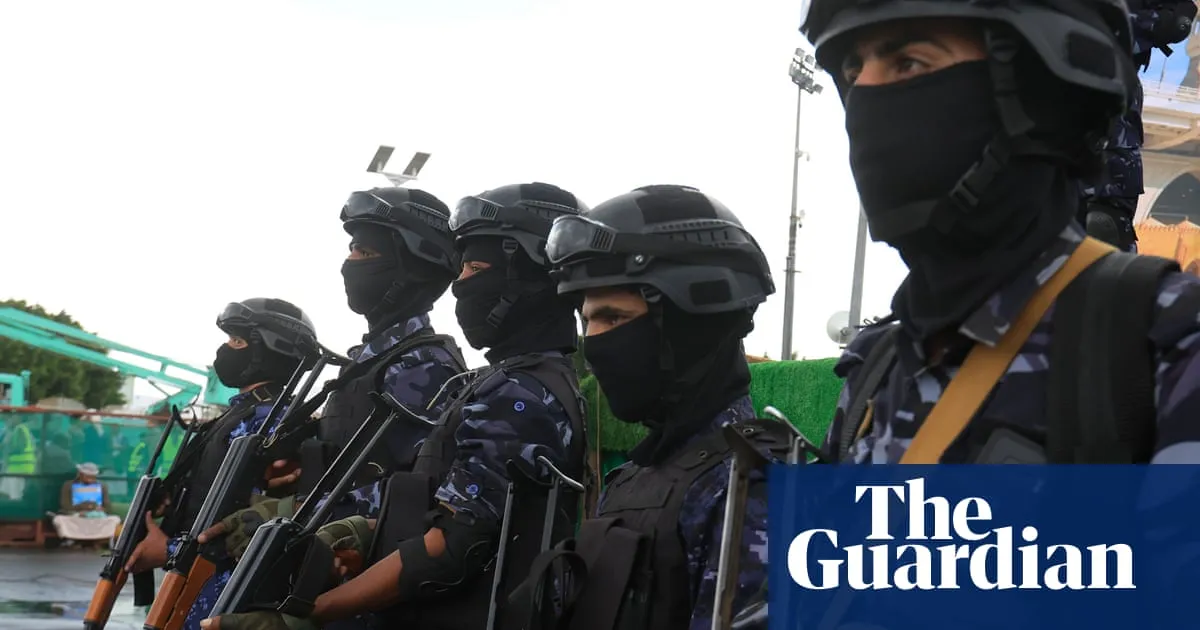
Houthi fighters are moving to seize strategic heights in Yemen that would cut the Red Sea coast off from areas held by Saudi-backed forces after Donald Trump called off US strikes on the group at the last minute, reportedly as bombs were being loaded on to aircraft.Amid increasingly heavy fighting in Yemen, which has displaced tens of thousands of people in recent weeks, the New York Times reported on Monday that the US president had flip-flopped wildly in recent days after a call from Saudi Arabia for US strikes on the Houthis.It comes amid the Houthis’ rapid advance on the ground with the group gaining control over much of Yemen’s Red Sea coast from Saudi-backed Yemeni government forces and advancing to areas adjacent to the crucial Bab al-Mandab strait, which Saudi Arabia has used as an alternative route for oil exports bypassing disruption in the strait of Hormuz.In the call reported by the New York Times, Saudi Arabia’s crown prince, Mohammed bin Salman, implored Trump to step in to help halt the Houthi advance after weeks of such appeals. Trump, who had been resisting joining the Saudi war in Yemen, after the call then told the Pentagon to prepare for airstrikes against the Houthis before reversing course once again, the report said.A camp for people displaced by the fighting in Yemen, near the city of Aden. Photograph: ReutersTrump has frequently given mixed signals to Riyadh, telling reporters during a visit to Ireland earlier this month that the Houthis “called us, and they don’t want to fight us”, adding that the group was “allowing ships to pass” the Bab al-Mandab strait and that the situation would “work out very well”.He added that the Houthi problem was limited to “one country” an apparent reference to Saudi Arabia promising to “take care of fixing that”.The UN says hostilities in Yemen have displaced at least 125,000 people since the start of September. Taiz city has received the largest number of displaced persons, taking in up to 86,000 Yemenis since the recent escalation began.The rapid advance by the Iran-aligned group this month has extended the wider Middle East conflict to a new theatre and further threatened global energy supplies.Washington has so far rebuffed repeated pleas from Prince Mohammed to join the fight in Yemen with the Houthis claiming on Saturday they had fired on Riyadh, where columns of smoke were visible near the main airport.Flames and large plume of black smoke seen rising near Riyadh airportThe Yemeni president, Rashad al-Alimi, spoke to Trump on Sunday, requesting support for his UN-recognised government in its fight against the Houthis. Trump made no direct pledge of military support during the call, sources said.Saudi Arabia has launched hundreds of strikes in recent days on Houthi positions in the strategic Kahboub mountains, according to the group, but making little impact on the advance of its fighters.Fighting has centred on the outskirts of the remote Al-Wazi’iyah district in Taiz province and Ras al-Ara along the Indian Ocean coast, which separate the Red Sea coast from the city of Aden, where the government is based. The Houthis aim to secure the rear of their forces around the Bab al-Mandab strait by taking control of the mountains, which would also allow them to open new fronts, according to sources who spoke to Reuters.skip past newsletter promotionafter newsletter promotionThe surge in fighting between Saudi Arabia and the Houthis has created a new dilemma for Trump, under pressure to help defend Washington’s close Saudi allies but anxious not to further expand the deeply unpopular war he launched in February against Iran.The US bombed the Houthis for two months in early 2025, but Trump called off those strikes after reaching a ceasefire with the group and has kept out of the conflict since.Amid the broad failure of the US-Israeli war against Iran, and with the US midterm elections looming, the Trump administration’s priorities appear to be to secure at least some oil supplies through the strait of Hormuz, while avoiding a wider entanglement in Yemen.That, however, invites longer-term risks, not least the growing alienation of key US allies in the Gulf, including Saudi Arabia, where Washington is increasingly seen as an unreliable ally, that could also undermine the so-called “security for oil” understanding where the US provides a defence umbrella for Gulf states in exchange for energy supplies.Reuters contributed to this report
SRCThe Guardian - World News
LANGEN
LEANCenter-Left
WORDS726
ENT12
MON · 2026-09-21 · 16:14 GMTBRIEF NSR-2026-0921-112965
NSR-2026-0921-112965News Report·EN·Political Strategy
Houthis move to seize strategic terrain after Trump calls off airstrikes at last minute
Houthi fighters are advancing to seize strategic terrain in Yemen, potentially cutting off the Red Sea coast from Saudi-backed forces. This comes after US President Donald Trump reportedly called off planned airstrikes against the Houthis at the last minute, following a plea from Saudi Arabia.
Peter Beaumont Senior international correspondentThe Guardian - World NewsFiled 2026-09-21 · 16:14 GMTLean · Center-LeftRead · 3 min
The Guardian - World NewsFIG 01
Reading time
3min
Word count
726words
Sources cited
3cited
Entities identified
12entities
Quality score
100%
§ 01
Briefing Summary
AI-generatedNEWSAR · AI
Houthi fighters are advancing to seize strategic terrain in Yemen, potentially cutting off the Red Sea coast from Saudi-backed forces. This comes after US President Donald Trump reportedly called off planned airstrikes against the Houthis at the last minute, following a plea from Saudi Arabia. The Houthis have been rapidly gaining control of Yemen's Red Sea coast and are nearing the Bab al-Mandab strait, a crucial route for Saudi oil exports. Trump's decision to reverse course on airstrikes followed a call from Saudi Crown Prince Mohammed bin Salman, despite previous resistance from Trump to join the conflict. The escalating fighting has displaced tens of thousands of people, and the UN reports at least 125,000 displaced since September.
Confidence 0.90Sources 3Claims 5Entities 12
§ 02
Article analysis
Model · rule-basedFraming
Political Strategy
Conflict
Tone
Mixed Tone
AI-assessed
CalmNeutralAlarmist
Factuality
0.70 / 1.00
Factual
LowHigh
Sources cited
3
Well sourced
FewMany
§ 03
Key claims
5 extracted01
UN says hostilities in Yemen have displaced at least 125,000 people since the start of September.
statisticUN
Confidence
1.00
02
The Yemeni president requested support for his government in its fight against the Houthis from Trump.
factual
Confidence
0.90
03
Houthi fighters are moving to seize strategic heights that would cut the Red Sea coast off from areas held by Saudi-backed forces.
factual
Confidence
0.90
04
Saudi Arabia's crown prince implored Trump to halt the Houthi advance after weeks of appeals.
factualNew York Times
Confidence
0.80
05
Donald Trump called off US strikes on the Houthis at the last minute, reportedly as bombs were being loaded.
factualNew York Times
Confidence
0.80
§ 04
Full report
3 min read · 726 words§ 05
Entities
12 identifiedKey playerOppositionContextPositiveNeutralNegative
§ 06
Keywords & salience
9 termshouthi advance
1.00
red sea coast
0.90
us airstrikes
0.80
yemen conflict
0.80
bab al-mandab strait
0.70
donald trump
0.60
saudi arabia
0.60
displaced persons
0.50
global energy supplies
0.40
§ 07
Topic connections
Interactive graph Network visualization showing 51 related topics
View Full Graph Person Organization Location Event|Click node to navigate|Edge numbers = shared articles