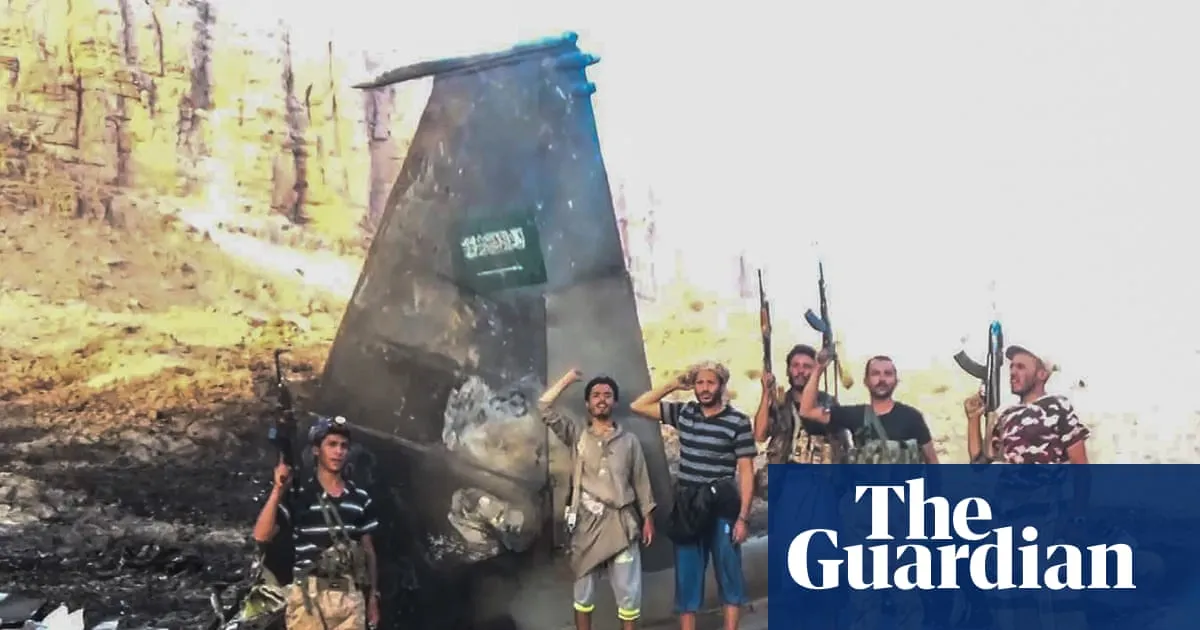
As many as 169 people have been reportedly killed in Yemen in the last three days as Iran-aligned Houthis battle Saudi-backed government forces for control of strategic heights on the Red Sea coast, while thousands flee the violence.Houthi military officials said at least 118 people had been killed in clashes as well as Saudi air and artillery strikes on Taiz, al-Jawf, Marib and Saada provinces since Sunday, Agence France-Presse reported. Yemeni government sources have said at least 36 people have been killed on their side of the conflict.The Houthis accused Saudi Arabia of striking the port city of Mocha on Tuesday, killing six civilians, including two children. The group also said a Saudi strike on a prison in al-Jawf province, north-western Yemen, killed nine detainees.The Saudi government, which backs Yemen’s UN-recognised government against Houthi forces, on Tuesday issued an alert in the south of the country before potential strikes, after the Houthis launched strikes at the Saudi capital, Riyadh, at the weekend for the first time in years.A screengrab from AFPTV footage of Saudi-backed government fighters engaging Houthi forces in al-Jawf province, in the north-west of Yemen. Photograph: AFP/Getty ImagesThe renewed fighting came after a dramatic offensive launched by the Houthis three weeks earlier in which the group seized control of much of Yemen’s Red Sea coast from government-aligned forces. They were the most significant territorial gains in the last four years of the civil war in the country. The offensive has upended global energy markets, which are already reeling from the Iranian closure of the strait of Hormuz, and further expanded the regional scope of the US-Iran war, now in its seventh month.Last week the Houthis took control of Mocha and other strategic cities, which gave them control over the Bab al-Mandab strait, a key shipping lane home to 10% of all global maritime traffic that has gained renewed importance after the closure of the strait of Hormuz.The clashes have compounded an already dire humanitarian crisis, where about 22 million people need humanitarian assistance and 5.2 million people are already internally displaced.Displaced Yemeni people receive medical care at a camp in Ras Imran, a coastal area on the western outskirts of Aden. Photograph: Abdulnasser Alseddik/APYemen’s civil war started in 2014 when the Houthis seized control of the country’s capital and toppled the government. A Saudi-led coalition then intervened in an aerial campaign on behalf of the internationally recognised Yemeni government and allied militias.A UN-brokered ceasefire was established in 2022, which had largely held until the Houthis launched the current offensive.In recent days, clashes have focused on the strategic Kahboub mountains near the Red Sea coast as the Houthis seek to consolidate recent territorial gains. Government forces have been trying to hold the line against the Houthi advance on multiple fronts to prevent them from seizing the mountain range.Control of the mountains would give the Houthis a strategic vantage point over Red Sea coastal areas and would further cut off Aden, the seat of Yemeni government forces, from the western coast. Seizing the mountains would also complicate future government counterattacks.The Houthis have advanced on multiple fronts, particularly the outskirts of Taiz province and the coastal area of Ras al-Ara, with the greater goal of controlling the Kahboub mountains. Media affiliated with the Houthis have reported gains in the area, while government media said its fighters had successfully repelled Houthi incursions.Houthi-aligned detainees arrive in Sana’a after being freed from prisons run by Saudi-backed forces in Mocha after Houthis made gains in the region. Photograph: Mohammed Hamoud/Getty ImagesSince the Houthi campaign was launched, the group has routed government-aligned forces from western Yemen. The prospect of an Iranian-aligned force controlling Bab al-Mandeb has worried Saudi Arabia as it would place two shipping lanes vital to its energy exports in the hands of Iran and its allies.Saudi Arabia has launched hundreds of strikes on Yemen in recent days to try to stop the Houthis, with little success.Donald Trump reportedly considered striking the Houthis over the weekend but called them off at the last minute, while the UK said it would assist aerial refuelling of Saudi aircraft engaged in defensive missions, leaving open the prospect of further international intervention.Members of the G7 have called on Iran to stop arming the Houthis. In a joint statement released ahead of the UN general assembly, member states urged the Houthis to stop their strikes on Saudi Arabia, which have damaged key oil infrastructure and wounded dozens.“We call on the Houthis to immediately cease all military actions, all threats and attacks against civilian shipping, and to return to the political process in good faith,” the statement read.The clashes have killed about 700 people and displaced more than 100,000 people, pushing some Yemenis to flee the fighting via sea. Civilians have fled westwards across the Red Sea to Djibouti, while aid groups warn conditions for those remaining in Yemen are deteriorating.People fleeing the fighting queue to receive supplies after crossing the Red Sea and arriving in Djibouti. Photograph: Abdourahim Arteh/ReutersBabar Baloch, a UN refugee agency spokesperson, said on Tuesday that displacement inside Yemen could rise to 230,000 people and more than 10,000 could flee to Djibouti if fighting continued.Saudi Arabia has tried to marshal international support to roll back the Houthi offensive, with the Saudi crown prince, Mohammed bin Salman, asking Trump to strike the Houthis – a request Trump has thus far refused.Trump held a call with the head of Yemen’s governing body, Rashad al-Alimi, on Monday, with al-Alimi asking the US for military assistance. Trump expressed solidarity but did not promise military support, a source told Agence France-Presse.
SRCThe Guardian - World News
LANGEN
LEANCenter-Left
WORDS930
ENT12
TUE · 2026-09-22 · 13:57 GMTBRIEF NSR-2026-0922-113233
NSR-2026-0922-113233News Report·EN·Conflict
Up to 169 killed in Yemen as Houthis battle for Red Sea coastal heights
In Yemen, intense fighting over strategic Red Sea coastal heights has resulted in up to 169 reported deaths in the past three days. Iran-aligned Houthi forces are battling Saudi-backed government troops, with thousands fleeing the violence.
William Christou in BeirutThe Guardian - World NewsFiled 2026-09-22 · 13:57 GMTLean · Center-LeftRead · 4 min
The Guardian - World NewsFIG 01
Reading time
4min
Word count
930words
Sources cited
3cited
Entities identified
12entities
Quality score
100%
§ 01
Briefing Summary
AI-generatedNEWSAR · AI
In Yemen, intense fighting over strategic Red Sea coastal heights has resulted in up to 169 reported deaths in the past three days. Iran-aligned Houthi forces are battling Saudi-backed government troops, with thousands fleeing the violence. Houthi officials reported at least 118 deaths from clashes and Saudi strikes, while government sources stated 36 of their personnel were killed. This renewed conflict follows a significant Houthi offensive that secured control of much of Yemen's Red Sea coast, including the vital Bab al-Mandab strait. The fighting has exacerbated the existing humanitarian crisis, with millions requiring assistance. The G7 has called on Iran to cease arming the Houthis and urged an end to the military actions.
Confidence 0.90Sources 3Claims 5Entities 12
§ 02
Article analysis
Model · rule-basedFraming
Conflict
Economic Impact
Tone
Mixed Tone
AI-assessed
CalmNeutralAlarmist
Factuality
0.80 / 1.00
Factual
LowHigh
Sources cited
3
Well sourced
FewMany
§ 03
Key claims
5 extracted01
The Houthis launched strikes at the Saudi capital, Riyadh, at the weekend for the first time in years.
factualnull
Confidence
0.95
02
The Houthis seized control of much of Yemen’s Red Sea coast from government-aligned forces in a dramatic offensive three weeks prior.
factualnull
Confidence
0.90
03
Up to 169 people have been reportedly killed in Yemen in the last three days due to Houthi battles for Red Sea coastal heights.
statisticAgence France-Presse
Confidence
0.90
04
Yemeni government sources reported at least 36 people killed on their side.
statisticYemeni government sources
Confidence
0.85
05
Houthi military officials stated at least 118 people were killed in clashes and Saudi strikes.
statisticHouthi military officials
Confidence
0.85
§ 04
Full report
4 min read · 930 words§ 05
Entities
12 identifiedKey playerOppositionContextPositiveNeutralNegative
Organizations1
§ 06
Keywords & salience
10 termsyemen civil war
1.00
houthi forces
0.90
red sea coast
0.80
saudi-backed government
0.80
bab al-mandab strait
0.70
humanitarian crisis
0.60
global energy markets
0.50
us-iran war
0.40
internally displaced
0.40
maritime traffic
0.40
§ 07
Topic connections
Interactive graph Network visualization showing 51 related topics
View Full Graph Person Organization Location Event|Click node to navigate|Edge numbers = shared articles