close Video Zelenskyy: Risk of Russian attacks on Europe 'very high' In an exchange following his meeting with President Trump, Ukraine's president warns Russia could target neighboring European countries with drones, missiles or ground operations. NEWYou can now listen to Fox News articles! Hören Sie sich diesen Artikel an 4 Min UNITED NATIONS - Ukrainian President Volodymyr Zelenskyy warned Tuesday that Russia could launch attacks against other European countries, telling Fox News Digital that the risk of a new offensive is "very high" as Moscow seeks to undermine European unity and weaken support for Ukraine. Speaking to reporters following his meeting with President Donald Trump on the sidelines of the United Nations General Assembly in New York, Zelenskyy was asked by Fox News Digital about the possibility that Russia could invade or attack another European country in the near future. "That's why the risk of offensive by drones, missiles or land operation is very high against other countries who are bordering Russia or Belarus," Zelenskyy said. US INTEL WARNS Russia COULD LAUNCH LIMITED ATTACK ON NATO ALLY IN EFFORT TO FRAGMENT ORGANIZATION: REPORT U.S. President Donald Trump and Ukraine's President Volodymyr Zelenskiy shake hands as they meet on the sidelines of the 81st United Nations General Assembly (UNGA) in New York City, US, in this handout released September 22, 2026. (Ukrainian Presidential Press Service/Handout via Reuters) The Ukrainian leader argued that Russian President Vladimir Putin, unable to achieve his military objectives in Ukraine, could seek to create instability elsewhere in Europe to pressure Western governments into reducing their support for Kyiv. "How to divide unanimity in Europe? ... To attack somebody else. To attack and say, look, I will go further if you will not stop this," Zelenskyy said. He pointed to drone incursions and disruptions affecting several European countries, arguing that Moscow is already attempting to intimidate European societies and test their response. Zelenskyy said Putin's inability to secure a decisive victory in Ukraine could push him toward additional confrontations, as he faces pressure to justify the war to the Russian public. FINNISH FOREIGN MINISTRY OFFICIAL DETAILS HOW Russia'S 'HYBRID WARFARE' RESHAPED BORDER SECURITY Ukrainian and German soldiers are seen training on the Patriot air defense missile system at a military training area in Germany in June 2024. (Jens Büttner/picture alliance via Getty Images) Asked by Fox News Digital what European countries should do in response to the growing threat, Zelenskyy offered a direct answer. "Respond. Always respond. It's not about the war. If you don't respond, Russians, they will go further," he said. The warning comes amid heightened concerns about Russian activity in Europe. Zelenskyy's warning comes amid heightened tensions across Europe following a series of Russian drone incursions and warnings from European leaders about the possibility of further attacks. German Chancellor Friedrich Merz warned on Sept. 14 that peace in Europe was under threat, urging European countries to take the danger seriously. Speaking at an EU-Arctic Summit in Finland, Merz said Russia's presence in the region and its hybrid attacks elsewhere in Europe were increasing, calling for a united response from European countries and NATO. Russia’S STRIKES NEAR MOLDOVA RAISE ALARM OVER PUTIN’S PLANS FOR Europe’S EASTERN FLANK President Donald Trump, left, greets Ukraine's President Volodymyr Zelenskyy at the White House, Oct. 17, 2025, in Washington. (Alex Brandon/AP) The German leader's warning followed an attempted drone attack at Leipzig/Halle Airport on Aug. 4, which German authorities publicly attributed to Russia on Sept. 1. Polish Prime Minister Donald Tusk issued a separate warning on Sept. 17 that Russia was planning drone or missile attacks against NATO countries supporting Ukraine, including Poland, while potentially portraying the incidents as accidental to weaken the alliance's response. The concerns are not limited to hypothetical threats. On Sept. 8, a drone entered Romanian airspace before returning to Moldova and crashing, according to Romania's Defense Ministry. A week later, Italian fighter jets operating under NATO's air defense mission shot down a drone that entered Lithuanian airspace from Belarus. Italian officials said the drone most likely came from Russia, although Lithuanian authorities were still investigating its origin. TRUMP SAYS US WILL LET Ukraine MAKE PATRIOT MISSILES IN MAJOR POLICY SHIFT Romanian naval forces destroy two suspected Russian Gerbera drones over the Black Sea, roughly 90 nautical miles off Constanta, according to East2West. (p) Latvian President Edgars Rinkēvičs also warned in a Sept. 18 interview with The Guardian that European countries and NATO were struggling to keep pace with developments in drone warfare, highlighting gaps in air and missile defenses that could leave European countries vulnerable to Russian attacks. Zelenskyy's remarks followed talks with Trump in which the Ukrainian leader said he raised the possibility of a mutual halt to attacks on Russian and Ukrainian energy infrastructure, as well as Ukraine's need for additional Patriot air defense missiles ahead of winter. "We are ready," Zelenskyy said of a potential agreement to halt energy strikes, adding that he was unsure whether Russia was prepared to reciprocate. Zelenskyy also said Trump had expressed a willingness to help Ukraine obtain additional air defense capabilities, although no concrete commitment on immediate missile deliveries had been made. A U.S.-made MIM-104 Patriot surface-to-air missile is launched during a live-fire exercise at the Chiupeng missile base in Pingtung County on Aug. 20, 2024. (Sam Yeh/AFP via Getty Images) The meeting came as Russia and Ukraine intensified aerial attacks, including strikes on energy infrastructure, ahead of the UN General Assembly. Efrat (Effie) Lachter is a reporter for Fox News Digital with more than 15 years of experience covering conflict, global affairs, human rights and political accountability. She has directed and produced more than 200 documentary segments across more than 40 countries, documenting conflicts, humanitarian crises, corruption, human trafficking, gender-based violence and the human stories behind major world events. Lachter’s reporting has taken her into conflict zones and crisis areas across the Middle East, Europe, Asia and Africa. Her work has included uncovering human trafficking networks, revealing an ISIS underground torture prison in Syria, documenting the war in Ukraine and interviewing senior political figures and world leaders. She was also among the Western journalists who entered Russia after the war began to bring testimonies from Putin’s opposition. Lachter is the recipient of the 2022 Peres Center for Peace Award and was a 2023–2024 Knight-Wallace Journalism Fellow at the University of Michigan. She also won two Rockower Awards for Excellence in Reporting. She holds a bachelor's degree in communication and a master's degree in political science.
SRCFox News - World
LANGEN
LEANCenter-Right
WORDS1 080
ENT12
TUE · 2026-09-22 · 22:11 GMTBRIEF NSR-2026-0923-113316
NSR-2026-0923-113316News Report·EN·National Security
Battle-tested Zelenskyy sounds chilling alarm on where Putin’s war could head next
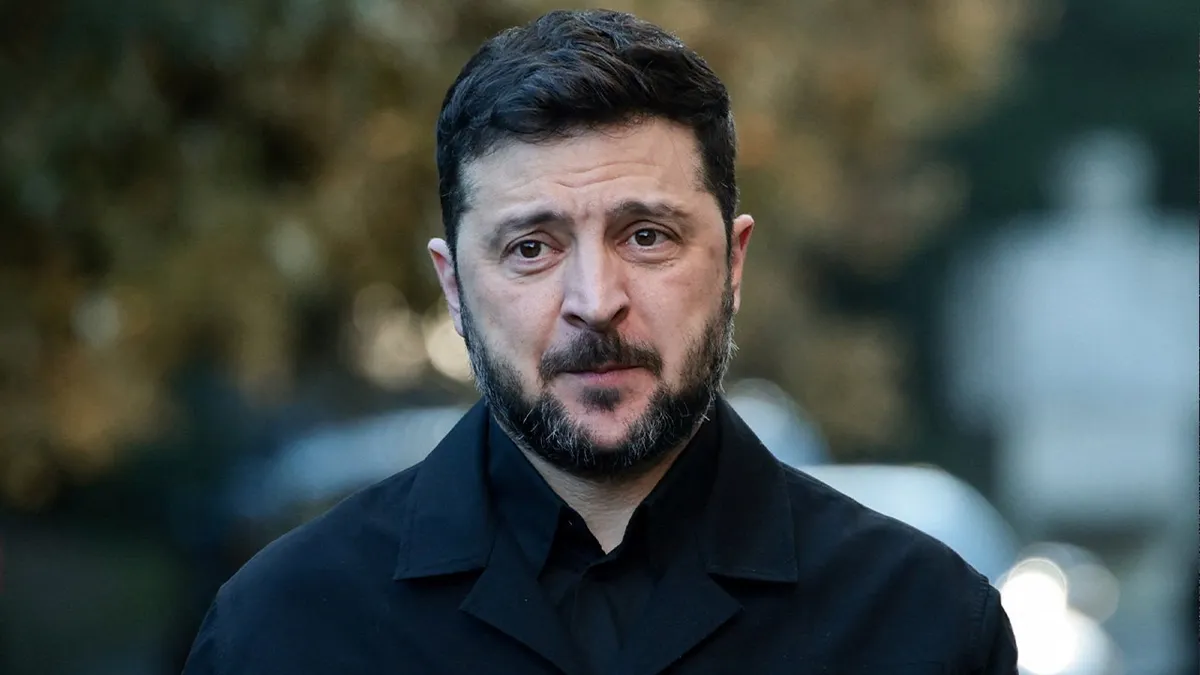
Ukrainian President Volodymyr Zelenskyy warned that Russia's risk of launching new offensives against other European countries is "very high." Speaking at the United Nations General Assembly, Zelenskyy stated that Russia may attack neighboring countries with drones, missiles, or land operations to undermine European unity and weaken support for Ukraine. He argued that Russian President Vladimir Putin, unable to achieve his objectives in Ukraine, could seek to create instability elsewhere to pressure Western governments.
Fox News - WorldFiled 2026-09-22 · 22:11 GMTLean · Center-RightRead · 5 min
Fox News - WorldFIG 01
Reading time
5min
Word count
1 080words
Sources cited
3cited
Entities identified
12entities
Quality score
100%
§ 01
Briefing Summary
AI-generatedNEWSAR · AI
Ukrainian President Volodymyr Zelenskyy warned that Russia's risk of launching new offensives against other European countries is "very high." Speaking at the United Nations General Assembly, Zelenskyy stated that Russia may attack neighboring countries with drones, missiles, or land operations to undermine European unity and weaken support for Ukraine. He argued that Russian President Vladimir Putin, unable to achieve his objectives in Ukraine, could seek to create instability elsewhere to pressure Western governments. Zelenskyy urged European nations to "respond" to Russian actions, as he believes inaction will embolden further aggression. This warning comes amid heightened concerns about Russian activity in Europe, including drone incursions reported in Romania and Lithuania, and warnings from German and Polish leaders about potential Russian attacks.
Confidence 0.90Sources 3Claims 5Entities 12
§ 02
Article analysis
Model · rule-basedFraming
National Security
Political Strategy
Tone
Sensational
AI-assessed
CalmNeutralAlarmist
Factuality
0.60 / 1.00
Mixed
LowHigh
Sources cited
3
Well sourced
FewMany
§ 03
Key claims
5 extracted01
European countries should respond to the growing threat from Russia, as 'If you don't respond, Russians, they will go further'.
quoteVolodymyr Zelenskyy
Confidence
1.00
02
The risk of a new Russian offensive against other European countries is 'very high'.
quoteVolodymyr Zelenskyy
Confidence
1.00
03
Russia could target neighboring European countries with drones, missiles or ground operations.
predictionVolodymyr Zelenskyy
Confidence
0.90
04
Ukraine's President Volodymyr Zelenskyy warned that Russia could launch attacks against other European countries.
predictionVolodymyr Zelenskyy
Confidence
0.90
05
Russian President Vladimir Putin could seek to create instability elsewhere in Europe to pressure Western governments into reducing their support for Kyiv.
predictionVolodymyr Zelenskyy
Confidence
0.80
§ 04
Full report
5 min read · 1 080 words§ 05
Entities
12 identifiedKey playerOppositionContextPositiveNeutralNegative
People3
Organizations2
§ 06
Keywords & salience
10 termsvolodymyr zelenskyy
1.00
vladimir putin
1.00
russian offensive
1.00
european unity
0.90
support for ukraine
0.90
hybrid warfare
0.80
nato ally
0.70
united nations general assembly
0.60
donald trump
0.50
patriot air defense missile system
0.40
§ 07
Topic connections
Interactive graph Network visualization showing 51 related topics
View Full Graph Person Organization Location Event|Click node to navigate|Edge numbers = shared articles