Iran has pushed back on claims that it dropped former preconditions for reopening the Strait of Hormuz in surprise talks held in New York under the mediation of Qatar between Tehran’s foreign minister, Abbas Araghchi, and Donald Trump’s envoys Steve Witkoff and Jared Kushner.Trump said the three-hour talks held in a room at the UN headquarters had gone very well and been very productive. He suggested further talks were possible imminently, which led to the price of a barrel of Brent crude to fall to below $100 (£75) for the first time in two weeks. Witkoff said the talks had been “encouraging, constructive and successful”.In his speech to the UN general assembly, Trump said he had a decision to make very soon on whether to “annihilate the Islamic Republic” or help turn it into one of the great countries of the Middle East, the kind of bombastic threat Trump often deploys during talks with Iran.In Tehran, the foreign ministry spokesperson, Esmail Baghaei, confirmed the talks had occurred, but appeared not to confirm any shift in the Iranian negotiating position. He said: “The interaction that took place with the American side was through Qatari mediation. This interaction was aimed at conveying Iran’s conditions, including the end of the war in all its dimensions, the cessation of American aggressive actions, the naval siege, and the economic war, the release of Iranian assets and so on.” Aware of the potential domestic backlash, he added that Iran’s conditions had been conveyed.Iran set seven preconditions before returning to talks, and in a new development over the past 48 hours said the crucial Strait of Hormuz could be reopened within seven days if those conditions were met.It is likely that the US and the Gulf states would have to accept a navigational route for shipping in the Strait of Hormuz – a key waterway for transporting oil – that requires commercial shipping to enter through a sea lane mainly in Iranian waters and under Iranian rather than Omani control.The fact that the talks lasted three hours suggests some progress was made. The US side is under pressure to leverage down oil prices and increase the availability of refined oil before the midterm elections in November. Latest published figures suggest the number of identifiable tankers making it through the strait is fewer than five a day, but estimates of the US navy are much higher.The blockage in the strait is made worse by the uncertainty surrounding the control by the Houthis’ (the Iranian-backed Yemeni paramilitaries) of a second energy transport chokepoint, the Bab al-Mandab strait that leads from the Red Sea into the Indian Ocean.There is little sign that Trump wants to relaunch a full-scale war with Iran or indeed with the Houthis as Republicans battle to turn the domestic political agenda away from a hugely unpopular war that the Americans think they are losing.Iran is under ever more intense pressure from sanctions, and a US naval blockade is making it nearly impossible for Iran to export oil, depriving the country of badly needed foreign currency. Iran’s civilian aircraft on Wednesday faced a potential worldwide grounding owing to the threat of US secondary sanctions on any entity that engaged with Iran’s civilian fleet.Iranian officials negotiated frantically with neighbouring countries to try to maintain an air bridge, but it appears Oman and Iraq have been forced to close their airspace to Iranian civilian planes.The president of Iran, Masoud Pezeshkian, is due to address the UN general assembly on Wednesday after arriving in New York on a flight from Tehran as talks were under way.Pezeshkian is an advocate of negotiations with the US but has not played a direct role in the talks. He has said the memorandum of understanding (MoU), agreed with the US on 17 June, remained the starting point.Implementation of the MoU fell apart after the two sides accused one another of breaching its terms by trying to take control of the strait. Iran said the MoU clearly left Iran in control of the strait for an interim period before a long-term agreement on its management was reached, including the possibility of Oman and Iran charging fees for navigational services.Pezeshkian is expected to condemn western double standards over what he regards as an illegal US assault on Iran that has left schoolchildren dead and infrastructure ravaged. Europe’s preparedness to call out Russia for its invasion of Ukraine, and its reticence in criticising the attack on Iran, or Israel’s treatment of Palestinians in Gaza, has been a constant theme of Pezeshkian’s remarks.Many of the most powerful speeches on Tuesday at the UN general assembly came from European and Arab politicians who decried the inability of the west to enforce peace. In his farewell speech to the UN, the French president, Emmanuel Macron, criticised the attempt to overthrow the Iranian government by the US and Israel, arguing: “Every time a few states, sometimes even in the name of international order, have tried to replace the people in order to change a regime or a system, they have plunged those states into even greater chaos.”He also said that the west had not imposed a peace in Gaza. “Some boast of a supposed peace. But this peace hasn’t reopened humanitarian routes for a single second. Must we stand by and watch this spectacle that shames us all? Never!”Macron landed himself in hot water with Israel when he suggested Hamas was not present in the West Bank, as opposed to Gaza.Netanyahu’s office responded, using the biblical name for the West Bank: “Hamas terrorists carry out attacks against Jews almost every day. They have murdered countless Israeli civilians in Judea and Samaria.”Jordan’s King Abdullah II attacked the Israeli government for “moving the goalposts”, for continuing attacks and the destruction of civilian infrastructure in Gaza, and for refusing to withdraw from the war-torn Palestinian territory. This has forced the Palestinian population in Gaza into barely one-third of the territory, he said.Observers must no longer treat Israeli policies as “temporary military measures” or a “consequence of war”, he said.“Accountability begins when we call things what they are: an attempt to erase Palestinian life and impose a new territorial reality in Gaza,” he added.
SRCThe Guardian - World News
LANGEN
LEANCenter-Left
WORDS1 029
ENT12
WED · 2026-09-23 · 10:41 GMTBRIEF NSR-2026-0923-113444
NSR-2026-0923-113444News Report·EN·Diplomatic
Iran denies dropping preconditions amid ‘very productive’ three-hour UN talks in New York
Iran has denied dropping preconditions for reopening the Strait of Hormuz following three-hour talks in New York between Iranian Foreign Minister Abbas Araghchi and US envoys Steve Witkoff and Jared Kushner, mediated by Qatar. President Trump described the discussions as "very productive" and suggested further talks are possible, leading to a drop in Brent crude prices.
Patrick Wintour in New YorkThe Guardian - World NewsFiled 2026-09-23 · 10:41 GMTLean · Center-LeftRead · 5 min
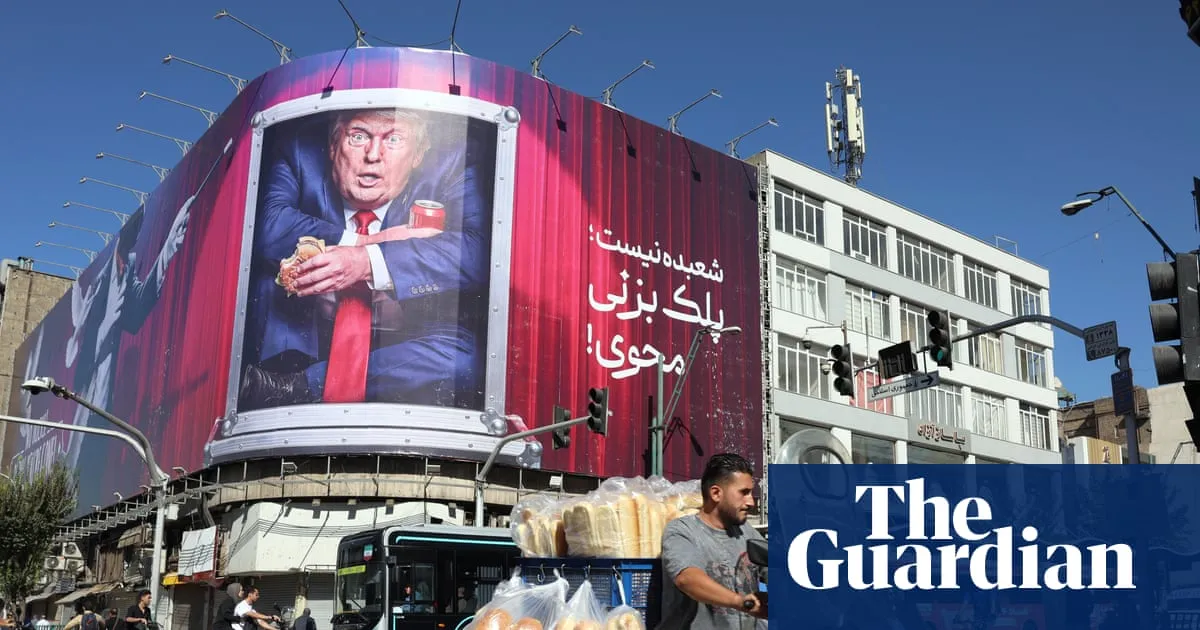
The Guardian - World NewsFIG 01
Reading time
5min
Word count
1 029words
Sources cited
3cited
Entities identified
12entities
Quality score
100%
§ 01
Briefing Summary
AI-generatedNEWSAR · AI
Iran has denied dropping preconditions for reopening the Strait of Hormuz following three-hour talks in New York between Iranian Foreign Minister Abbas Araghchi and US envoys Steve Witkoff and Jared Kushner, mediated by Qatar. President Trump described the discussions as "very productive" and suggested further talks are possible, leading to a drop in Brent crude prices. Iran's foreign ministry confirmed the talks aimed to convey Iran's conditions, including an end to aggressive actions and economic war. The article notes that Iran had previously set seven preconditions for returning to talks and suggested the Strait of Hormuz could be reopened within seven days if these were met. The US side is reportedly under pressure to lower oil prices before midterm elections.
Confidence 0.90Sources 3Claims 5Entities 12
§ 02
Article analysis
Model · rule-basedFraming
Diplomatic
Political Strategy
Tone
Mixed Tone
AI-assessed
CalmNeutralAlarmist
Factuality
0.60 / 1.00
Mixed
LowHigh
Sources cited
3
Well sourced
FewMany
§ 03
Key claims
5 extracted01
US President Donald Trump described the three-hour talks in New York as 'very productive'.
quoteDonald Trump
Confidence
1.00
02
The price of a barrel of Brent crude fell below $100 for the first time in two weeks following the talks.
statistic
Confidence
0.90
03
Iran denies dropping former preconditions for reopening the strait of Hormuz.
factualIran
Confidence
0.90
04
Iran's conditions for reopening the strait of Hormuz include the end of the war, cessation of American aggressive actions, naval siege, economic war, and release of Iranian assets.
factualEsmail Baghaei (Iran's foreign ministry spokesperson)
Confidence
0.80
05
The US side is under pressure to lower oil prices before the midterm elections in November.
factual
Confidence
0.70
§ 04
Full report
5 min read · 1 029 words§ 05
Entities
12 identifiedKey playerOppositionContextPositiveNeutralNegative
People5
Organizations3
§ 06
Keywords & salience
7 termsstrait of hormuz
1.00
iran negotiations
0.90
un talks
0.80
oil prices
0.70
qatari mediation
0.60
preconditions
0.50
us-iran relations
0.40
§ 07
Topic connections
Interactive graph Network visualization showing 51 related topics
View Full Graph Person Organization Location Event|Click node to navigate|Edge numbers = shared articles