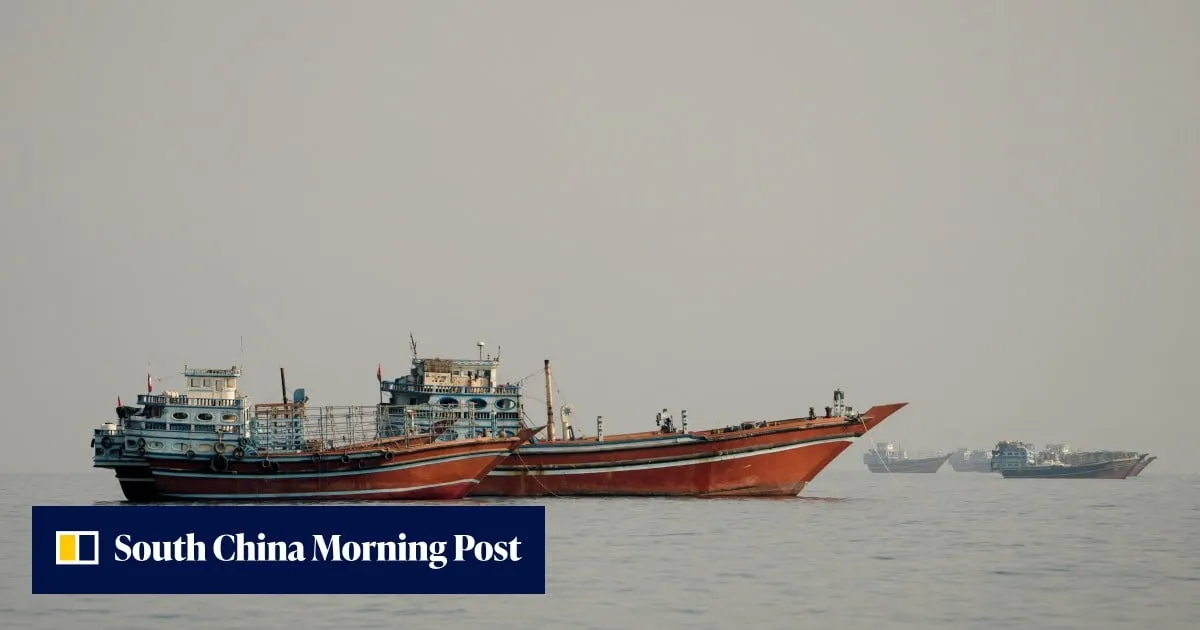
When Iran shut down the Strait of Hormuz at the start of the war, choking off sea passage for some 15 million barrels of oil a day, many feared that prices would skyrocket, cratering the world economy.Instead, nearly seven months on, oil is expensive but not exorbitant, and analysts say there is enough oil available to meet current global needs, even as the higher prices cause political problems for US President Donald Trump and others.That’s because Saudi Arabia and other Gulf producers quickly found alternative routes and reached for unused pipeline capacity. When Iran and its militant allies targeted those, the oil exporters and the US military found still other ways – workarounds for the workarounds – in an often clandestine game of whack-a-mole.With oil now at around US$100 a barrel – higher than before the war but not as bad as feared – Iran has diminished leverage, while a US naval blockade and tightened sanctions smother its own economy.
SRCSouth China Morning Post
LANGEN
LEANCenter-Right
WORDS160
ENT9
THU · 2026-09-24 · 11:40 GMTBRIEF NSR-2026-0924-113760
NSR-2026-0924-113760Analysis·EN·Economic Impact
Gulf nations keep oil flowing amid Iran war, but it’s getting costly
Despite Iran's closure of the Strait of Hormuz, which initially threatened to disrupt 15 million barrels of oil daily, global oil prices have remained expensive but not exorbitant. This is due to Saudi Arabia and other Gulf producers implementing alternative routes and utilizing unused pipeline capacity.
Associated PressSouth China Morning PostFiled 2026-09-24 · 11:40 GMTLean · Center-RightRead · 1 min
South China Morning PostFIG 01
Reading time
1min
Word count
160words
Sources cited
1cited
Entities identified
9entities
Quality score
100%
§ 01
Briefing Summary
AI-generatedNEWSAR · AI
Despite Iran's closure of the Strait of Hormuz, which initially threatened to disrupt 15 million barrels of oil daily, global oil prices have remained expensive but not exorbitant. This is due to Saudi Arabia and other Gulf producers implementing alternative routes and utilizing unused pipeline capacity. When these routes were targeted, exporters and the US military developed further workarounds. Seven months into the conflict, oil is trading around $100 a barrel, a price that has diminished Iran's leverage while its economy is constrained by US naval blockades and sanctions.
Confidence 0.85Sources 1Claims 5Entities 9
§ 02
Article analysis
Model · rule-basedFraming
Economic Impact
Conflict
Tone
Measured
AI-assessed
CalmNeutralAlarmist
Factuality
0.70 / 1.00
Factual
LowHigh
Sources cited
1
Limited
FewMany
§ 03
Key claims
5 extracted01
Oil is now at around US$100 a barrel.
statistic
Confidence
0.95
02
Saudi Arabia and other Gulf producers found alternative routes and reached for unused pipeline capacity.
factual
Confidence
0.90
03
Iran shut down the Strait of Hormuz, choking off sea passage for some 15 million barrels of oil a day.
factual
Confidence
0.90
04
Iran has diminished leverage due to a US naval blockade and tightened sanctions.
factual
Confidence
0.85
05
Oil prices are expensive but not exorbitant, and there is enough oil available to meet current global needs.
factualanalysts
Confidence
0.80
§ 04
Full report
1 min read · 160 words§ 05
Entities
9 identifiedKey playerOppositionContextPositiveNeutralNegative
Organizations1
Locations4
Events1
§ 06
Keywords & salience
10 termsoil prices
1.00
strait of hormuz
0.90
iran war
0.90
gulf producers
0.80
alternative routes
0.70
pipeline capacity
0.60
us naval blockade
0.50
sanctions
0.50
us military
0.50
donald trump
0.40
§ 07
Topic connections
Interactive graph Network visualization showing 51 related topics
View Full Graph Person Organization Location Event|Click node to navigate|Edge numbers = shared articles