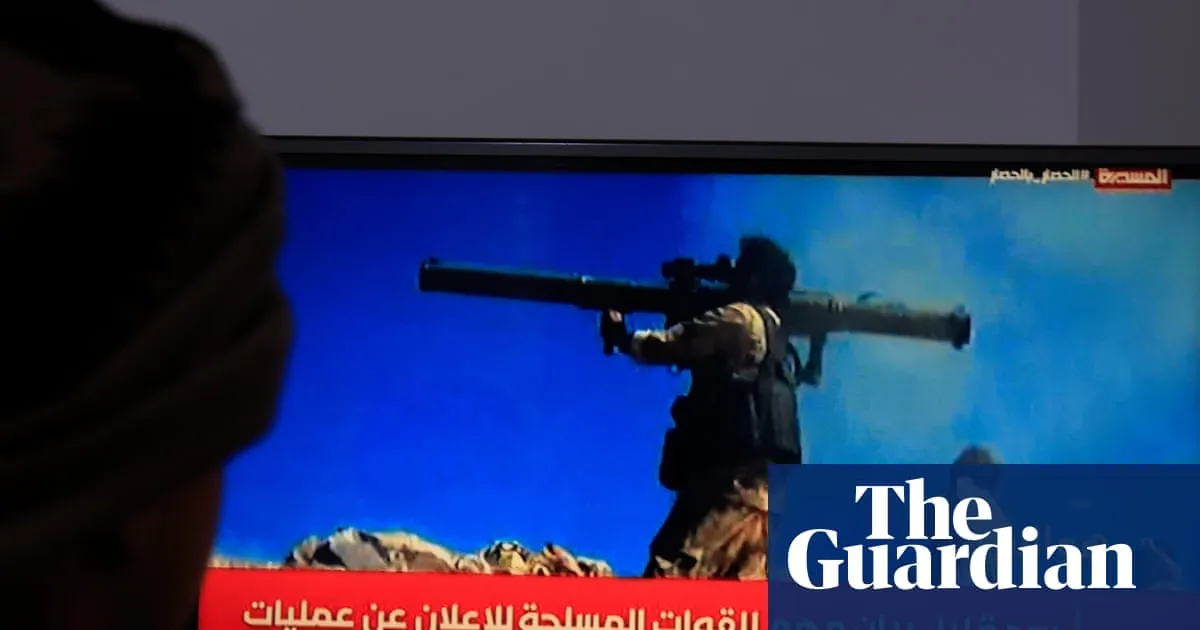
Saudi Arabia says it intercepted six ballistic missiles fired by Yemen’s Iran-backed Houthis, with the latest attacks pushing oil prices to a one-week high over fears of spiralling supply disruptions.The Saudi-led coalition in Yemen said the missiles were aimed at Taif in western Saudi Arabia and the Yanbu area on the Red Sea, with the Houthis claiming their attacks were aimed at “a sensitive target” in the capital Riyadh and on Saudi Aramco facilities in Tanbu.Oil prices climbed about 3%, but trade was volatile and prices came off session highs after reports the US and Iran discussed reopening the Strait of Hormuz.The escalating attacks threaten Saudi Arabia’s ability to export oil through the Red Sea at a time when the Strait of Hormuz is disrupted and the kingdom’s east-west pipeline is only now resuming operations after drone strikes earlier this month. The Houthis declared a naval blockade on the kingdom in July, opening a second theatre in the US-Iran war.It was not clear whether there was any damage or casualties in either Taif or Yanbu, the main alternative route for Saudi oil.The Houthis seized the whole Yemeni western coast in a lightning offensive nearly two weeks ago that brought them to the shores of the Red Sea’s strategic Bab el-Mandeb waterway.Why the civil war in Yemen has world governments on edgeYemen’s internationally recognised government pressed world leaders on Thursday for help defeating the militants, saying that their new perch along one of the world’s busiest waterways presents an international economic risk.While claiming that their blockade only applies to Saudi shipping and there remains no threat to commercial shipping on the Red Sea, the Houths have also warned other nations not to get involved.But the vice-president of the internationally recognised government council urged world leaders at the UN general assembly not to trust the Houthis’ assurances – and to see a bigger picture in the crisis around the strait.“The Houthi militias’ use of the safety of navigation as a tool for blackmail threatens not only Yemen. It is taking hostage the entire global economy,” said vice-president, Abdullah Abdulkader al Alimi-Bawzer.Arguing that protecting the strait “is the responsibility of every economy that depends on secure supply chains, energy security and freedom of navigation,” he urged the international community to keep weapons and technology from getting into the rebels’ hands.The Saudi-backed government’s forces had earlier repelled overnight attacks by the Houthis on a key supply route to Yemen’s third-biggest city Taiz from the southern port city of Aden where the internationally recognised administration is based, government sources said.The Houthis have kept up pressure along a steep, winding mountain pass known as Hejat al-Abd, a lifeline for government forces and the only route for goods and residents to reach Taiz and travel abroad. Seizing parts of the road could allow the Houthis to tighten their grip around the city and deal another blow to the government, which has struggled to regain the initiative since losing the western coast.Riyadh’s foreign ministry said on Friday that Saudi Arabia, Turkey and Pakistan would hold an urgent meeting of their chiefs of staff to discuss ways to support repel the Houthi attacks under their joint defence agreement. Under the defence pact, all three countries agreed that an armed attack on any one of them would be treated as an attack on all three.Officials in Pakistan are said to be deeply worried about being dragged into the never-ending war unfolding across the Middle East.With Reuters and the Associated Press
SRCThe Guardian - World News
LANGEN
LEANCenter-Left
WORDS580
ENT12
FRI · 2026-09-25 · 02:54 GMTBRIEF NSR-2026-0925-113946
NSR-2026-0925-113946News Report·EN·Conflict
Saudi Arabia intercepts wave of Houthi missiles as oil climbs to one-week high
Saudi Arabia intercepted six ballistic missiles fired by Yemen's Iran-backed Houthis, targeting Taif and the Yanbu area on the Red Sea. These attacks, which the Houthis claimed were aimed at sensitive targets in Riyadh and Saudi Aramco facilities in Tanbu, caused oil prices to climb to a one-week high due to fears of supply disruptions.
Guardian staff and agenciesThe Guardian - World NewsFiled 2026-09-25 · 02:54 GMTLean · Center-LeftRead · 3 min
The Guardian - World NewsFIG 01
Reading time
3min
Word count
580words
Sources cited
3cited
Entities identified
12entities
Quality score
100%
§ 01
Briefing Summary
AI-generatedNEWSAR · AI
Saudi Arabia intercepted six ballistic missiles fired by Yemen's Iran-backed Houthis, targeting Taif and the Yanbu area on the Red Sea. These attacks, which the Houthis claimed were aimed at sensitive targets in Riyadh and Saudi Aramco facilities in Tanbu, caused oil prices to climb to a one-week high due to fears of supply disruptions. The escalating attacks threaten Saudi oil exports via the Red Sea, a critical route especially with disruptions elsewhere. Yemen's internationally recognized government urged world leaders for assistance, highlighting the international economic risk posed by the Houthis' control of the Bab el-Mandeb waterway. Saudi Arabia, Turkey, and Pakistan will hold an urgent meeting to discuss repelling Houthi attacks under their joint defense agreement.
Confidence 0.90Sources 3Claims 5Entities 12
§ 02
Article analysis
Model · rule-basedFraming
Conflict
Economic Impact
Tone
Mixed Tone
AI-assessed
CalmNeutralAlarmist
Factuality
0.70 / 1.00
Factual
LowHigh
Sources cited
3
Well sourced
FewMany
§ 03
Key claims
5 extracted01
The vice-president of Yemen's internationally recognized government council stated that Houthi blackmail threatens the entire global economy.
quoteAbdullah Abdulkader al Alimi-Bawzer
Confidence
1.00
02
Saudi Arabia intercepted six ballistic missiles fired by Yemen’s Iran-backed Houthis.
factualSaudi Arabia
Confidence
0.90
03
The Houthis seized the whole Yemeni western coast, bringing them to the shores of the Red Sea’s Bab el-Mandeb waterway.
factual
Confidence
0.80
04
The Houthi attacks pushed oil prices to a one-week high over fears of supply disruptions.
factual
Confidence
0.80
05
The Houthis claimed their attacks were aimed at a sensitive target in Riyadh and Saudi Aramco facilities in Tanbu.
factualHouthis
Confidence
0.70
§ 04
Full report
3 min read · 580 words§ 05
Entities
12 identifiedKey playerOppositionContextPositiveNeutralNegative
§ 06
Keywords & salience
10 termshouthi missiles
1.00
oil prices
0.90
supply disruptions
0.80
yemen civil war
0.70
saudi arabia
0.70
red sea
0.60
strait of hormuz
0.60
freedom of navigation
0.50
energy security
0.50
saudi aramco
0.40
§ 07
Topic connections
Interactive graph Network visualization showing 51 related topics
View Full Graph Person Organization Location Event|Click node to navigate|Edge numbers = shared articles