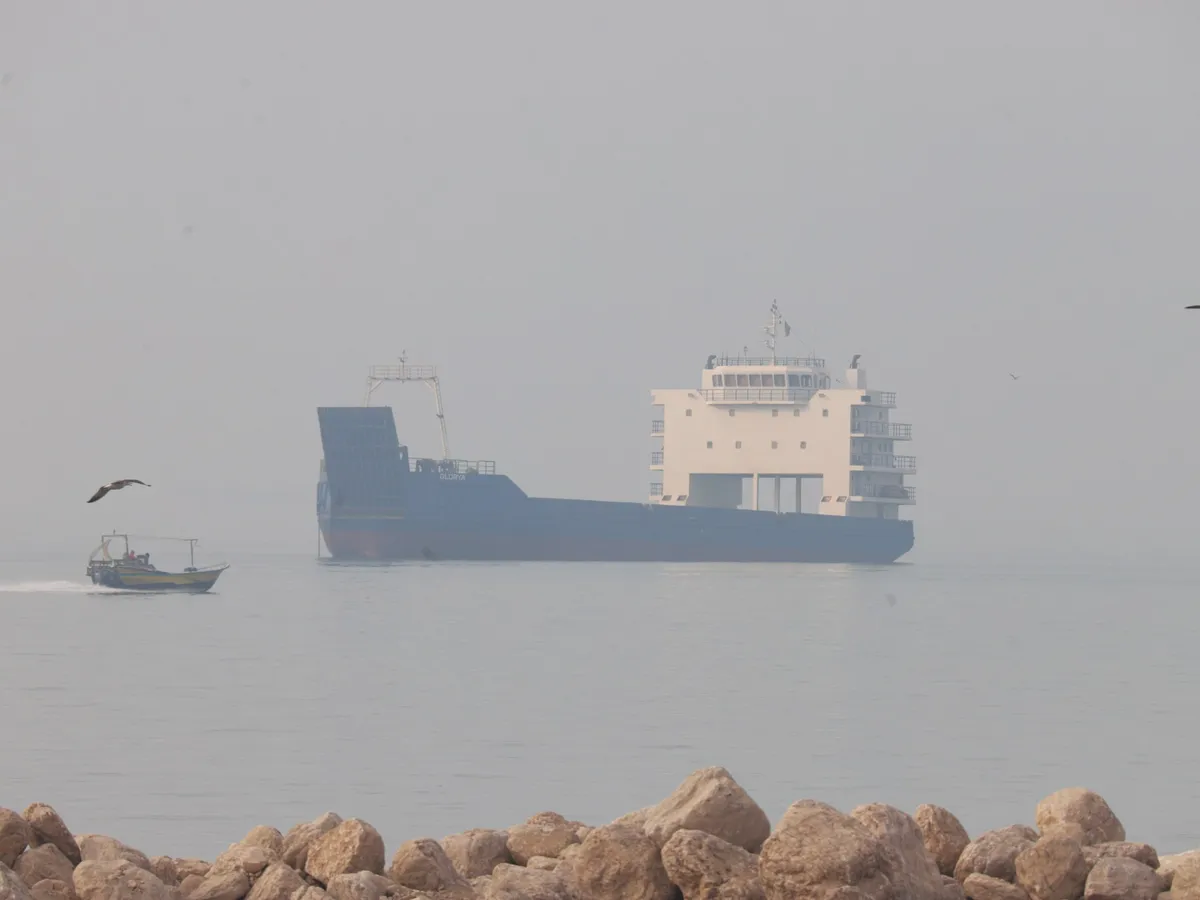
EXPLAINERReports have emerged that tanker captains are earning $100,000 plus a $50,000 per-trip bonus to transit the strait.Vessels in the Strait of Hormuz near the beach of Bandar Abbas, Iran, on October 6, 2026 [Amirhosein Khorgooi/ISNA/via WANA (West Asia News Agency) via Reuters]Published On 8 Oct 2026As shipping traffic through the besieged Strait of Hormuz fell to its lowest level since July this week, reports have emerged that sailors are being paid large bonuses for making the dangerous trip through the Gulf waterway.Some captains are earning base salaries of as much as $100,000 – the high end of usual salaries which vary greatly between shipping companies – plus a $50,000 bonus per voyage through the strait, the UK’s Financial Times has reported.Recommended Stories list of 3 itemslist 1 of 3Saudi Arabia says East-West pipeline pumping 5.8 million bpdlist 2 of 3What new measures is Iran taking to counter US economic pressure?list 3 of 3US sets new demands for Iran deal: What are they?end of listOil exports from the Middle East rose above pre-war levels at the end of last month despite ongoing attacks on tankers in the Strait of Hormuz. But shipping data from Kpler shows that about 40 percent of those are leaving the region due to a combination of pipeline exports and small shuttle boats carrying out risky ship-to-ship transfers.Here’s what we know.Are oil exports getting through the strait?Yes. According to shipping data from Kpler, at least 16.5 million barrels left the region last month, matching the pre-war average, excluding Iran, which is under a naval blockade by the United States.However, about 40 percent of this is being exported via Saudi Arabia’s East-West pipeline or via ship-to-ship transfers by smaller boats travelling undetected through the strait.Kpler reported on Tuesday that the number of detectable vessels passing through the strait had fallen to its lowest level in more than two months, with only seven vessels passing through the crucial waterway in the previous week, the lowest figure since July 23.Data is hard to determine, as many smaller shuttle boats are turning off their transponders to avoid detection when travelling through the strait before offloading oil to larger tankers waiting beyond it.[Al Jazeera]How dangerous is it for sailors in the strait?Very. Attacks on vessels in the Strait of Hormuz have continued in the past week.On Wednesday night, the United Kingdom Maritime Trade Operations (UKMTO) reported several casualties after multiple projectiles struck a vessel sailing off Qatar’s northern coast.Following the start of the US-Israel war on Iran in late February, Tehran all but closed the strait, with limited vessels receiving clearance. Iran has launched strikes at ships making the crossing without its express permission.The US, for its part, imposed a naval blockade on Iranian ports due to Tehran’s closure and has escorted some vessels through the waterway.Last week, attacks on tankers in the strait hit their highest level since the war began as regional oil producers tried to increase exports at heightened risk for crew and cargo.Saul Kavonic, energy head at MST Marquee, told the Reuters news agency: “The frequency of Iranian attacks on ships is now at the highest point since the war began, and likely to intensify further.”He added that “constrained product flows, extreme logistics costs and high likelihood of Iranian escalation are keeping [oil] prices elevated”.What are oil prices doing?Oil prices rose on Thursday morning, with Brent crude futures increasing by $2.28, or 2.28 percent, to $102.28 a barrel by 04:27 GMT.US West Texas Intermediate crude futures gained $1.66, or 1.88 percent, to $89.94.This is despite oil exports recovering to some extent due to Saudi Arabia using alternative export infrastructure and due to the complex system of ship-to-ship transfers.The East-West pipeline, which carries oil from fields in Saudi Arabia’s east to the Yanbu port on the Red Sea in the west, has been crucial to this process. However, it has also come under threat and been forced to close at times due to strikes from Iran-backed groups.(Al Jazeera)What incentives are sailors receiving for crossing the strait?The Financial Times reported this week that tanker captains can now command a base salary of $100,000, plus a $50,000 per-trip bonus, to make the dangerous transit.Overall, the crew on board each ship can earn four to six times their normal salaries.On Monday, The Wall Street Journal reported that shipping companies were spending between $30m and $40m for a single round trip to move oil in and out of Hormuz through ship-to-ship transfers.It added that oil producers now have to swallow high costs to get oil out of the waterway, with shipowners and individual sailors making some of the best returns the industry has seen in decades. Many sailors willing to risk the trip are coming from India, the Philippines and China to do so.“One Shandong-based ship-staffing company is even offering as much as $25,000 for a round trip as reward, according to seafarers and recruitment s seen by The Wall Street Journal. For oilers and cadets [low-level crewmembers of a commercial ship] the $25,000 could represent more than a year of wages,” the outlet reported.How are ships navigating Hormuz?As with the smaller shuttle boats that move in and out of the strait under threat of attack, captains on board larger ships and tankers must turn off their lights and transponders to make the journey.According to Bloomberg, which spoke to a captain on a vessel that was part of the shuttle runs, his vessel, which frequently carries barrels at night, is given strict instructions: no lights, no phones, and only one radar on as they cross.Speaking from the Philippines, where he has arrived following a three-month stint taking vessels through the strait, he explained that he and his crew got their bearings by using the coast and lighthouses as a reference, adding that it is “quite challenging”.After seeing a fire ahead on one trip, the captain said he called the US Navy, which has been assisting ships on routes through the waterway to avoid mines, to warn them of an attack.He added that his most recent contract through the strait was shorter than usual since he knew the voyage was “not easy”, but he still received several times his usual salary for the trip.Another captain of a Liquefied Natural Gas tanker told Bloomberg that his journey began by turning off the breaker that connects the ship’s location transponder to hide their whereabouts while they were travelling along the Omani coast.Crew members also barricade the main decks with sandbags in case drones or missiles attack them.The report added that shipping executives estimate a one-in-20 chance of being hit while crossing the strait at present.
SRCAl Jazeera
LANGEN
LEANCenter
WORDS1 100
ENT12
THU · 2026-10-08 · 11:02 GMTBRIEF NSR-2026-1008-117320
NSR-2026-1008-117320News Report·EN·Conflict
The Hormuz bonus: Sailor salaries soar for transits amid Iran war
Sailors transiting the Strait of Hormuz are receiving substantial bonuses due to increased risks amid ongoing conflict. Tanker captains can earn base salaries of up to $100,000 plus a $50,000 bonus per trip.
Edna MohamedAl JazeeraFiled 2026-10-08 · 11:02 GMTLean · CenterRead · 5 min
Al JazeeraFIG 01
Reading time
5min
Word count
1 100words
Sources cited
3cited
Entities identified
12entities
Quality score
100%
§ 01
Briefing Summary
AI-generatedNEWSAR · AI
Sailors transiting the Strait of Hormuz are receiving substantial bonuses due to increased risks amid ongoing conflict. Tanker captains can earn base salaries of up to $100,000 plus a $50,000 bonus per trip. Overall, ship crews can see their normal salaries multiplied by four to six times. This comes as shipping traffic through the strait has fallen to its lowest level in over two months, with attacks on vessels continuing. Despite these dangers, oil exports from the region have recovered to pre-war levels, partly due to alternative export methods like pipelines and ship-to-ship transfers, though these also carry significant risks and costs.
Confidence 0.90Sources 3Claims 5Entities 12
§ 02
Article analysis
Model · rule-basedFraming
Conflict
Economic Impact
Tone
Mixed Tone
AI-assessed
CalmNeutralAlarmist
Factuality
0.80 / 1.00
Factual
LowHigh
Sources cited
3
Well sourced
FewMany
§ 03
Key claims
5 extracted01
Shipping traffic through the Strait of Hormuz fell to its lowest level since July this week.
statisticKpler
Confidence
0.95
02
About 40 percent of oil exports from the Middle East are leaving the region via pipeline or small shuttle boats.
statisticKpler
Confidence
0.90
03
Sailors are reportedly earning $100,000 base salaries plus a $50,000 per-trip bonus to transit the Strait of Hormuz.
statisticFinancial Times
Confidence
0.90
04
Attacks on vessels in the Strait of Hormuz have continued in the past week, with reports of casualties.
factualUKMTO
Confidence
0.85
05
Iran has launched strikes at ships making the crossing without its express permission.
factualArticle
Confidence
0.80
§ 04
Full report
5 min read · 1 100 words§ 05
Entities
12 identifiedKey playerOppositionContextPositiveNeutralNegative
Organizations6
Locations5
Events1
§ 06
Keywords & salience
10 termsstrait of hormuz
1.00
sailor salaries
0.90
war bonuses
0.80
iran war
0.70
tanker attacks
0.70
oil exports
0.60
ship-to-ship transfers
0.50
shipping traffic
0.50
naval blockade
0.40
east-west pipeline
0.40
§ 07
Topic connections
Interactive graph Network visualization showing 51 related topics
View Full Graph Person Organization Location Event|Click node to navigate|Edge numbers = shared articles