A fortnight ago, when Donald Trump first threatened Iran’s regime, telling protesters in the country that “help is coming”, there were not enough US military assets in the Middle East to back up the rhetoric. That has now changed, although plenty of questions remain about what an attack on Iran could achieve.An aircraft carrier, the USS Abraham Lincoln, has arrived in the Indian Ocean, dispatched from the South China Sea alongside three destroyers equipped with Tomahawk cruise missiles. Its eight-squadron air wing includes F-35C and F/A-18 jets and, critically, EA-18G Growlers to suppress anything that is left of Iran’s air defences after last year’s war with Israel.Open-source monitors have spotted transport planes bringing what they believe to be US air defence systems to the Gulf. That is in line with reports that Patriot and Thaad antimissile batteries would be deployed to protect US bases from any Iranian drone and missile counterattack against military sites in the region.On top of that, squadrons of F-15 fighters – an estimated 35 planes – have been redeployed from RAF Lakenheath in Suffolk to Muwaffaq Salti airbase in Jordan. It had been intended for the F-15s to be flown back to the US, but now they have been deployed as extra defensive cover for Israel, Jordan, Iraq and the region if the conflict escalates.Michael Carpenter, a former member of the US national security council, under Joe Biden, believes that the most plausible military option would be to go after Iran’s supreme leader, Ayatollah Ali Khamenei, a capture-or-kill operation modelled on the seizure of Venezuela’s former president Nicolás Maduro. Targeting other key Iranian military sites would not obviously degrade the country’s regime significantly, he added. “I find it unlikely, dubious, that these would have the strategic effects sought,” he said.Targeting Khamenei, Carpenter argues, would be “a very fraught operation with a dubious outcome”. The success of the seizure of Maduro relied, partly, on “exquisite intelligence from the inside”, he said, built up over five months of preparation by the CIA and sources within Maduro’s government, but it was unclear how far that existed in the case of Iran, even allowing for possible Israeli help.Israel was chillingly successful in assassinating Iranian leaders during last June’s 12-day war, though afterwards Israeli sources revealed a key method for tracing their locations was tracking the bodyguards’ mobile phones. Procedures ought to have been tightened up. And as the Israeli foreign minister, Israel Katz, acknowledged, Khamenei’s security precautions kept him out of their sights that summer.Iran is not likely to have much air defence to protect itself from Tomahawks or incoming jets. Last June, Israeli jets were quickly able to fly over large parts of the country, without suffering losses, paving the way for the US bombing of the nuclear enrichment site under the mountain at Fordow. This month, the US was able to suppress Venezuela’s air defence within a couple of hours.However, a capture operation would have to range over considerable distance (Tehran is about 1,000 miles from the Indian Ocean), which could tip the crude military thinking towards an assassination attempt. That in turn would represent an extraordinary escalation: an attempt by the US to kill the leader of another country with which it is not at war, and from which it faces no immediate threat.A western analyst, who asked not to be named, said they believed a US attempt to try and kill Iran’s supreme leader “is more likely than a capture attempt – and also less risky if it were to involve a standoff munition” – though it would also “depend heavily on the intelligence and the number of people who’ve been co-opted (if any have been) from his protective detail”.The question then is what would follow. Iran’s regime has been cohesive enough to violently suppress demonstrators, killing perhaps 30,000. If Khamenei were to be killed it is not obvious that any successor would suddenly shift policy in whatever direction the White House seeks. Though Khamenei has shortlisted three potential successors, there may be a struggle for power the US simply cannot control.What is more certain is there would be an immediate military response. On Sunday, Iran’s president, Masoud Pezeshkian, warned that any attack on Khamenei would amount to a declaration of war. Iran’s most potent available form of defence is attack, particularly from high-speed ballistic missiles (whose stock is estimated at 2,000) stored in “missile cities” deep below ground.The most obvious target for a missile attack, combined with drones, would be the Abraham Lincoln and its allied warships. But Matthew Savill of the Royal United Services Institute argues that Iran “may not be able to fix its position” with available surveillance because it will be sailing out in the Indian Ocean. “The US knows the closer to the Persian Gulf it goes, the more visible it is to the Iranians,” he added.An alternative counterstrike would be to target US military bases in the Gulf, such as al-Udeid airbase in Qatar, headquarters to US Central Command. This month the base was reinforced by new Patriot air defence systems according to Chinese satellite imagery, but a consideration for the US is that last June 14% of Iranian ballistic missiles got past sophisticated Israeli and US air defences.This, though, would risk international escalation, bringing Gulf states and their allies automatically into the conflict. The UK has already forward deployed the RAF’s 12 Squadron, a joint UK-Qatari unit at al-Udeid, to deter a possible attack and help the Qataris act in self defence. Another alternative for Iran could be to try and mine the strait of Hormuz, closing it to merchant shipping, though that would rely on submarines that the US will be closely monitoring underwater.Iran’s military options may be limited, but so too are the White House’s prospects of achieving an instant knockout.
SRCThe Guardian - World News
LANGEN
LEANCenter-Left
WORDS964
ENT11
FRI · 2026-01-30 · 13:00 GMTBRIEF NSR-2026-0130-11983
NSR-2026-0130-11983Analysis·EN·National Security
Killing Khamenei? Hitting military sites? It is unclear what a US attack on Iran would achieve | Dan Sabbagh
Following Donald Trump's threats to Iran, the US has increased its military presence in the Middle East, including deploying the USS Abraham Lincoln carrier strike group to the Indian Ocean and F-15 fighters to Jordan. The US is also reportedly deploying air defense systems to the Gulf to protect bases from potential Iranian counterattacks.
Dan Sabbagh Defence and security editorThe Guardian - World NewsFiled 2026-01-30 · 13:00 GMTLean · Center-LeftRead · 4 min
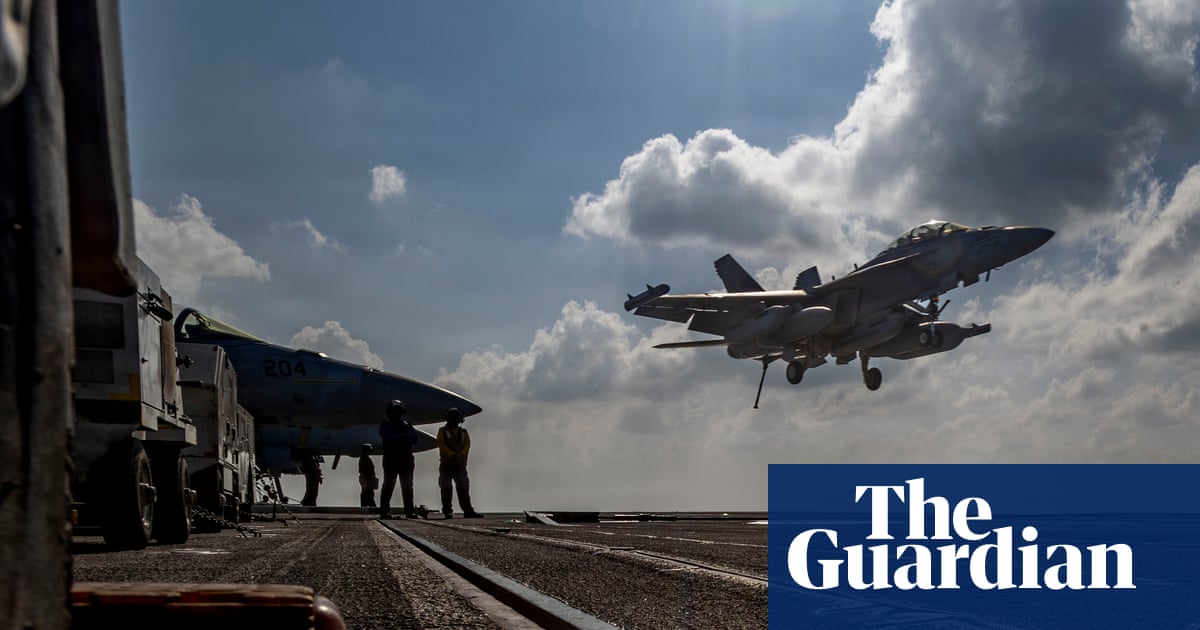
The Guardian - World NewsFIG 01
Reading time
4min
Word count
964words
Sources cited
2cited
Entities identified
11entities
Quality score
100%
§ 01
Briefing Summary
AI-generatedNEWSAR · AI
Following Donald Trump's threats to Iran, the US has increased its military presence in the Middle East, including deploying the USS Abraham Lincoln carrier strike group to the Indian Ocean and F-15 fighters to Jordan. The US is also reportedly deploying air defense systems to the Gulf to protect bases from potential Iranian counterattacks. While the purpose of a potential attack remains unclear, a former US national security council member suggests a possible military option could involve targeting Iran's Supreme Leader, Ayatollah Ali Khamenei. However, the success of such an operation is uncertain, requiring significant intelligence, similar to a previous attempt to capture Nicolás Maduro. Other military options, such as targeting Iranian military sites, may not significantly weaken the regime.
Confidence 0.90Sources 2Claims 5Entities 11
§ 02
Article analysis
Model · rule-basedFraming
National Security
Political Strategy
Tone
Measured
AI-assessed
CalmNeutralAlarmist
Factuality
0.70 / 1.00
Factual
LowHigh
Sources cited
2
Limited
FewMany
§ 03
Key claims
5 extracted01
F-15 fighters have been redeployed from RAF Lakenheath to Jordan.
factual
Confidence
1.00
02
The US has increased its military assets in the Middle East.
factual
Confidence
1.00
03
Open-source monitors have spotted transport planes bringing what they believe to be US air defence systems to the Gulf.
factual
Confidence
0.90
04
Targeting Khamenei would be a very fraught operation with a dubious outcome.
quoteMichael Carpenter
Confidence
0.80
05
Targeting other key Iranian military sites would not obviously degrade the country’s regime significantly.
quoteMichael Carpenter
Confidence
0.70
§ 04
Full report
4 min read · 964 words§ 05
Entities
11 identifiedKey playerOppositionContext
I
Iran location · Opposition
90
US
United States location · Key Player
80
DT
Donald Trump person · Key Player
70
I
Israel location
70
AA
Ayatollah Ali Khamenei person · Opposition
70
UA
USS Abraham Lincoln organization
60
C
CIA organization
50
NM
Nicolás Maduro (Maduro) person · Context
50
JB
Joe Biden person · Context
40
SC
South China Sea location · Context
40
IO
Indian Ocean location · Context
40
§ 06
Keywords & salience
10 termsus attack on iran
0.90
khamenei
0.80
military sites
0.70
iranian regime
0.60
air defense systems
0.60
us military
0.60
capture-or-kill operation
0.50
tomahawk cruise missiles
0.50
military assets
0.50
israel
0.40
§ 07
Topic connections
Interactive graph Network visualization showing 51 related topics
View Full Graph Person Organization Location Event|Click node to navigate|Edge numbers = shared articles