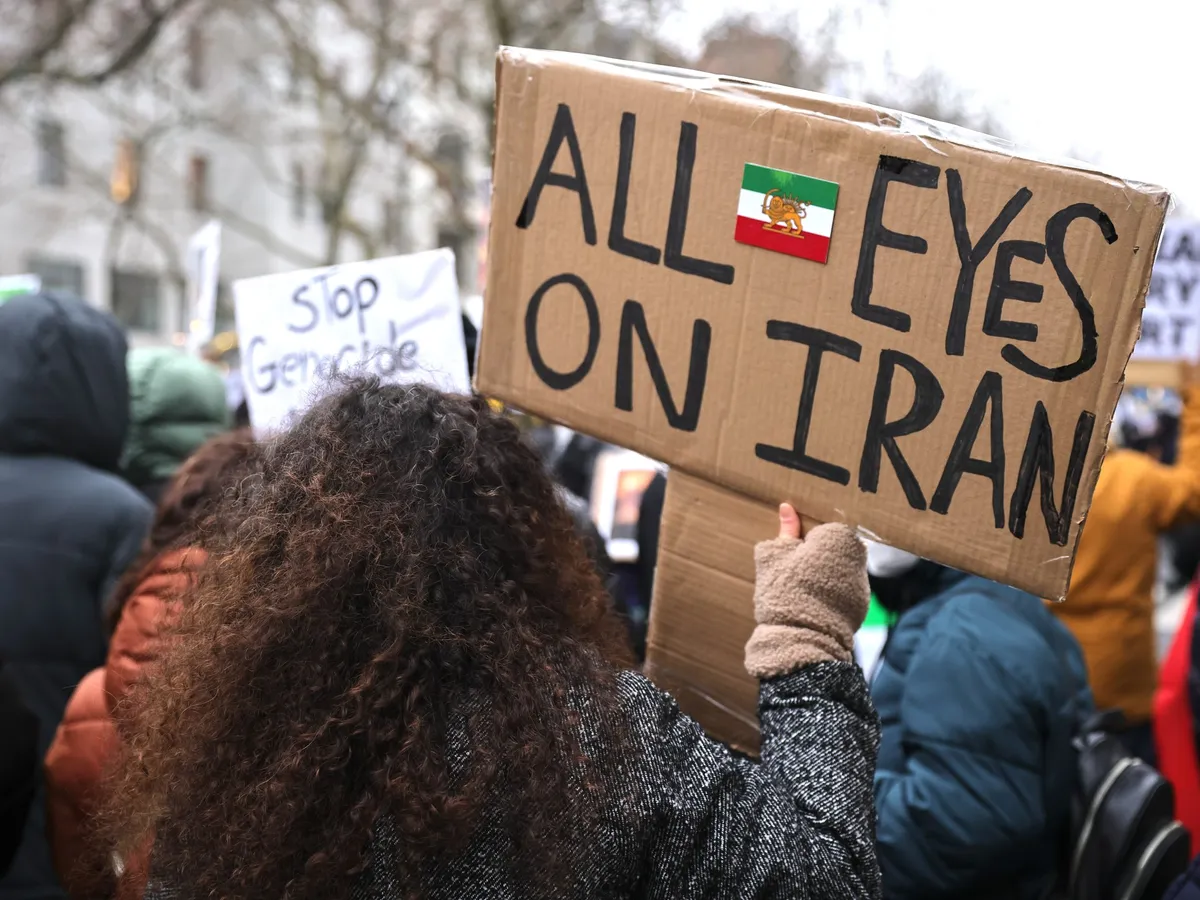
EXPLAINERFacing the prospect of US strikes, Iran has intensified diplomatic efforts with countries including Turkiye.At a January 24, 2026 demonstration in Berlin under the slogan 'Help Iran. No Business With The Mullahs', a protester holds a banner reading 'All eyes on Iran', after officials admitted more than 5,000 people were killed in the recent nationwide crackdown on protests [Omer Messinger/Getty Images]Published On 30 Jan 2026Amid rising tensions and growing fears of a military clash between Iran and the United States, a series of nations – especially in Iran’s extended neighbourhood – are engaged in hectic diplomacy aimed at avoiding an all-out war.We look at the various diplomatic efforts taking place, and whether they could succeed in defusing tensions.What is happening between Iran and the US?On Wednesday, US President Donald Trump renewed threats of US military intervention in Iran if it does not reach a deal to curb its nuclear programme and ballistic missile capacity.“A massive Armada is heading to Iran,” Trump wrote in a post on his Truth Social platform. The US fleet of warships includes the nuclear-powered aircraft carrier USS Abraham Lincoln.US Central Command (CENTCOM) confirmed in a post on X on Monday that the USS Abraham Lincoln had been sent to the Middle East to “promote regional security and stability”.The vessel, which departed its home port of San Diego, California in November and had been operating in the South China Sea until last week, is one of the US Navy’s largest warships.Trump first issued a threat to militarily intervene in Iran earlier this month during protests against the country’s government. The protests had begun in late December 2025 over the country’s worsening economic conditions. They escalated into a broader challenge to the country’s clerical leadership, which has been in power since the 1979 Islamic revolution.Trump initially backed down from his threat to attack Iran after receiving assurances that protesters would not be executed, he said. But he has since renewed them.Tehran has stated that it is not willing to negotiate under the threat of attack and has signalled its readiness to defend Iran.“Tehran’s priority is currently not to negotiate with the US, but to have 200 percent readiness to defend our country,” Kazem Gharibabadi, a senior member of the Iranian negotiating team, told Iranian state media on Wednesday.He said messages had been passed to the US through intermediaries, but stated that even if conditions became suitable for talks, Iran would remain fully prepared to defend itself. He pointed out that the US launched an assault on its nuclear facilities in June last year – just as negotiations were about to begin to end its 12-day war with Israel.During that conflict, there were few Israeli casualties, but Iranian missiles did manage to breach Israel’s much-vaunted “Iron Dome” defence system, causing alarm in Tel Aviv and Washington.On Thursday, the Iranian army announced it had added 1,000 new “strategic” drones to its forces, including one-way attack drones and combat, reconnaissance and cyber-capable systems designed to strike fixed or mobile targets on land, in the air and at sea.“Proportionate to the threats facing us, the agenda of the army includes maintaining and improving strategic advantages for fast combat and a decisive response to any aggression,” army commander Amir Hamati said in a short statement.At the same time, however, Iran is pursuing diplomatic channels in a bid to de-escalate the situation.What diplomatic efforts are taking place?TurkiyeIran’s foreign minister, Abbas Araghchi, arrived in Istanbul to hold high-level talks with Turkish Foreign Minister Hakan Fidan and President Recep Tayyip Erdogan on Friday.While announcing Araghchi’s meetings with the Turkish leaders, Esmaeil Baghaei, Iranian Ministry of Foreign Affairs spokesperson, said that Tehran aims to “constantly strengthen ties with neighbours based on shared interests”.While the exact agenda for these discussions has not been revealed, the talks come amid Trump’s threats of military intervention in Iran.Araghchi’s meeting will take place while similar discussions between Iran’s leadership and representatives of other countries continue.PakistanOn Thursday, Araghchi spoke with Pakistani Foreign Minister Ishaq Dar on a phone call.According to a news release by the Iranian government, Dar reiterated Islamabad’s position on respecting state sovereignty, rejecting interference in other countries’ internal affairs and condemning “terrorism”.On the same day, Pakistani Prime Minister Shehbaz Sharif spoke to Iranian President Masoud Pezeshkian. Sharif wrote in an X post that the two leaders reaffirmed their commitment to further strengthening ties between Pakistan and Iran.EgyptEgypt’s Ministry of Foreign Affairs said on Wednesday that its top diplomat, Badr Abdelatty, had spoken with Araghchi and US Special Envoy to the Middle East Steve Witkoff separately in a bid to “work toward achieving calm, in order to avoid the region slipping into new cycles of instability”.Saudi Arabia and Gulf nationsOn Tuesday, Saudi Arabia’s Crown Prince Mohammed bin Salman held a call with Iran’s President Pezeshkian and said the kingdom would “not allow its airspace or territory to be used for any military actions against Iran or for any attacks from any party, regardless of their origin”.The United Arab Emirates (UAE) has made similar pledges not to allow a US strike on Iran from its territories or airspace.IndiaOn Wednesday, India’s deputy national security adviser, Pavan Kapoor, travelled to Tehran for meetings with Iran’s Supreme National Security Council Secretary Ali Larijani and Deputy for International Affairs Ali Bagheri Kani.Last week, India voted against a United Nations Human Rights Council (UNHRC) resolution condemning Iran for its crackdown on protesters.Twenty-five members of the council voted in favour of the resolution, while 14 abstained. Seven, including India, China, Vietnam and Cuba, opposed it.ChinaBesides also voting against the UNHRC resolution last week, China made a show of support for Iran at the UN on Wednesday this week.Fu Cong, China’s permanent representative to the United Nations, told an open debate on the Middle East: “The use of force cannot solve problems. Any acts of military adventurism will only push the region into an abyss of unpredictability.” He urged all countries to abide by the United Nations Charter and to oppose interference in the internal affairs of other countries.“China hopes that the United States and other relevant parties will heed the call of the international community and regional countries, do more things that are conducive to peace and stability in the Middle East, and avoid exacerbating tensions and adding fuel to the fire,” he said.RussiaOn Thursday, Russia said there was room for negotiation between the US and Iran.“We continue to call on all parties to exercise restraint and to renounce any use of force to resolve issues. Clearly, the potential for negotiations is far from exhausted … We must focus primarily on negotiating mechanisms,” Kremlin spokesperson Dmitry Peskov told reporters.“Any forceful actions can only create chaos in the region and lead to very dangerous consequences in terms of destabilising the security system throughout the region.”What about the West?Western leaders have largely focused on condemning Iran’s crackdown on protesters this month and have mostly held back from making any major pronouncements on an impending war between Iran and the US.
SRCAl Jazeera
LANGEN
LEANCenter
WORDS1 160
ENT10
FRI · 2026-01-30 · 14:30 GMTBRIEF NSR-2026-0130-11962
NSR-2026-0130-11962News Report·EN·Diplomatic
US-Iran tensions: The diplomatic scramble to prevent a war
In January 2026, heightened tensions between the US and Iran have spurred a flurry of diplomatic activity to prevent military conflict. US President Trump has threatened military intervention if Iran doesn't curb its nuclear program, deploying a naval armada including the USS Abraham Lincoln to the Middle East.
Sarah ShamimAl JazeeraFiled 2026-01-30 · 14:30 GMTLean · CenterRead · 5 min
Al JazeeraFIG 01
Reading time
5min
Word count
1 160words
Sources cited
4cited
Entities identified
10entities
Quality score
100%
§ 01
Briefing Summary
AI-generatedNEWSAR · AI
In January 2026, heightened tensions between the US and Iran have spurred a flurry of diplomatic activity to prevent military conflict. US President Trump has threatened military intervention if Iran doesn't curb its nuclear program, deploying a naval armada including the USS Abraham Lincoln to the Middle East. These threats followed protests in Iran that began in late December 2025 due to worsening economic conditions and evolved into challenges against the government. Iran, however, refuses to negotiate under threat and asserts its readiness to defend itself. Various nations, particularly those in Iran's region, are engaging in diplomatic efforts to de-escalate the situation. Iran has communicated with the US through intermediaries, prioritizing national defense over negotiations.
Confidence 0.90Sources 4Claims 5Entities 10
§ 02
Article analysis
Model · rule-basedFraming
Diplomatic
National Security
Tone
Mixed Tone
AI-assessed
CalmNeutralAlarmist
Factuality
0.70 / 1.00
Factual
LowHigh
Sources cited
4
Well sourced
FewMany
§ 03
Key claims
5 extracted01
Tehran’s priority is currently not to negotiate with the US, but to have 200 percent readiness to defend our country.
quoteKazem Gharibabadi, a senior member of the Iranian negotiating team
Confidence
1.00
02
Iran launched an assault on its nuclear facilities in June last year – just as negotiations were about to begin to end its 12-day war with Israel.
factualArticle's own claim
Confidence
1.00
03
Tehran has stated that it is not willing to negotiate under the threat of attack.
factualArticle's own claim
Confidence
1.00
04
The USS Abraham Lincoln had been sent to the Middle East to “promote regional security and stability”.
quoteUS Central Command (CENTCOM)
Confidence
1.00
05
US President Donald Trump renewed threats of US military intervention in Iran.
factualArticle's own claim
Confidence
1.00
§ 04
Full report
5 min read · 1 160 words§ 05
Entities
10 identifiedKey playerOppositionContextPositiveNeutralNegative
§ 06
Keywords & salience
10 termsus-iran tensions
1.00
diplomatic efforts
0.80
military intervention
0.70
nuclear programme
0.60
donald trump
0.60
protests
0.50
ballistic missile
0.50
regional security
0.50
negotiations
0.40
middle east
0.40
§ 07
Topic connections
Interactive graph Network visualization showing 51 related topics
View Full Graph Person Organization Location Event|Click node to navigate|Edge numbers = shared articles