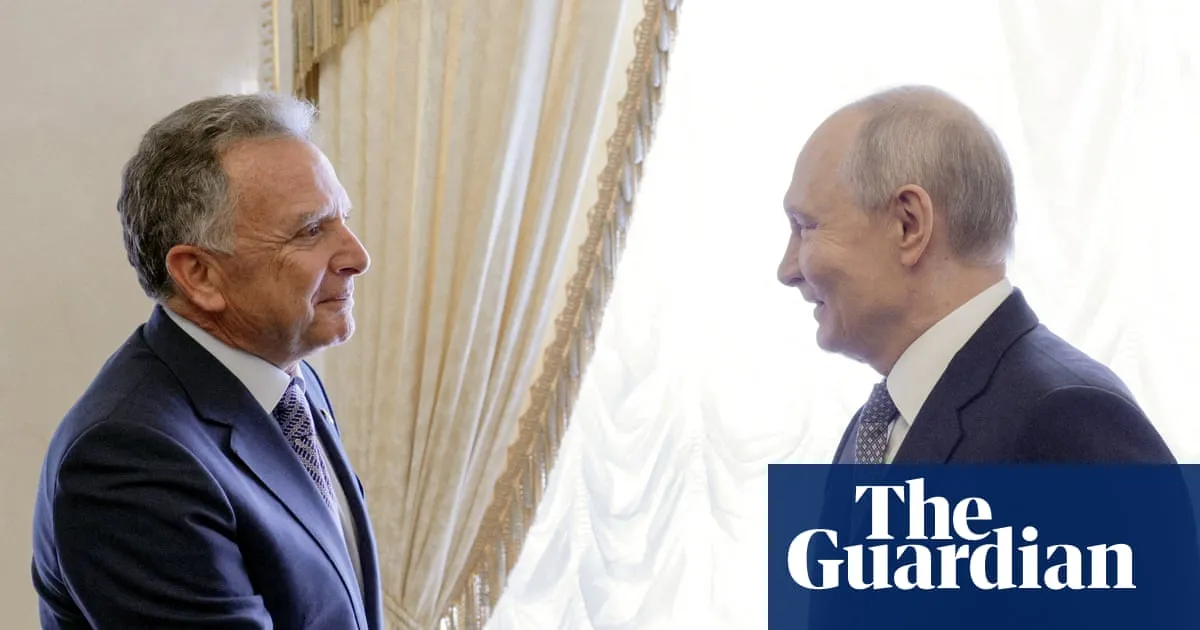
Vladimir Putin ordered the release of an American from a Russian jail as he met Donald Trump’s envoy Steve Witkoff in St Petersburg on Wednesday for fresh talks on ending the Ukraine" class="entity-link entity-event" data-entity-id="142386" data-entity-type="event">war in Ukraine, amid increasingly close relations between Moscow and Washington.Trump had previously asked Putin to free Stephen Hubbard, a 74-year-old former teacher who had spent more than four years in Russian jails on charges of fighting as a mercenary for Ukraine.His release appeared to be Moscow’s latest calculated move to bring Trump further into line with Putin’s position on Ukraine, while offering the US president a diplomatic victory ahead of the midterm elections.Hubbard was released unilaterally by Russia, rather than as part of a prisoner exchange as has often been the case with previous releases of Americans held in the country.Writing on social media after the release was announced, Trump said it followed a request he had made “directly” to Putin last week.He wrote on Truth Social: “The United States, out of respect for President Trump, was not required to give anything in return – an unprecedented situation for Russia … There was no ‘swap’ necessary for this release.”Stephen Hubbard in court in Moscow in October 2024. Photograph: Moscow city court press service/APWitkoff, meanwhile, lavished praise on Putin during their meeting at the grand Constantine Palace in St Petersburg, describing the Russian president as a humanitarian.“You talk so much about my president, President Trump, being a humanitarian. You are a humanitarian also, sir, and I salute that,” Witkoff told Putin. He also conveyed Trump’s thanks for a controversial deal to resume Russian diesel exports to the US.The warmth of Witkoff’s remarks stood in stark contrast to the increasingly hostile rhetoric directed at Volodymyr Zelenskyy by senior US officials, most notably Trump, who has called for the Ukrainian president to resign and portrayed him as the main obstacle to peace.Witkoff travelled to Russia from Oslo, where he had met Zelenskyy and European leaders a day earlier in an attempt to inject momentum into stalled negotiations, with Russia’s full-scale invasion of Ukraine now in its fifth year.Witkoff told Putin during a televised portion of their meeting: “We’ve brought some papers. It’s really some ideas, some sort of peace deal between Russia and Ukraine, and you’ll read that at your leisure.”The visit was Witkoff’s ninth to Russia since Trump tasked him with brokering an end to the war.‘You are a humanitarian, sir, and I salute that,’ Witkoff told Putin during their meeting. Photograph: Kristina Solovyova/Pool Sputnik Kremlin/APThe latest rupture in relations between Washington and Kyiv was triggered by Trump’s surprise decision to lift sanctions on Russian diesel as part of a deal with Putin, followed by his call for Zelenskyy to be replaced after Ukraine refused to halt its strikes on Russian oil refineries.Kyiv has since complained of disruptions to US intelligence-sharing and restrictions on its access to Starshield, the military-grade version of Elon Musk’s Starlink satellite network.Zelenskyy said on Tuesday that Washington had resumed providing advance warnings of Russian missile attacks after his meeting with Witkoff in Oslo.But Ukraine continues to face restrictions on Starshield, although it remains unclear who ordered them. The Wall Street Journal reported on Tuesday that Musk had personally ordered the slowdown, while Reuters, citing sources, said the directive had come from inside the White House.During Wednesday’s meeting with Witkoff, Putin thanked Trump and his wife, Melania, for “their attention to efforts to end the war”. Witkoff, meanwhile, said there was “some degree of momentum” behind efforts to reach a peace deal, describing the talks in Oslo as “constructive”.Yet there are few signs of an imminent breakthrough. Despite repeated Ukrainian calls for a ceasefire, including a halt to attacks on energy infrastructure, Moscow has given little indication that it intends to end its bombardment of Ukraine as winter approaches, apparently confident that continued pressure will help it extract greater concessions from Kyiv.The Russian leader remains intent on sticking to his maximalist war aims, including his demand for full Russian control of Ukraine’s eastern Donetsk region.Putin also sought to emphasise the prospects for closer economic ties between Russia and the US once the war ends, suggesting that Moscow could significantly increase its exports of fertilisers to the American market.Russian officials said the first tanker carrying diesel to the US would depart on Thursday as part of an initial shipment of about 300,000 tonnes.Energy analysts and traders have questioned whether Trump’s agreement to temporarily resume Russian diesel imports will deliver meaningful relief to American consumers ahead of the midterm elections, arguing that the volumes involved are too small to significantly ease the global supply squeeze.
SRCThe Guardian - World News
LANGEN
LEANCenter-Left
WORDS767
ENT12
WED · 2026-10-21 · 11:50 GMTBRIEF NSR-2026-1021-120718
NSR-2026-1021-120718News Report·EN·Political Strategy
Putin orders release of jailed American as he meets Trump envoy for Ukraine talks
Russian President Vladimir Putin ordered the release of American Stephen Hubbard from a Russian jail during a meeting with Donald Trump's envoy, Steve Witkoff, in St. Petersburg.
Pjotr SauerThe Guardian - World NewsFiled 2026-10-21 · 11:50 GMTLean · Center-LeftRead · 4 min
The Guardian - World NewsFIG 01
Reading time
4min
Word count
767words
Sources cited
3cited
Entities identified
12entities
Quality score
100%
§ 01
Briefing Summary
AI-generatedNEWSAR · AI
Russian President Vladimir Putin ordered the release of American Stephen Hubbard from a Russian jail during a meeting with Donald Trump's envoy, Steve Witkoff, in St. Petersburg. Hubbard, a 74-year-old former teacher, had been held for over four years on mercenary charges. Trump had previously requested Hubbard's release directly from Putin. Witkoff praised Putin as a "humanitarian" and presented him with ideas for a peace deal between Russia and Ukraine. The release occurred amidst discussions on ending the war in Ukraine and follows a controversial deal for Russian diesel exports to the US. Witkoff's visit aimed to inject momentum into stalled negotiations, though prospects for an imminent breakthrough remain uncertain.
Confidence 0.90Sources 3Claims 5Entities 12
§ 02
Article analysis
Model · rule-basedFraming
Political Strategy
Diplomatic
Tone
Mixed Tone
AI-assessed
CalmNeutralAlarmist
Factuality
0.70 / 1.00
Factual
LowHigh
Sources cited
3
Well sourced
FewMany
§ 03
Key claims
5 extracted01
Witkoff conveyed Trump’s thanks for a deal to resume Russian diesel exports to the US.
factual
Confidence
1.00
02
Witkoff described Putin as a humanitarian during their meeting.
quoteSteve Witkoff
Confidence
1.00
03
Hubbard was released unilaterally by Russia, rather than as part of a prisoner exchange.
factual
Confidence
1.00
04
Trump had previously asked Putin to free Stephen Hubbard, a 74-year-old former teacher, on charges of fighting as a mercenary for Ukraine.
factual
Confidence
1.00
05
Vladimir Putin ordered the release of an American from a Russian jail as he met Donald Trump’s envoy Steve Witkoff for talks on ending the war in Ukraine.
factual
Confidence
1.00
§ 04
Full report
4 min read · 767 words§ 05
Entities
12 identifiedKey playerOppositionContextPositiveNeutralNegative
People5
Locations6
§ 06
Keywords & salience
10 termsukraine war
1.00
putin
0.90
trump envoy
0.90
prisoner release
0.80
peace talks
0.80
us-russia relations
0.70
stephen hubbard
0.60
diplomatic victory
0.50
humanitarian
0.40
diesel exports
0.40
§ 07
Topic connections
Interactive graph Network visualization showing 51 related topics
View Full Graph Person Organization Location Event|Click node to navigate|Edge numbers = shared articles