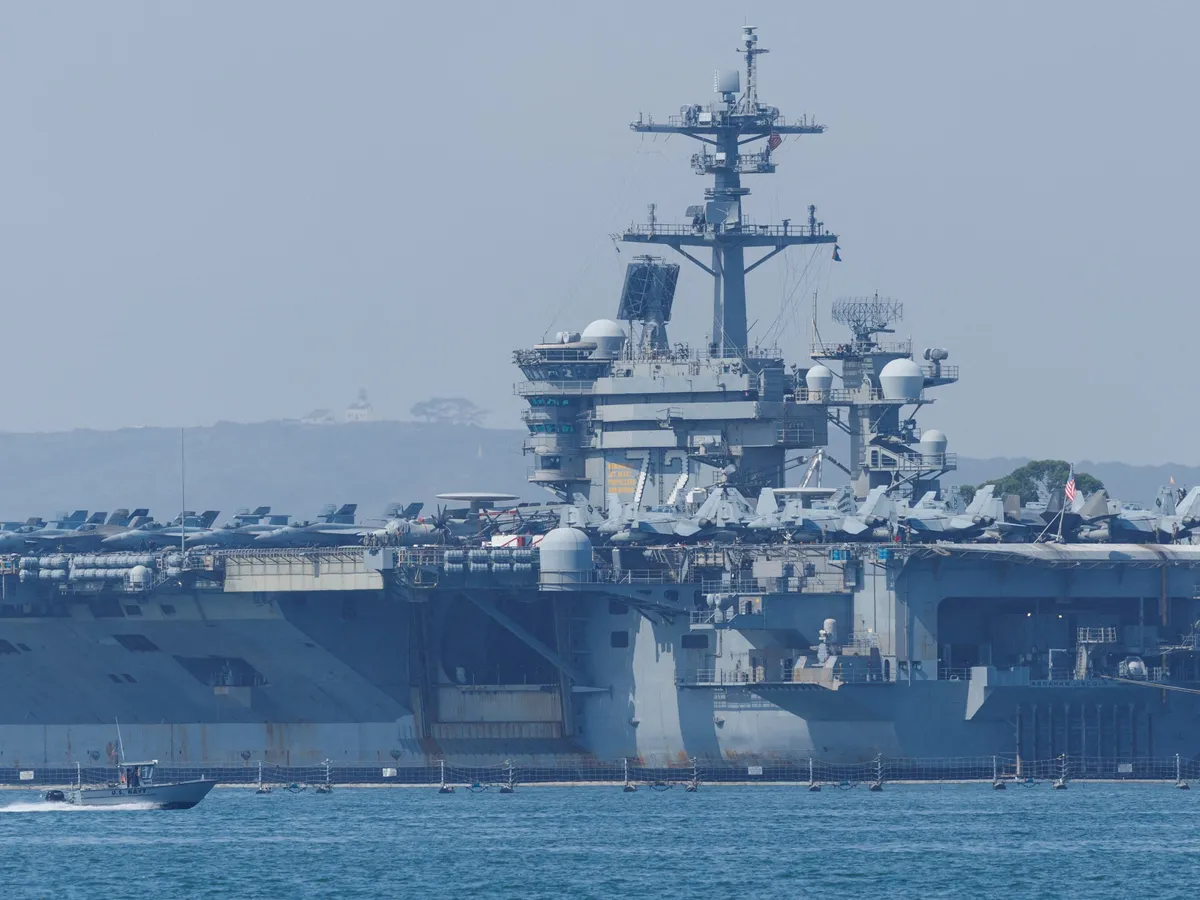
EXCLUSIVEProposals include requirements for Iran to halt uranium enrichment for three years and transfer stock to a third country, Al Jazeera has learned.The USS Abraham Lincoln (CVN-72), a Nimitz-class nuclear-powered aircraft carrier currently positioned in the Arabian Sea, is pictured at Naval Air Station North Island in San Diego, California, on August 11, 2025 [File: Mike Blake/Reuters]Published On 4 Feb 2026Mediators from Qatar, Turkiye and Egypt have presented Iran and the United States with a framework of key principles to be discussed in talks on Friday this week, including a commitment by Iran to significantly limit its uranium enrichment, two sources familiar with the negotiations have told Al Jazeera.Key points in the proposed framework also include restrictions on the use of ballistic missiles and the arming of Iran’s allies in the region, according to the sources, who include a senior diplomat who asked to remain anonymous due to the sensitive nature of the talks.Recommended Stories list of 3 itemslist 1 of 3Will Iran and Israel go to war?list 2 of 3Trump says talks with Iran continuing as US shoots down an Iranian dronelist 3 of 3What would be the impact of a US attack on Iran?end of listAn Iranian source has separately told Al Jazeera that the talks, which US special envoy Steve Witkoff and Iranian Foreign Minister Abbas Araghchi are expected to attend, will take place in Oman and not Turkiye as previously planned.This slim window for diplomacy comes as the region braces for a potential US attack on Iran after President Donald Trump ordered forces to amass in the Arabian Sea following a violent crackdown by Iran on protesters last month.What is in the proposals?Under the proposed framework for an agreement, Iran would commit to zero enrichment of uranium for three years. After that, it would agree to limit enrichment of uranium to below 1.5 percent.Its current stock of highly enriched uranium – including about 440kg (970lb) that has been enriched to 60 percent – would be transferred to a third country.The proposed framework goes beyond Iran’s nuclear programme with mediators proposing that Iran should agree not to transfer weapons and technologies to its regional, nonstate allies.Tehran would also pledge to not initiate the use of ballistic missiles under this framework. This falls short of a US demand that Iran curb the number and range of its ballistic missiles.A “nonaggression agreement” between Tehran and Washington is also being proposed by the three mediators, one of the sources said.It is not yet known how Washington or Tehran have responded to the proposed framework.For its part, the US has made it clear that any deal must include regulations on Iran’s nuclear programme, missiles and proxies.In the past, Iran has been willing to compromise on nuclear development, including in 2015 when it signed the Joint Comprehensive Plan of Action (JCPOA), a nuclear deal with other countries, including the US, to limit nuclear enrichment in exchange for sanctions relief. Three years later, however, Trump pulled the US out of the agreement.But Tehran has so far refused to talk about limiting its support for nonstate allies in the region and curtailing its ballistic missiles.On Wednesday, Iran was still holding firm to the line that it would “exclusively” discuss the nuclear programme and the lifting of sanctions, the semiofficial Tasnim news agency reported.Defiant toneThe mediators’ framework was presented to the US and Iran just before Witkoff met with Israeli Prime Minister Benjamin Netanyahu and his spy chiefs during a visit to Israel on Tuesday.The US is entering negotiations with significant leverage as Iran faces an unprecedented mix of external and internal pressures.A US aircraft carrier, fighter jets and navy destroyers are now positioned in the Arabian Sea, presenting Tehran with a credible military threat.Meanwhile, Iran has been rocked by nationwide protests in December and January, which culminated in the country’s most brutal episodes of violence in decades.Still, Supreme Leader Ali Khamenei has maintained a defiant tone, and observers remained cautious about whether he would be willing to compromise on key issues, considering the degree of mistrust towards the US in Tehran.Reviving diplomacyThis is not the first time Iranian and US officials have met in a bid to revive diplomacy between the two nations, which have not had diplomatic relations since 1980. In June, US and Iranian officials gathered in the Omani capital, Muscat, to discuss a nuclear agreement, but the process stalled as Israel bombed Iran.The Israeli strikes kicked off a 12-day war, which ended with the US bombing key Iranian nuclear facilities and Iran making a symbolic strike on Al Udeid military base in Qatar, which hosts US forces.Since then, Tehran has claimed it has replenished its stockpile of ballistic missiles and has warned countries it would use them if attacked. Washington is particularly eager to limit Iran’s ballistic missiles because, during the 12-day war, some Iranian missiles succeeded in breaching Israel’s much-vaunted Iron Dome defence system.In the meantime, tensions remained high. On Tuesday, the US shot down an Iranian drone that had come close to the USS Abraham Lincoln aircraft carrier. And on the same day, US officials said Islamic Revolutionary Guard Corps forces had harassed a US-flagged, US-crewed merchant vessel in the Strait of Hormuz, a Gulf waterway critical to global trade.
SRCAl Jazeera
LANGEN
LEANCenter
WORDS871
ENT12
WED · 2026-02-04 · 14:50 GMTBRIEF NSR-2026-0204-13313
NSR-2026-0204-13313News Report·EN·Diplomatic
Mediators propose framework for crucial Iran-US talks this week
Mediators from Qatar, Turkiye, and Egypt have proposed a framework for Iran-US talks scheduled for Friday in Oman. The framework aims to de-escalate tensions amid a potential US attack following Iranian crackdowns on protestors.
Virginia PietromarchiAl JazeeraFiled 2026-02-04 · 14:50 GMTLean · CenterRead · 4 min
Al JazeeraFIG 01
Reading time
4min
Word count
871words
Sources cited
2cited
Entities identified
12entities
Quality score
75%
§ 01
Briefing Summary
AI-generatedNEWSAR · AI
Mediators from Qatar, Turkiye, and Egypt have proposed a framework for Iran-US talks scheduled for Friday in Oman. The framework aims to de-escalate tensions amid a potential US attack following Iranian crackdowns on protestors. Key proposals include Iran halting uranium enrichment for three years, then limiting it to below 1.5 percent, and transferring its current enriched uranium stock to a third country. The framework also suggests Iran agree not to transfer weapons to regional allies or initiate ballistic missile use. A "nonaggression agreement" between Tehran and Washington is also proposed. US special envoy Steve Witkoff and Iranian Foreign Minister Abbas Araghchi are expected to attend the talks.
Confidence 0.90Sources 2Claims 5Entities 12
§ 02
Article analysis
Model · rule-basedFraming
Diplomatic
National Security
Tone
Measured
AI-assessed
CalmNeutralAlarmist
Factuality
0.80 / 1.00
Factual
LowHigh
Sources cited
2
Limited
FewMany
§ 03
Key claims
5 extracted01
Iran would pledge not to initiate the use of ballistic missiles under this framework.
factualAl Jazeera
Confidence
0.90
02
Iran would agree to limit enrichment of uranium to below 1.5 percent after three years.
factualAl Jazeera
Confidence
0.90
03
Mediators proposed Iran halt uranium enrichment for three years and transfer stock to a third country.
factualAl Jazeera
Confidence
0.90
04
A “nonaggression agreement” between Tehran and Washington is being proposed.
factualone of the sources
Confidence
0.80
05
Talks will take place in Oman and not Turkiye as previously planned.
factualIranian source
Confidence
0.80
§ 04
Full report
4 min read · 871 words§ 05
Entities
12 identifiedKey playerOppositionContextPositiveNeutralNegative