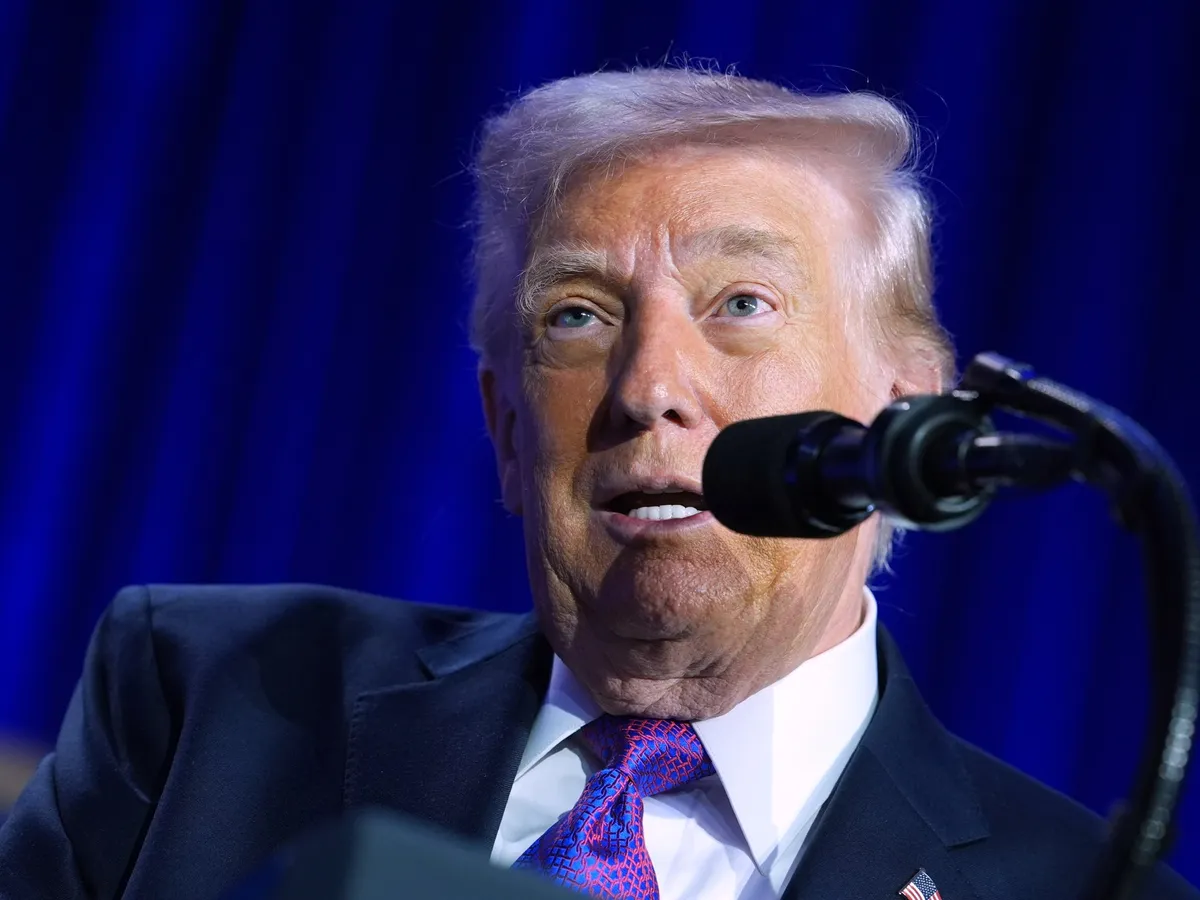
Analysts say US strategy unclear as Trump officials insist on including ballistic missiles, regional ‘proxies’ in talks.United States President Donald Trump speaks in Washington, DC, the US [File: Evan Vucci/The Associated Press]Published On 6 Feb 2026Washington, DC – The administration of United States President Donald Trump is entering the latest round of talks with Iran with a list of maximalist demands, even as their wider strategy remains unclear, analysts have told Al Jazeera.The talks in Muscat, Oman, on Friday are the first since the US attacked Iran’s nuclear facilities in June. They mark the latest chapter in US-Iran relations during Trump’s second term, which initially saw the president seek a new agreement on Iran’s nuclear programme, before those talks were derailed by Israel’s 12-day war and the subsequent US strikes.Recommended Stories list of 3 itemslist 1 of 3Rubio: US ready to talk with Iran, ‘not sure’ a deal can be reachedlist 2 of 3Some in Israel question its influence over US as Iran war decision nearslist 3 of 3US-Iran nuclear talks set for Oman on Friday, Tehran confirmsend of listRecent months have seen deadly anti-government protests spread across Iran as Trump repeatedly threatened more US military intervention and tightened crippling sanctions.The US president has since surged a multibillion-dollar “armada” of US military assets off the coast of Iran, following a playbook that preceded both the previous strikes on Iran as well as the US abduction of Venezuelan leader Nicolas Maduro on January 3.“I think that the US thinks that Iran is weakened, so this is the opportune time for going in with maximalist demands to get the most concessions that they can get,” Sina Azodi, the director of Middle East Studies at George Washington University in Washington, DC, told Al Jazeera.Those demands include not only staunching Iran’s nuclear programme, but seeking limits on its ballistic missile programme and ending support for so-called regional “proxies”. Reports have indicated the expanded agenda pushed by the Trump administration repeatedly threatened to derail the talks, which are set to include Trump’s special envoy Steve Witkoff, Trump’s son-in-law Jared Kushner, and Iranian Foreign Minister Abbas Araghchi.US Secretary of State Marco Rubio on Wednesday said the US was “ready for talks”.“In order for talks to actually lead to something meaningful, they will have to include the range of their ballistic missiles, their sponsorship of terror organisations, and the treatment of their own people,” Rubio told reporters.Trump, meanwhile, again threatened Iran in an NBC News interview on Wednesday, saying Iranian Supreme Leader Ali Khamenei should be “very worried”. However, he also recently appeared to present more narrow objectives for the talks.Last week, Trump told reporters he wanted “two things” from Iran: “Number one, no nuclear. And number two, stop killing protesters.”On Thursday, White House spokesperson Karoline Leavitt again renewed the threat.“While these negotiations are taking place, I would remind the Iranian regime that the president has many options at his disposal, aside from diplomacy, as the commander-in-chief of the most powerful military in the history of the world,” she told reporters.What is the US strategy?Throughout Trump’s second term, his administration has pursued a mercurial foreign policy strategy, described by some analysts as a “madman theory” and others as mad-dash. That unpredictability has hung over Friday’s talks.The administration struck Iran on June 22 after five rounds of talks in Oman, during which Witkoff held an in-person meeting with Araghchi. The attacks came after a two-month deadline imposed by Trump for Iran to halt nuclear enrichment passed, even as more talks were scheduled.Tehran has for decades insisted its nuclear programme is for civilian purposes and had previously agreed to curtail enrichment in exchange for sanctions relief under the 2015 Joint Comprehensive Plan of Action (JCPOA), from which Trump withdrew in 2018.“It’s unclear whether [US goals] are going to be limited to the nuclear issue, as the president says, or much more comprehensive demand for full capitulation, as Secretary Rubio suggests,” Ali Vaez, the Iran Project director at the International Crisis Group, told Al Jazeera.“If past is prelude, the US is going to walk into these talks without a negotiating strategy…and it would be a set of moving goalposts depending on what the Iranians are willing to put on the table,” he said.In one scenario, Vaez said, Trump could use the talks to find an “off-ramp” to his current military posturing and threats to intervene in support of protesters in Iran. Demonstrations have since been stifled by the Iranian authorities, he noted, and any military escalation could spark not just a regional security crisis, but a global economic crisis felt in the US.But Trump continues to be surrounded by several officials, including Rubio, likely to push back against anything seen as a concession at a time when the administration sees Iran’s strength as being diminished.“I think any deal that will benefit the Islamic Republic could be perceived in Washington as saving a regime that is on the ropes,” Vaez said. “That is unattractive.”If the administration does hold onto its hard line – particularly on its ballistic missile – it is likely to find little cooperation, despite Iran’s desire to avoid further military action, George Washington University’s Azodi explained.While Tehran may be open to codifying some range limits on its ballistic missile programme, further restrictions, including a stockpile reduction, would likely be a non-starter, he said.“The strongest deterrent, and the only deterrent that Iran has right now is its missile programme,” he said. “Once that one is taken care of, Iran will be vulnerable to future Israeli attacks. Basically, it will lose its sovereignty.”“That is the brightest red line.”Regional influenceFriday’s meeting comes amid calls for diplomatic de-escalation from Gulf countries, which have repeatedly warned of the regional impact of a renewed conflict.There are currently eight permanent US military bases located across Bahrain, Egypt, Iraq, Israel, Jordan, Kuwait, Qatar, Saudi Arabia, Syria and the United Arab Emirates. Following the US strike on Iran last year, Iran attacked Al Udeid airbase in Qatar, a major non-NATO US ally.Khamenei has warned Washington that any attack on his country would result in a “regional war”. Earlier this week, the US military shot down an Iranian drone in the Persian Gulf and subsequently claimed Iranian boats “threatened” a US-flagged merchant ship in the Strait of Hormuz, further raising the prospect of military entanglement.Meanwhile, US envoy Witkoff met earlier this week with Israeli Prime Minister Benjamin Netanyahu, who has repeatedly pressed for military action against Iran while subverting diplomatic efforts. Netanyahu warned Witkoff to remain sceptical of any Iranian commitments, Reuters news agency reported.Khalil Jahshan, the executive director of the Arab Center Washington, DC, told Al Jazeera that the US posture going into the talks shows a “synchronisation of positions” with the Israeli government, which has long viewed Iran’s ballistic programme as one of its most significant regional targets.Jahshan said the talks may be “superficial argumentation” on the part of the US “to diffuse the objections from Arab allies”, but he did not see them as likely to divert another US or Israeli attack. In turn, he saw little hope of Iran acquiescing.“There is no doubt [Iran] is exhausted because of the sanctions. It’s exhausted because of the domestic unrest,” he said.“It’s exhausted because of several regional setbacks and would like to avert a US-Israeli attack on Iran. But at the same time, I don’t think it is necessarily responsive to these spurts of chaotic semi-diplomatic threats.”Negar Mortazavi, a senior fellow at the Center for International Policy, also acknowledged there is a camp inside of Iran that “believes the negotiations are a ruse and that the Trump administration’s ultimate goal is military attacks and regime change”.
SRCAl Jazeera
LANGEN
LEANCenter
WORDS1 269
ENT12
FRI · 2026-02-06 · 04:55 GMTBRIEF NSR-2026-0206-13809
NSR-2026-0206-13809News Report·EN·Political Strategy
Trump’s ‘maximalist demands’ for Iran put talks in Oman on uncertain ground
Talks between the US and Iran are set to resume in Muscat, Oman, on Friday, following a period of heightened tensions including US strikes on Iranian nuclear facilities in June. The Trump administration is reportedly entering these talks with "maximalist demands" that extend beyond Iran's nuclear program.
Joseph StepanskyAl JazeeraFiled 2026-02-06 · 04:55 GMTLean · CenterRead · 6 min
Al JazeeraFIG 01
Reading time
6min
Word count
1 269words
Sources cited
4cited
Entities identified
12entities
Quality score
100%
§ 01
Briefing Summary
AI-generatedNEWSAR · AI
Talks between the US and Iran are set to resume in Muscat, Oman, on Friday, following a period of heightened tensions including US strikes on Iranian nuclear facilities in June. The Trump administration is reportedly entering these talks with "maximalist demands" that extend beyond Iran's nuclear program. These demands include limiting Iran's ballistic missile program and ending support for regional proxies. Analysts suggest the US believes Iran is weakened, creating an opportunity to extract significant concessions. The US delegation includes special envoy Steve Witkoff and Jared Kushner, while Iran will be represented by Foreign Minister Abbas Araghchi. Secretary of State Marco Rubio stated the US is ready to talk, but any meaningful agreement must address ballistic missiles and support for terrorism.
Confidence 0.90Sources 4Claims 5Entities 12
§ 02
Article analysis
Model · rule-basedFraming
Political Strategy
National Security
Tone
Measured
AI-assessed
CalmNeutralAlarmist
Factuality
0.70 / 1.00
Factual
LowHigh
Sources cited
4
Well sourced
FewMany
§ 03
Key claims
5 extracted01
Trump wants “no nuclear” and to “stop killing protesters” from Iran.
quoteDonald Trump
Confidence
1.00
02
Trump threatened Iranian Supreme Leader Ali Khamenei should be “very worried”.
quoteDonald Trump
Confidence
1.00
03
US Secretary of State Marco Rubio said the US was “ready for talks”.
quoteMarco Rubio
Confidence
1.00
04
The US attacked Iran’s nuclear facilities in June.
factualAl Jazeera
Confidence
1.00
05
Trump officials insist on including ballistic missiles, regional ‘proxies’ in talks.
factualAnalysts
Confidence
0.90
§ 04
Full report
6 min read · 1 269 words§ 05
Entities
12 identifiedKey playerOppositionContextPositiveNeutralNegative
People6
§ 06
Keywords & salience
9 termsus-iran relations
0.90
maximalist demands
0.80
nuclear programme
0.70
ballistic missiles
0.70
oman talks
0.60
regional proxies
0.60
sanctions
0.50
trump administration
0.50
us military intervention
0.50
§ 07
Topic connections
Interactive graph Network visualization showing 51 related topics
View Full Graph Person Organization Location Event|Click node to navigate|Edge numbers = shared articles