2 hours agoTabby WilsonBBC NewsEPAUS President Donald Trump has said he could impose additional tariffs on countries that continue to trade with Iran, in an executive order signed on Friday. The order does not specify the rate that could be imposed, but uses 25% as an example, and says it will apply to goods imported into the US from any nation that "directly or indirectly purchases, imports, or otherwise acquires any goods or services from Iran".Trump has not directly commented on the order, but reiterated "no nuclear weapons" for Iran when speaking from Air Force One on Friday night.It comes amid ongoing talks between senior US and Iranian officials in Oman, following several weeks of threats from both sides. Trump threatened a 25% tariff of countries doing business with Iran earlier this year, in a post to Truth Social. On 12 January, he wrote: "Effective immediately, any country doing business with the Iran" class="entity-link entity-organization" data-entity-id="8614" data-entity-type="organization">Islamic Republic of Iran will pay a tariff of 25% on any and all business being done with the United States of America."At the time, no further detail was provided on how the tariffs would work in practice.The White House said that this latest executive order reaffirmed the "ongoing national emergency with respect to Iran", and noted that the president may modify it of circumstances change. It read: "The President is holding Iran accountable for its pursuit of nuclear capabilities, support for terrorism, ballistic missile development, and regional destabilization that endanger American security, allies, and interests." There has been no immediate comment from Iran.Starting in Oman on Friday, the ongoing talks are the first involving US and Iranian officials since last June, when the US bombed Iran's three main nuclear facilities.The Iranian delegation was led by Iranian Foreign Minister Abbas Araghchi, while the US was represented by special envoy Steve Witkoff and Trump's son-in-law, Jared Kushner.Speaking to reporters onboard Air Force One, Trump said Friday's talks were "very good", and that Iran "looks like it wants to make a deal very badly". "If they don't make a deal, the consequences are very steep," the president said, adding that there will be another meeting early next week. Oman's Foreign Minister Badr Albusaidi, who mediated the discussions, said they had been "useful to clarify both Iranian and American thinking and identify areas for possible progress".The president has said he would be prepared to strike the Middle Eastern nation if it refused to reach a deal on its nuclear programme. Iran insists its nuclear programme is entirely peaceful and has repeatedly denied accusations by the US and its allies that it is seeking to develop nuclear weapons.The US has also built up a significant military presence in the region, including what Trump describes as a "massive armada" in response to Iran's violent repression of nationwide anti-government protests last month. Human rights groups have said that many thousands of people were killed in the crackdown, but the full scale of the bloodshed remains unclear due to internet restrictions imposed by the government since 8 January.
SRCBBC News - World
LANGEN
LEANCenter
WORDS503
ENT11
SAT · 2026-02-07 · 01:28 GMTBRIEF NSR-2026-0207-14104
NSR-2026-0207-14104News Report·EN·Economic Impact
Trump signs executive order threatening tariffs for countries trading with Iran
President Trump signed an executive order on Friday threatening tariffs on countries that trade with Iran. The order allows for tariffs, potentially as high as 25%, on goods imported into the US from nations that do business with Iran.
BBC News - WorldFiled 2026-02-07 · 01:28 GMTLean · CenterRead · 3 min
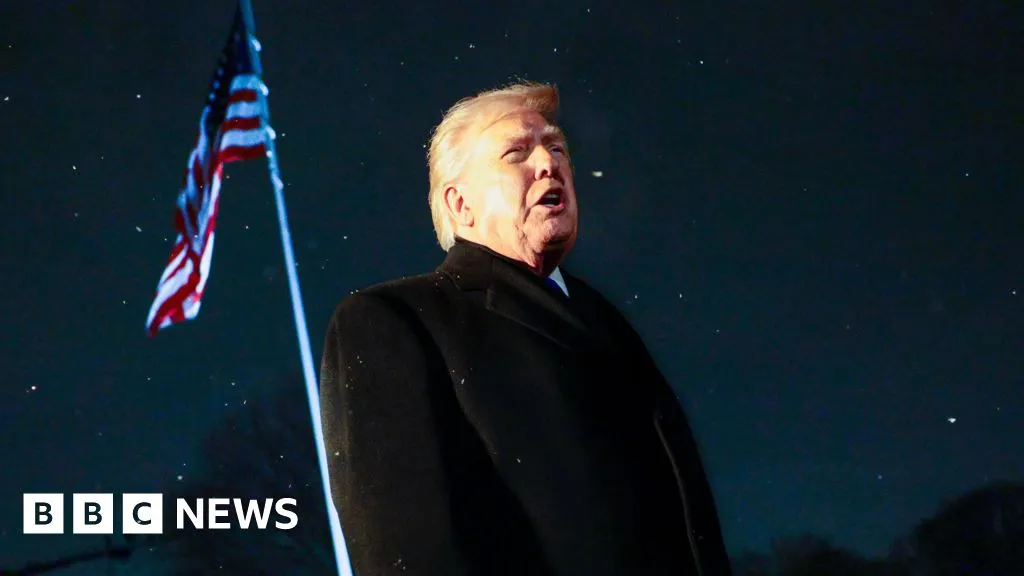
BBC News - WorldFIG 01
Reading time
3min
Word count
503words
Sources cited
7cited
Entities identified
11entities
Quality score
100%
§ 01
Briefing Summary
AI-generatedNEWSAR · AI
President Trump signed an executive order on Friday threatening tariffs on countries that trade with Iran. The order allows for tariffs, potentially as high as 25%, on goods imported into the US from nations that do business with Iran. This action aims to hold Iran accountable for its nuclear ambitions, support for terrorism, and regional destabilization. The order comes amid ongoing talks between US and Iranian officials in Oman, the first such meeting since June. These talks, mediated by Oman, seek to clarify positions and identify areas for progress, with further discussions planned for next week. Trump stated that Iran seems eager to make a deal but faces steep consequences if they don't.
Confidence 0.90Sources 7Claims 5Entities 11
§ 02
Article analysis
Model · rule-basedFraming
Economic Impact
National Security
Tone
Measured
AI-assessed
CalmNeutralAlarmist
Factuality
0.80 / 1.00
Factual
LowHigh
Sources cited
7
Well sourced
FewMany
§ 03
Key claims
5 extracted01
Ongoing talks are the first involving US and Iranian officials since last June.
factualBBC News
Confidence
1.00
02
The White House said the order reaffirmed the 'ongoing national emergency with respect to Iran'.
quoteThe White House
Confidence
1.00
03
Trump threatened a 25% tariff of countries doing business with Iran earlier this year.
factualBBC News
Confidence
1.00
04
The order uses 25% as an example of a tariff rate that could be imposed.
factualBBC News
Confidence
1.00
05
Trump signs executive order threatening tariffs for countries trading with Iran.
factualBBC News
Confidence
1.00
§ 04
Full report
3 min read · 503 words§ 05
Entities
11 identifiedKey playerOppositionContextPositiveNeutralNegative
People5
§ 06
Keywords & salience
8 termsiran
1.00
tariffs
1.00
trade
0.80
executive order
0.70
us relations
0.60
oman talks
0.50
nuclear weapons
0.50
economic sanctions
0.40
§ 07
Topic connections
Interactive graph Network visualization showing 51 related topics
View Full Graph Person Organization Location Event|Click node to navigate|Edge numbers = shared articles