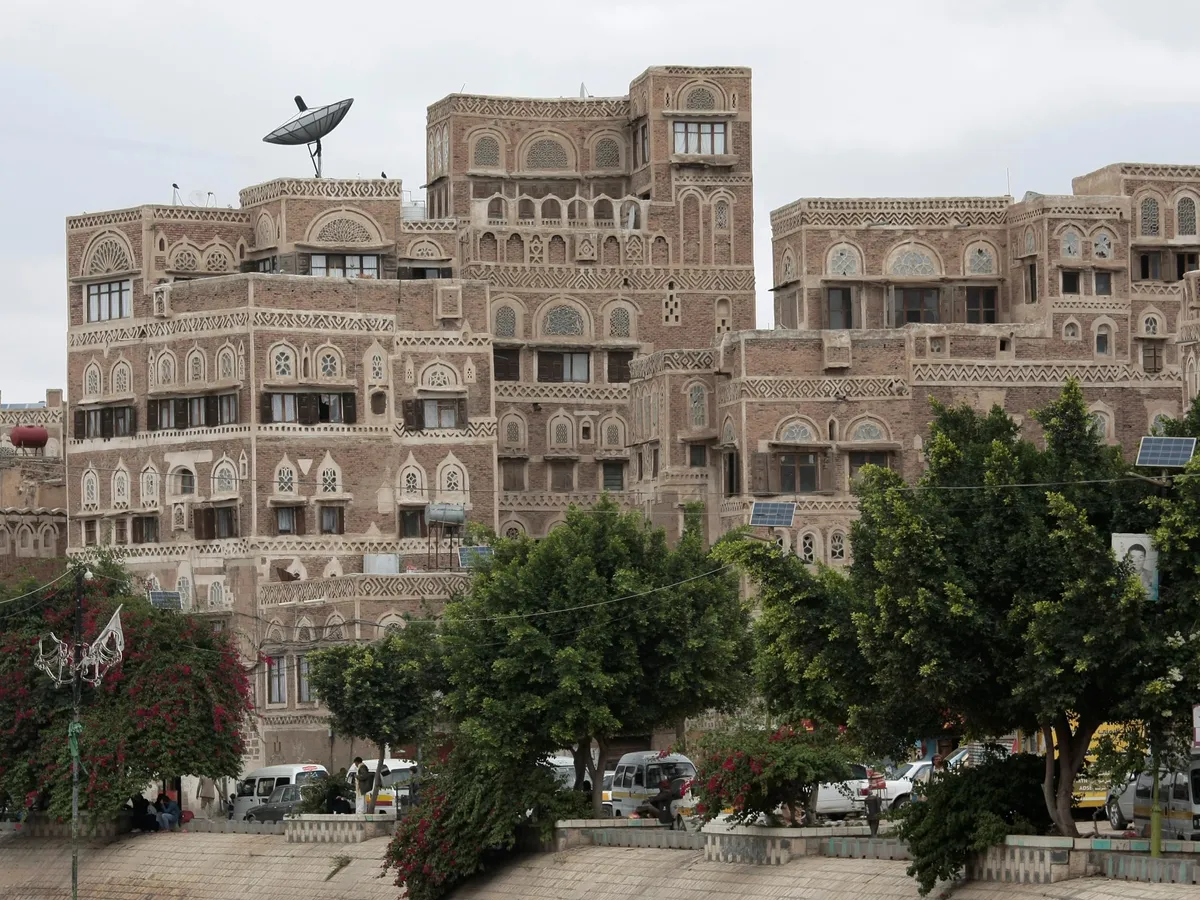
Hope and scepticism as Yemen’s Saudi-backed gov’t announces a new cabinetThe Saudi-backed government announces new 35-member cabinet as it is set to govern a divided nation racked by years of war.One of the many challenges Yemen's new cabinet faces is the country's divisions. The capital, Sanaa, and northern Yemen is under the control of the Houthis while the new cabinet will govern the south [File: Hani Mohammed/AP Photo]Published On 8 Feb 2026Sanaa, Yemen – After weeks of consultations in Riyadh, the Saudi-backed Presidential Leadership Council (PLC), Yemen’s internationally recognised government, has announced a new cabinet, whose members have diverse political and regional affiliations, as part of efforts to govern the divided Arab nation.The move on Friday came weeks after the collapse and dissolution of the Southern Transitional Council (STC) and withdrawal of United Arab Emirates forces from southern Yemen. The UAE-backed southern separatists briefly took over two Yemeni provinces bordering Saudi Arabia, drawing military action from Riyadh. The events have strained ties between the two regional powers.Recommended Stories list of 4 itemslist 1 of 4Who controls Yemen now and why it matterslist 2 of 4Hope flickers as lights return to war-scarred Adenlist 3 of 4Yemen’s crumbling health system leaves patients without treatment optionslist 4 of 4New Yemen government formed with Shaya Mohsin al-Zindani as prime ministerend of listThe cabinet announcement has triggered mixed reactions and a war of words with some seeing a glimmer of hope and a step towards establishing government authority while others view it as a redistribution of power and wealth among the country’s rival elites.The 35-member cabinet, which has 10 more members compared with the previous cabinet, has representations from diverse professional backgrounds, including administration, economics, law and academia.Yaseen Al-Tamimi, a Yemeni political researcher, said the large size of the government represents a forced return to the era of what she called an “appeasement” policy, which attempts to placate different groups and regions.Prime Minister Shaya Mohsen al-Zindani says the new government’s focus will be on improving living conditions and services for citizens [File: Evgenia Novozhenina/Pool/Reuters]Although such a large number of ministries places a heavy burden on the budget, the current phase in the country necessitates this type of appeasement, Al-Tamimi told Al Jazeera.The different political groups in the country need to feel that they have been given a share of power to push them to act in line with the government’s agenda, according to Al-Tamimi.“I see this formation of the new cabinet as satisfactory. It reflected the amount of effort that was made over the past weeks to appear with this composition of competent people with a certain amount of political and national responsibility.”In a statement on his Facebook page, Prime Minister Shaya Mohsen al-Zindani said the new government’s focus will be on improving living conditions and services for citizens, combating corruption and developing institutional performance to contribute to ending Houthi control of large parts of the country, restoring state institutions and consolidating stability.The PLC took control of southern Yemen with the backing of Saudi Arabia last month while northern Yemen, where most of the population is located, is under the control of the Iran-backed Houthi group.The Houthis took over the capital, Sanaa, in September 2014 and toppled the UN-recognised government in February 2015. The PLC governs from the southern port of Aden.What is needed for the new cabinet to succeedMohammed Al-Samei, a Taiz-based political journalist, expressed hope after the new ministers were appointed. He described them as competent and deserving of their posts and said their success will depend on how united they are.“The success of this government remains contingent on the existence of a firm political will from the prime minister, the Presidential Leadership Council and the various political forces. The new cabinet will not achieve true success unless these parties unite to serve the nation, away from side conflicts,” Al-Samei told Al Jazeera.Beyond the cabinet’s domestic political will, Al-Samei indicated that continued Saudi financial support will be indispensable.“Today, the new government faces serious challenges, including providing services and improving the livelihoods of citizens. Overcoming these challenges will be possible with the support of Yemen’s political process sponsors, particularly Saudi Arabia,” Al-Samei added.A day before the announcement of the new cabinet, Information Minister Moammar al-Eryani noted that Saudi Arabia had expressed its readiness to pay all salaries in Yemen’s south, including the salaries of soldiers.Al-Eryani said the move aims to restructure the military forces, make them subordinate to the state and receive their instructions from the supreme commander of the armed forces, Rashad Al-Alimi, who is the chairman of the PLC.Vice Foreign Minister Mustafa Noman, who is in Doha to attend the Al Jazeera Forum, also pointed to the role Saudi Arabia is playing in providing financial help to the government.“The Saudi government has taken the responsibility for one year. This is not going to be enough unless we have regular functioning of infrastructure operations and security,” Noman told Al Jazeera.He said the biggest challenge the government is going to face in the coming days is to restructure the security forces, which he added needed to be brought under the Ministries of Interior and Defence.Without stability, the government cannot work smoothly, Noman said, adding that only after security is established can infrastructure and services work and government functions resume.The diplomat said the government has to be resolute to do its job or it will face a great failure, which would create a vacuum. “And the vacuum will be filled by AQ [al-Qaeda] and ISIS [ISIL] and other nonstate actors operating in Yemen.”The new government has to also address the mounting humanitarian challenges facing Yemen, where about 18 million Yemenis – about half the population – face acute food shortages while tens of thousands are facing famine-like conditions.Women’s representationUnlike the previous cabinets, the new cabinet includes three women, sparking positive reactions from activists and civil society members.Afrah Al-Zuba has been named the minister of planning and international cooperation. Ishraq Al-Maqatri is the new minister of legal affairs, and Ahed Jaasous has been appointed minister of state for women’s affairs.“Today is a significant political moment. The newly formed cabinet includes women in key and influential positions,” Najiba Al-Naggar, a Yemeni community and human rights activist, told Al Jazeera.“This is not a minor detail. It is a political indicator and a clear message about the direction of this phase. It signifies recognition of women’s competence and indicates that the state has begun to treat women’s participation as a constitutional right, not as temporary appeasement.”Fatima Saleh, a university graduate in Sanaa, told Al Jazeera that the war has marginalised women’s political role.“I have not heard a woman minister for years. The announcement of three women ministers in this new cabinet is a proud moment for girls and women in Yemen,” Saleh said.She acknowledged that she and millions of women in northern Yemen are unlikely to get a direct benefit, but the move is an indicator that the leadership of the UN-recognised government does not “underestimate women as other radical groups” do in Yemen.The public divide in the southIn southern Yemen, where the public remains sharply divided over Saudi Arabia’s role, sentiments about the new cabinet have been mixed. Southern separatists, led by STC, have been seeking sovereignty for the south.Ahmed Maher, a journalist from Aden, said it is too early to judge the government, indicating its performance will determine its credibility.“The formation of the government is a new beginning, not the end,” he said. “Those who work for Yemen and its citizens will remain while those who persist in their racism and mistakes will depart.”On Saturday, the Hadramout Tribal Confederation and the Inclusive Hadramout Conference – two tribal blocs in Hadramout governorate, which PLC forces retook from the STC in early January – expressed in a statement their disapproval of the formation of the new government, saying the cabinet formation mechanism has “failed to bring about any fundamental change to the existing reality, given the absence of a just and comprehensive political solution that addresses all pending issues”.The two tribal groups reaffirm “their unwavering commitment to the Hadramout self-governance vision as the strategic option that establishes lasting stability and sustainable peace”.This statement was issued after southern separatists protested on Friday in Seyoun, a city in Hadramout, calling for independence and pledging to continue their struggle against Yemen’s UN-recognised government and Saudi intervention in southern Yemen.In December, southern separatists backed by the UAE took over the Hadramout and al-Mahra governorates, reaching the Saudi border. The kingdom considered such a move a threat to its national security. Saudi-backed fighters have since largely retaken those areas.Abdulkareem Nasser, a southern separatist in Seyoun, said the new cabinet does not represent the southern people, who have their own flag, vision and identity.“We [southern separatists] will continue our struggle and will not accept the agenda of this government and its sponsor [Saudi Arabia],” he said.“Our demand is clear: an independent state. We cannot abandon an independent state for water and electricity services. No government can persuade or force us to give up on our aspirations,” Nasser said.Although the members of the new cabinet belong to different regions and political groups, Al-Samei maintained that healing Yemen’s damaged unity remains a formidable challenge.“The war has eroded the country’s unity. The status quo separation between the south and the north has been ongoing for years, and the southerners are not fully united. It is a massive mission for the new government to tackle these challenges,” Al-Samei said.“If the new government is capable of stabilising the south and pushing into the north to recapture it from the Houthis, that could mean Yemen’s unity will be revived.”Houthis have not recognised the authority of the PLC, saying they are the legitimate government in the country. In the Houthis’ eyes, the Saudi-backed government officials are “mercenaries”.Abdullah Ali, a Houthi fighter in Sanaa, told Al Jazeera that it is the people who grant the leaders legitimacy, not the UN or Saudi Arabia.“Our leaders live among their people, lead from inside and bear all the hardships, so their leadership is legitimate. Any government imposed on the people by foreign players is illegitimate, and fighting it is a duty,” Ali said.
SRCAl Jazeera
LANGEN
LEANCenter
WORDS1 687
ENT10
SUN · 2026-02-08 · 10:43 GMTBRIEF NSR-2026-0208-14417
NSR-2026-0208-14417News Report·EN·Political Strategy
Hope and scepticism as Yemen’s Saudi-backed gov’t announces a new cabinet
Yemen's Saudi-backed government, the Presidential Leadership Council (PLC), announced a new 35-member cabinet on Friday after consultations in Riyadh. The move aims to govern the divided nation following the collapse of the Southern Transitional Council (STC) and withdrawal of UAE forces from southern Yemen.
Al Jazeera StaffAl JazeeraFiled 2026-02-08 · 10:43 GMTLean · CenterRead · 7 min
Al JazeeraFIG 01
Reading time
7min
Word count
1 687words
Sources cited
2cited
Entities identified
10entities
Quality score
100%
§ 01
Briefing Summary
AI-generatedNEWSAR · AI
Yemen's Saudi-backed government, the Presidential Leadership Council (PLC), announced a new 35-member cabinet on Friday after consultations in Riyadh. The move aims to govern the divided nation following the collapse of the Southern Transitional Council (STC) and withdrawal of UAE forces from southern Yemen. The new cabinet includes members from diverse political and regional backgrounds. Prime Minister Shaya Mohsen al-Zindani stated the government's focus will be on improving living conditions and services. Reactions to the announcement are mixed, with some viewing it as a positive step towards establishing government authority, while others see it as a redistribution of power among elites. The large size of the cabinet has also raised concerns about the burden on the national budget.
Confidence 0.90Sources 2Claims 5Entities 10
§ 02
Article analysis
Model · rule-basedFraming
Political Strategy
Conflict
Tone
Measured
AI-assessed
CalmNeutralAlarmist
Factuality
0.70 / 1.00
Factual
LowHigh
Sources cited
2
Limited
FewMany
§ 03
Key claims
5 extracted01
The new government’s focus will be on improving living conditions and services for citizens.
quoteShaya Mohsen al-Zindani
Confidence
1.00
02
The cabinet announcement has triggered mixed reactions.
factualAl Jazeera
Confidence
1.00
03
The capital, Sanaa, and northern Yemen is under the control of the Houthis.
factualAl Jazeera
Confidence
1.00
04
The Saudi-backed government announces new 35-member cabinet.
factualAl Jazeera
Confidence
1.00
05
The new cabinet is part of efforts to govern the divided Arab nation.
factualAl Jazeera
Confidence
0.90
§ 04
Full report
7 min read · 1 687 words§ 05
Entities
10 identifiedKey playerOppositionContextPositiveNeutralNegative
Organizations3
§ 06
Keywords & salience
9 termsyemen
1.00
new cabinet
0.90
saudi-backed government
0.80
political divisions
0.70
houthi control
0.60
power redistribution
0.50
southern transitional council
0.50
riyadh consultations
0.40
prime minister
0.40
§ 07
Topic connections
Interactive graph Network visualization showing 51 related topics
View Full Graph Person Organization Location Event|Click node to navigate|Edge numbers = shared articles