If the US and Iran are to avoid a regional war, both sides need to start to make concessions at talks in Geneva on Tuesday, and also to accommodate one another’s very different bargaining styles.The Iranian foreign minister Abbas Araghchi, steeped in almost 15 years of Iranian nuclear talks, is a near lifelong diplomat who has written a book on the art of negotiations that reveals the secrets of the Iranian diplomatic trade – the feints, the patience, the poker faces.He has a bachelor’s degree from Iran’s faculty of international relations, a master’s degree in political science from Islamic Azad University and a doctorate in political thought from the University of Kent in the UK.Donald Trump’s special envoy Steve Witkoff studied law at Hofstra, a university on Long Island near New York, before making his fortune in property development.While Araghchi, much more a consensus figure inside Iranian politics than his famous predecessor Javad Zarif, will have gameplanned the parameters of what Iran can offer in endless consultations across the spectrum of government, including the supreme leader Ali Khamenei, Witkoff works to a shifting brief devised by one man.Trump sees diplomacy as a branch of pro-wrestling. The Iranian foreign ministry regards it as a branch of chess, almost an art form.Indeed, for those in the US who claim Iran loves to play for time and spin a negotiation out, Araghchi’s book, The Power of Negotiation, provides some support.“The main principle of bargaining is practice: repetition, repetition, and repetition – combined with steadfastness and persistence. Insisting on positions and repeating demands is a necessity that must be done each time with different rhetoric and reasoning,” he writes.Born into a family of merchants – his grandfather was a carpet trader – he argues Iranian diplomacy reflects the country’s bazaars.“The Iranian negotiation style is generally known in the world as the ‘market style’, which means continuous and tireless bargaining. It requires a lot of time and energy, and he who gets tired and bored quickly will lose.”More theoretically, he argues in the book – written when out of office in 2014 – that when a negotiator enters the room, their true power rests on the level of national cohesion back home and the country’s military strength.If there is not at least a balance of power with your adversary, he argues it is best to decline talks until there is equilibrium, something Iran did after the bombing of its nuclear sites in June last year.Nevertheless, the Iranian tendency to say “Yes, but” can go far. Famously, Araghchi reduced his US counterpart Wendy Sherman to tears of frustration – something he regrets.Araghchi, who has already had six rounds of direct and indirect talks in two phases with Witkoff also discloses how vital it is to remain opaque.“The face of a skilled diplomat is inscrutable, and it is impossible to catch any emotion from it. The ability to control the expression of emotions on the face is not easy and requires continuous work and practice.”Providing your adversary with a graceful way out, he argues, is integral to diplomacy, describing this as providing “the Golden Bridge”, a term he has picked up from China (Araghchi spent four years as ambassador to Japan).This suggests that if Trump ends up accepting a version of the 2015 Iran nuclear deal from which he walked out in 2018, Araghchi will not be triumphalist. “Diplomacy is not a game that you must necessarily win, but a process where you must necessarily understand the other side,” he writes.Married twice, and with five children, Araghchi is a veteran of the Iran-Iraq war and maintains close relations with the Islamic Revolutionary Guard Corps IRGC, unlike his predecessor, Zarif, who criticised the elite forces’ power.“Araghchi is much more technocratic and careful in walking the tightrope necessary to survive,” said Ellie Geranmayeh from the European Council on Foreign Relations. “Zarif was more political and outspoken, and willing to test the boundaries of what was digestible for the regime.”Indeed, some thought Araghchi was put in the nuclear talks with Washington by Iranian conservatives to act as a check and balance on Zarif.Geranmayeh expects the US to make clear demands on diluting, or removing Iran’s stockpile of highly enriched uranium, but such an irreversible step by Iran would require parallel irreversible steps by the US, such as releasing many of Iran’s large assets frozen abroad.The scope for a compromise on enrichment exists on the basis that the bombing of its nuclear sites makes it impossible to enrich for 3 to 5 years. But this would require the return of the UN nuclear inspectorate, the IAEA, to be able to visit the bombed sites, an issue that was probably at the centre of talks on Monday between Araghchi and Rafael Grossi, the IAEA director general.Outside the nuclear aspects of the deal, Geranmayeh says: “In this Trumpian world, do not expect every agreement to be written down on paper. There could be a series of not verifiable understandings, including a non-aggression pact between Iran and the US and its allies.”Ali Ansari, professor of modern history at the University of St Andrews, said Iran may offer concessions “to keep the discussions going, but Trump is in no rush at present anyway”.Bringing in US oil companies – an economic concession that has been floated – would be a significant change in Iran’s anti-US revolutionary doctrine.Either way, Araghchi knows that whatever the outcome, he faces domestic criticism.Araghchi recalled once meeting with Zarif in the lift of Hassan Rouhani’s residence after the latter’s 2013 presidential election victory. At the time, Zarif had not yet accepted Rouhani’s offer to serve as his foreign minister. Araghchi asked him why. Zarif replied: ‘In the end, we’ll be found wanting, and we will be the victims.”
SRCThe Guardian - World News
LANGEN
LEANCenter-Left
WORDS956
ENT8
MON · 2026-02-16 · 20:10 GMTBRIEF NSR-2026-0216-16781
NSR-2026-0216-16781Analysis·EN·Political Strategy
The patience and the poker face: Iran’s wily diplomat set to face the US in nuclear talks
Ahead of nuclear talks in Geneva, the article profiles Iranian Foreign Minister Abbas Araghchi and US envoy Steve Witkoff, highlighting their contrasting backgrounds and negotiation styles. Araghchi, a seasoned diplomat with a PhD and a book on negotiation, is portrayed as patient and strategic, reflecting Iran's "market style" of bargaining.
Patrick Wintour Diplomatic editorThe Guardian - World NewsFiled 2026-02-16 · 20:10 GMTLean · Center-LeftRead · 4 min
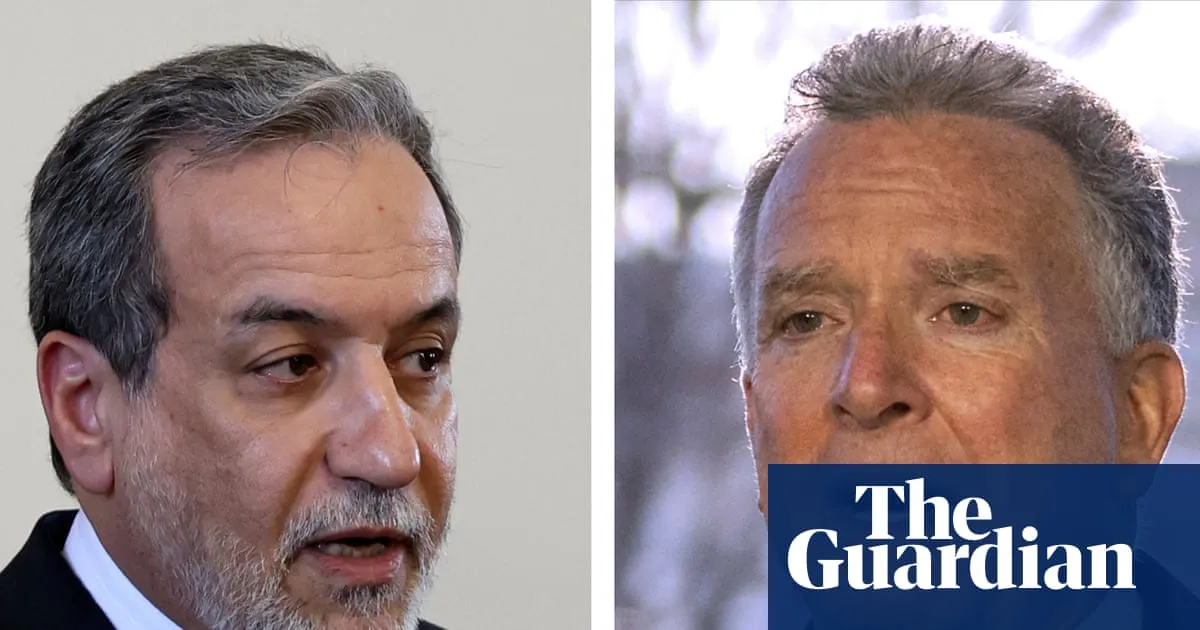
The Guardian - World NewsFIG 01
Reading time
4min
Word count
956words
Sources cited
4cited
Entities identified
8entities
Quality score
100%
§ 01
Briefing Summary
AI-generatedNEWSAR · AI
Ahead of nuclear talks in Geneva, the article profiles Iranian Foreign Minister Abbas Araghchi and US envoy Steve Witkoff, highlighting their contrasting backgrounds and negotiation styles. Araghchi, a seasoned diplomat with a PhD and a book on negotiation, is portrayed as patient and strategic, reflecting Iran's "market style" of bargaining. Witkoff, a property developer, is seen as operating under a more volatile approach dictated by President Trump. The article suggests that successful negotiations require both sides to make concessions and understand each other's approaches, particularly Iran's emphasis on persistence and repeated demands. Araghchi's book emphasizes national cohesion and military strength as key factors in successful negotiation.
Confidence 0.90Sources 4Claims 5Entities 8
§ 02
Article analysis
Model · rule-basedFraming
Political Strategy
Diplomatic
Tone
Measured
AI-assessed
CalmNeutralAlarmist
Factuality
0.60 / 1.00
Mixed
LowHigh
Sources cited
4
Well sourced
FewMany
§ 03
Key claims
5 extracted01
If there is not at least a balance of power with your adversary, it is best to decline talks.
quoteAraghchi
Confidence
1.00
02
Abbas Araghchi has written a book on the art of negotiations that reveals the secrets of the Iranian diplomatic trade.
factualnull
Confidence
1.00
03
The Iranian negotiation style is generally known in the world as the ‘market style’.
quoteAraghchi
Confidence
0.90
04
Araghchi reduced his US counterpart Wendy Sherman to tears of frustration.
factualnull
Confidence
0.80
05
Trump sees diplomacy as a branch of pro-wrestling.
factualnull
Confidence
0.70
§ 04
Full report
4 min read · 956 words§ 05
Entities
8 identifiedKey playerOppositionContextPositiveNeutralNegative
People4
Organizations1
§ 06
Keywords & salience
9 termsnuclear talks
1.00
iran
0.90
us
0.90
diplomacy
0.80
negotiation
0.80
abbas araghchi
0.70
bargaining styles
0.60
political science
0.50
regional war
0.40
§ 07
Topic connections
Interactive graph No topic relationship data available yet. This graph will appear once topic relationships have been computed.