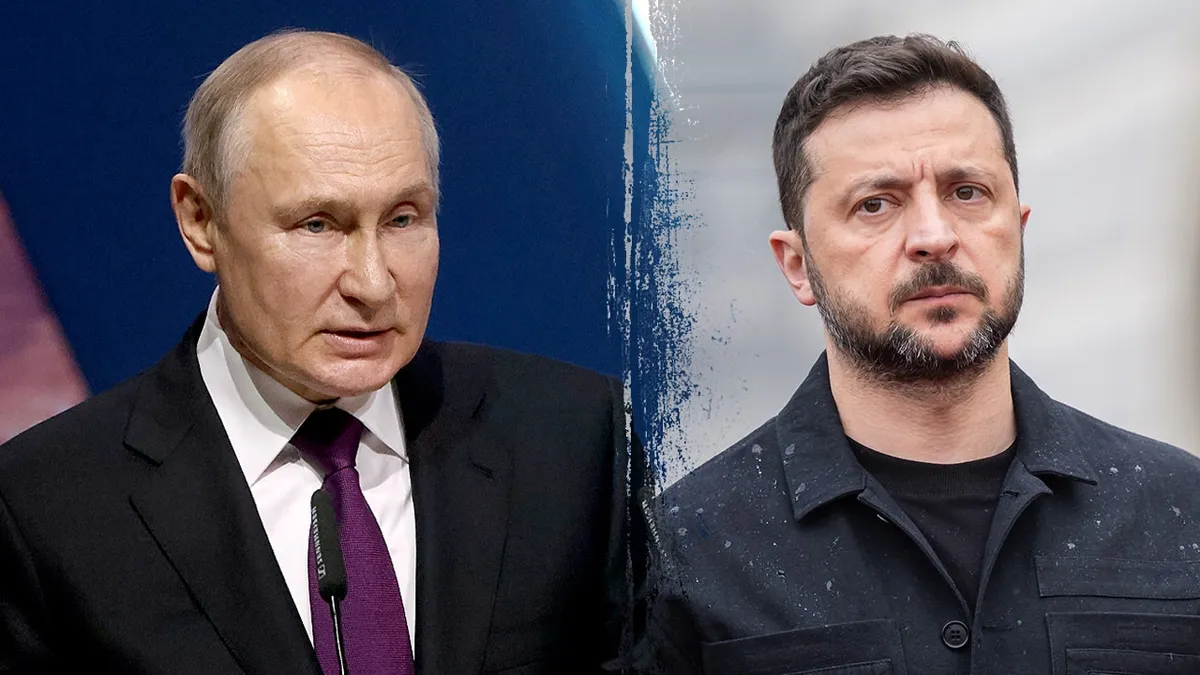
Four years into Russia’s full-scale invasion , the war in Ukraine has settled into a grinding conflict defined by high casualties and incremental territorial shifts. Russia still controls roughly one-fifth of Ukrainian territory, while Kyiv has recently clawed back limited ground in counteroffensives. Military estimates put Russian losses at about 1.2 million casualties since 2022, with Ukrainian losses between 500,000 and 600,000, underscoring the scale of attrition on both sides. Diplomacy has intensified alongside the fighting. President Donald Trump met Russian President Vladimir Putin in Alaska last August for high-stakes talks aimed at advancing negotiations. Ukrainian President Volodymyr Zelenskyy has traveled to Washington multiple times since Trump returned to office, including a contentious Oval Office meeting in Feb. 2025 and a follow-up visit later in the year. The most recent U.S. engagement with both sides came during trilateral negotiations in Abu Dhabi earlier this year and more taking place in Geneva on Feb. 17–18, where special envoy Steve Witkoff met with Russian and Ukrainian delegations as part of ongoing efforts to broker a settlement. As the war enters its fifth year, former officials and analysts say the next phase could unfold along three possible paths: prolonged stalemate, shifting Ukrainian momentum, or a dangerous erosion of Western resolve. ZELENSKYY ANNOUNCES NEXT ROUND OF TALKS WITH US, Russia AS Ukraine AIMS FOR 'REAL AND DIGNIFIED END TO THE WAR The most immediate trajectory is continuation. The war remains defined by attrition , with neither side delivering a decisive blow and negotiations producing little progress. Ret. U.S. Air Force Gen. Philip Breedlove, former NATO supreme allied commander of Europe, said Moscow is not winning despite its territorial hold, "There isn't a winner right now." "Russia, supposedly a world superpower with one of the world's probably top three world armies and top four world air forces, in 12 years has gained about 20% of Ukraine . And they have lost some, say, over 1.2 million in the conflict so far. It's a conflict that Ukraine is working hard to manage. It's also a conflict that Russia is not, I repeat, not winning," he said. ZELENSKYY CLAIMS US GAVE Ukraine AND Russia A DEADLINE TO REACH PEACE AGREEMENT Recent battlefield developments suggest another possibility. Breedlove pointed to rapid Ukrainian gains following disruptions in Russia’s command-and-control systems. "In the last three or four days, because of the loss of the Starlink command and control system, Ukraine launched an offensive, and they have snatched back months of Russian gains in three days, three-pronged push, hundreds of square miles regained, and Russia is backing up in several places right now." Carrie Filipetti, executive director of the Vandenberg Coalition, said such advances could shift leverage at the negotiating table. "Ukraine's recent advances to recapture its territory is yet another signal that Putin's war machine is continuing to atrophy as the world marks the fourth year of Russia’s full-scale invasion. Russia's latest territorial losses shows that far from being invincible, Putin and his army are beginning to experience real failures in terms of capability and resources." She added that momentum matters. "Not only is this the most significant Ukrainian advance on the battlefield in more than two years, its importance may be felt even more concretely at the diplomatic table. Finding a lasting and equitable peace deal through negotiation is often about momentum – and right now the Ukrainians have it." If sustained, such gains could alter Moscow’s calculations and give Kyiv a stronger footing in negotiations as long as Ukraine has strong U.S. support, Breedlove argues, "The first thing and the most important thing Ukraine needs is a declaratory statement by the West and specifically by the United States that we are not going to allow Russia to win in Ukraine, and we will give Ukraine what it needs to stop Russia… where Putin hears it loud and clear and where the people of Russia hear it loud and clear that is a game changer. And I think that's when Mr. Putin is going to have to make some tough decisions." ZELENSKYY SAYS PEACE DEAL IS CLOSE AFTER TRUMP MEETING BUT TERRITORY REMAINS STICKING POINT A third path worries some Western strategists: that inconsistent support could prolong or tilt the conflict in Russia’s favor. Heather Nauert, who served as spokesperson for the U.S. Department of State from 2017 to 2019, framed the war as more than a territorial dispute. "As we now enter the fifth year of Putin’s war in Ukraine, we’re reminded that this conflict has never been only about territory — it’s about identity, faith, and the future of a free nation. Russia has destroyed more than 600 churches, persecuted millions of Ukrainian Christians under occupation, and abducted more than 19,000 children in an effort to break Ukraine’s spirit. President Trump's push for a lasting peace must be backed by strength and accountability – one that protects innocent lives, defends religious freedom and brings stolen children home." Ret. Lt. Gen. Richard Newton said deterrence remains central. "Four years into this horrific war, the fundamental lesson remains unchanged: Peace is only possible when strength shapes the terms. Putin will continue to savagely test our resolve until the costs of his aggression outweigh any possible gain." "What Ukraine needs isn’t gestures from the world, but instead, unwavering support from the U.S. and Europe that convinces Moscow further advances carry unacceptable consequences," he argued. "Russia must not prevail against Ukraine and the West. What are needed are credible security guarantees , robust offensive and defensive capabilities and a unified, long-term commitment by the West to ensure deterrence isn’t an elusive goal, but a lasting reality." Breedlove warned that negotiations alone will not shift the balance. "The most dangerous scenario is that we do not do what we should do in Ukraine and Russia takes over Ukraine because they're not done. We have a policy of peace through strength and we're using it in Iran. We've used it in Venezuela. We're using it with oil tankers around the world... But when it comes to Putin and Ukraine, we are peace through weakness." "Mr. Putin is making a point that he's in charge in Ukraine, not the West and certainly not America. And so we need to change that dynamic. You got good guys and you got bad guys. And right now the bad guys have told America to take a hike. So now, rather than telling them what to do, we are going to the good guys and saying, you have to give up more because the bad guys are not playing well in the sandbox. That's peace through weakness, not peace through strength," Breedlove concluded.
SRCFox News - World
LANGEN
LEANCenter-Right
WORDS1 105
ENT12
TUE · 2026-02-24 · 11:00 GMTBRIEF NSR-2026-0224-18834
NSR-2026-0224-18834News Report·EN·Conflict
Russia’s war against Ukraine enters fifth year as experts outline 3 possible outcomes
Entering its fifth year, the Russia-Ukraine war remains a grinding conflict with high casualties and limited territorial changes. Russia controls about one-fifth of Ukraine, with estimated losses of 1.2 million, while Ukraine's losses are between 500,000 and 600,000.
Efrat LachterFox News - WorldFiled 2026-02-24 · 11:00 GMTLean · Center-RightRead · 5 min
Fox News - WorldFIG 01
Reading time
5min
Word count
1 105words
Sources cited
3cited
Entities identified
12entities
Quality score
100%
§ 01
Briefing Summary
AI-generatedNEWSAR · AI
Entering its fifth year, the Russia-Ukraine war remains a grinding conflict with high casualties and limited territorial changes. Russia controls about one-fifth of Ukraine, with estimated losses of 1.2 million, while Ukraine's losses are between 500,000 and 600,000. Despite ongoing fighting, diplomatic efforts have intensified, including meetings between Presidents Trump and Putin, Zelenskyy's visits to Washington, and trilateral negotiations facilitated by the U.S. in Abu Dhabi and Geneva. Analysts suggest three potential outcomes: a prolonged stalemate, a shift in Ukrainian momentum due to battlefield gains, or a weakening of Western support for Ukraine. The war is characterized by attrition, with neither side achieving a decisive victory, though recent Ukrainian gains offer a glimmer of hope.
Confidence 0.90Sources 3Claims 5Entities 12
§ 02
Article analysis
Model · rule-basedFraming
Conflict
Political Strategy
Tone
Measured
AI-assessed
CalmNeutralAlarmist
Factuality
0.70 / 1.00
Factual
LowHigh
Sources cited
3
Well sourced
FewMany
§ 03
Key claims
5 extracted01
Russia controls roughly one-fifth of Ukrainian territory.
factualArticle
Confidence
0.90
02
Ukrainian losses are estimated between 500,000 and 600,000.
statisticArticle
Confidence
0.80
03
Military estimates put Russian losses at about 1.2 million casualties since 2022.
statisticArticle
Confidence
0.80
04
Moscow is not winning despite its territorial hold.
quoteRet. U.S. Air Force Gen. Philip Breedlove
Confidence
0.70
05
Ukraine launched an offensive, and they have snatched back months of Russian gains in three days.
quoteRet. U.S. Air Force Gen. Philip Breedlove
Confidence
0.60
§ 04
Full report
5 min read · 1 105 words§ 05
Entities
12 identifiedKey playerOppositionContextPositiveNeutralNegative
People4
Organizations1
§ 06
Keywords & salience
9 termsrussia ukraine war
1.00
attrition
0.70
negotiations
0.70
casualties
0.60
stalemate
0.60
territorial shifts
0.60
peace agreement
0.50
diplomacy
0.50
western resolve
0.40
§ 07
Topic connections
Interactive graph Network visualization showing 51 related topics
View Full Graph Person Organization Location Event|Click node to navigate|Edge numbers = shared articles