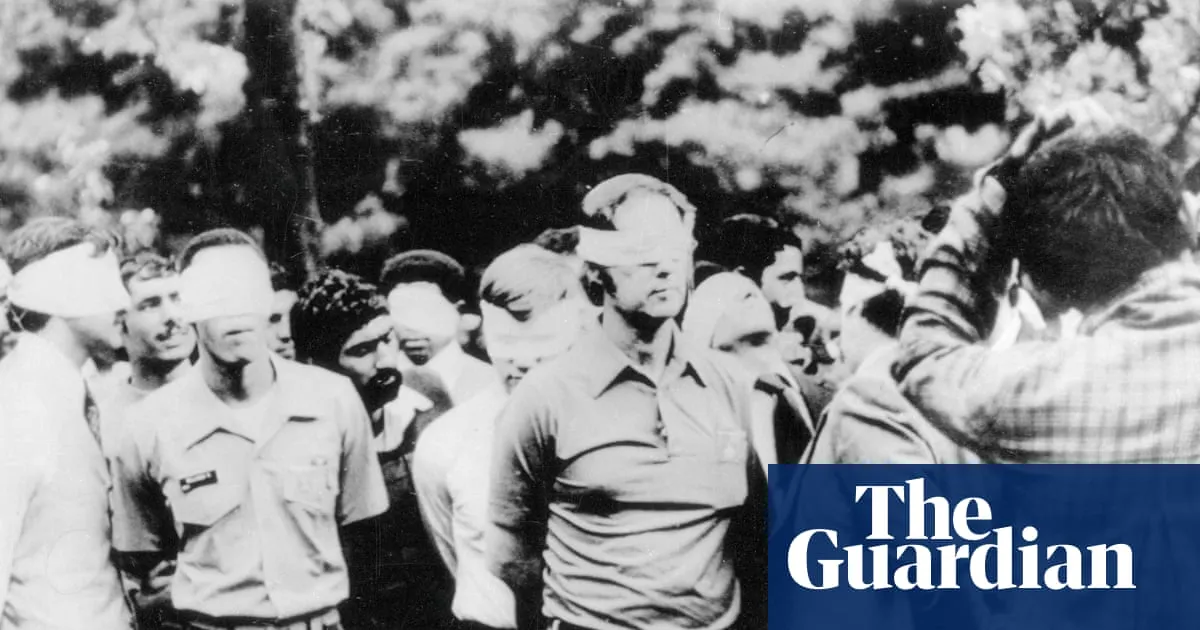
For millions of younger Americans, the sudden explosion of Iran onto the national political stage and consciousness may seem like a bolt from the blue.Yet for older generations and those with deeper historical awareness, Donald Trump’s announcement on Saturday of strikes against a distant foe is more like the outcome of a collision long foretold.The military operation’s code name, Epic Fury, provides a clue. The underlying mutual resentments that have fueled tensions between the United States and Iran are indeed epic and have simmered dangerously for nearly half a century before, finally, boiling over into open warfare.Iran has occupied a place deep in the American national psyche since the Islamic Revolution of 1979, one of the most momentous events of the 20th century; the revolution toppled the pro-western monarchy of the reigning shah, Mohammad Reza Pahlavi, and provided the inspiration for the spread of radical political Islamism with which later generations would become familiar through acts of terrorism.But the revolution also delivered a more immediate trauma to the American soul that was long-lasting and which – it can be argued – is bearing bitter fruits now.The militant takeover of the US embassy in Tehran by Islamist revolutionaries in November 1979 brought America humiliation on the global stage to rank with defeat in Vietnam.The subsequent holding for 444 days of 52 US hostages – who were frequently publicly paraded wearing blindfolds and subjected to numerous mistreatments that included mock executions – belittled American power and doomed the presidency of Jimmy Carter.Carter’s failed attempt to free the hostages with a quixotic rescue came to grief catastrophically in the Iranian desert, leaving eight US servicemen dead, and crystallizing the sense of national obloquy.The otherworldly strangeness of Carter’s arch-nemesis, Ayatollah Ruhollah Khomeini, the aged Shia cleric who had become the revolution’s spiritual leader, intensified the sense of alienation many Americans came to feel for Iran as it came under an ascetic form of sharia rule.Carter was defeated by Ronald Reagan in the 1980 presidential election, but thanks to Khomeini’s petty-minded determination to inflict maximum ignominy on a nation he dubbed “the great Satan”, the hostages were held until moments after he left office the following January and not freed until Reagan was sworn in.That ended the embassy drama, but Iran’s pivotal place in US foreign policy decision-making was cemented and made its presence felt for years to come.In the 1980s, Hezbollah, Iran’s then-recently established Lebanese Shia proxy group, began seizing US hostages in Beirut. With diplomatic ties between Washington and Tehran severed after the embassy crisis, Reagan dispatched envoys on a clandestine mission to Iran to appeal to elusive regime “moderates” in an attempt to win their release.The upshot was a secret deal whereby the US supplied weapons to Iran – breaching a congressional arms embargo – in exchange for the hostages’ release before funneling the profits to the Contras, a Nicaraguan rebel group trying to unseat a Marxist government. That, too, violated an act of Congress.The Iran-Contra affair, when it was eventually disclosed, enveloped Reagan in scandal and came close to ending his presidency. As some hostages were released, others were taken – and the psychic wound between the US and Iran deepened.The excruciating human drama of that period – exemplified in wall-to-wall television coverage of the embassy siege, yellow ribbons tied round trees to signify hope for the hostages, and Carter’s haggard visage as he fruitlessly worked the phones trying to release them – is obscure to succeeding generations of Americans.But they may have made an indelible mark on Trump, who at nearly 80 remembers it vividly who has frequently lambasted Carter as the US’s worst president.Now openly calling for regime change, Trump has reportedly told aides that he wants to be the president who topples the Islamic republic, a political system now openly despised by millions of Iranians who – like their American counterparts – are too young to remember the revolution.That, together with the regime’s current weakness following recent mass demonstrations that it bloodily suppressed and last summer’s US-Israeli strikes on its nuclear and military installations, may lead Trump to think he is pushing at an open door.US-Israeli strikes on Iran: what do we know so far? – video analysisYet the deep-rooted US fixation with Iran has its mirror image.While many younger Iranians have been extolling America – and Trump in particular – as symbols of hope in recent protests, Iran has historical grievances with Washington that go further back than the revolution and may serve as a spur to those who remain loyal to it.It is those grievances that have inspired generations of loyal Iranian revolutionaries to chant “marg bar Amrika” (death to America), a slogan that seasoned Iranian analysts have described as a central pillar of regime ideology.Fueling the bitterness are memories of Operation Ajax, a 1953 US-British instigated coup that toppled Mohammad Mosaddegh, the nationalist Iranian prime minister who had angered Britain by nationalizing Iran’s oil assets, which were then UK-owned.The event is often remembered as the CIA’s first successful coup – giving it the taste to stage more – and for cementing Pahlavi’s power as monarch.Pahlavi had fled the country during the coup, which he supported, in the fear that it might fail. When it succeeded, he returned to become more powerful than before, ruling as an absolute monarch with the help of Savak, his repressive intelligence agency that had been trained by Israel.The lesson absorbed by his opponents, including Khomeini, was that the US was Pahlavi’s patron and puppet-master as he imposed a modernization program on a country that much of its more traditional-minded population found alien.As a result, the US replaced Iran’s traditional foreign bogeymen, Britain and Russia, as the chief agents of a hated western interference in the country’s affairs, resentment of which dated back to the 19th century.Khomeini was banished into exile in 1964 after condemning the shah as a “traitor” over so-called “capitulations” that granted US service employees and their families legal immunity.By the 1970s, there were an estimated 50,000 Americans in Iran, many of them military personnel as the shah lavished oil wealth on state-of-the-art armaments that the country lacked the skills to use.But there was little cultural understanding. When Pahlavi was diagnosed with chronic lymphocytic leukemia – a type of blood cancer - by visiting French physicians in 1974, the diagnosis was kept secret and, in an embarrassing intelligence failure, the US ambassador, Richard Helms – a former CIA director – did not find out about it.Reports of Americans and other westerners committing gross cultural violations such as riding motorcycles into historic mosques in Isfahan, a city that is one of Iran’s cultural jewels, compounded the sense of estrangement.So when opposition to the shah erupted into popular street protests in 1978, one of the driving forces was the demand to drive foreign – and specifically US – interference from Iranian politics.Two generations later, the spirit of revolution has once again been gripping Iran. But this time, by launching strikes and openly calling for regime change, Trump is explicitly inserting US involvement back into the heart of a nation that has historically resented foreign influence while finding political stability elusive.In a reverse dynamic from the events of 1978-79, the shah’s son, Reza Pahlavi, has openly cheered Trump’s intervention as “humanitarian” and an invitation to Iranians to “reclaim” their country from what many of them see as a regime of tyrannical theocrats.The US-based Pahlavi, who has fashioned himself as “uniquely positioned” to lead an Iranian democratic transition despite not having been in the country for 48 years, has been bolstered by reports of demonstrators shouting “javid shah” (long live the shah) - a far cry from the chants of “death to the shah” that presaged his father’s overthrow.It’s yet another mirror image – with the difference this time that the Islamic regime has shown a much more ruthless willingness than the late shah did in 1978 to kill demonstrators in its determination to retain power. Put differently, regime change may be widely desired – but could prove illusory.As his son and those chanting for him gaze in allure at the historical reflection, they are likely to find their vision obscured by lots of smoke.
SRCThe Guardian - World News
LANGEN
LEANCenter-Left
WORDS1 363
ENT10
SUN · 2026-03-01 · 10:00 GMTBRIEF NSR-2026-0301-20294
NSR-2026-0301-20294Analysis·EN·National Security
Trump’s current war on Iran picks up where a longstanding enmity left off
The article discusses the historical context of escalating tensions between the United States and Iran, culminating in recent military actions under President Trump. It argues that the current conflict is rooted in decades of mutual resentment dating back to the 1979 Iranian Revolution, which overthrew the pro-Western Shah and ushered in a period of radical Islamism.
Robert Tait in WashingtonThe Guardian - World NewsFiled 2026-03-01 · 10:00 GMTLean · Center-LeftRead · 6 min
The Guardian - World NewsFIG 01
Reading time
6min
Word count
1 363words
Sources cited
0cited
Entities identified
10entities
Quality score
100%
§ 01
Briefing Summary
AI-generatedNEWSAR · AI
The article discusses the historical context of escalating tensions between the United States and Iran, culminating in recent military actions under President Trump. It argues that the current conflict is rooted in decades of mutual resentment dating back to the 1979 Iranian Revolution, which overthrew the pro-Western Shah and ushered in a period of radical Islamism. A key event was the hostage crisis at the U.S. embassy in Tehran, where 52 Americans were held for 444 days, causing humiliation and impacting the Carter presidency. The article suggests this historical animosity has fueled ongoing tensions and shaped U.S. foreign policy towards Iran for over forty years.
Confidence 0.90Claims 5Entities 10
§ 02
Article analysis
Model · rule-basedFraming
National Security
Conflict
Tone
Mixed Tone
AI-assessed
CalmNeutralAlarmist
Factuality
0.60 / 1.00
Mixed
LowHigh
Sources cited
0
No named sources
FewMany
§ 03
Key claims
5 extracted01
The US supplied weapons to Iran in a secret deal.
factual
Confidence
1.00
02
Iran's then-recently established Lebanese Shia proxy group, Hezbollah, began seizing US hostages in Beirut in the 1980s.
factual
Confidence
1.00
03
Carter's attempt to free the hostages failed, leaving eight US servicemen dead.
factual
Confidence
1.00
04
52 US hostages were held for 444 days.
factual
Confidence
1.00
05
The US embassy in Tehran was taken over by Islamist revolutionaries in November 1979.
factual
Confidence
1.00
§ 04
Full report
6 min read · 1 363 words§ 05
Entities
10 identifiedKey playerOppositionContextPositiveNeutralNegative
People5
Locations4
§ 06
Keywords & salience
10 termsus-iran relations
0.90
hostage crisis
0.80
islamic revolution
0.80
us embassy takeover
0.80
historical enmity
0.70
ayatollah khomeini
0.60
political islamism
0.60
american psyche
0.50
jimmy carter
0.50
foreign policy
0.40
§ 07
Topic connections
Interactive graph Network visualization showing 51 related topics
View Full Graph Person Organization Location Event|Click node to navigate|Edge numbers = shared articles