A prolonged conflict is bound to disrupt the model of regional stability and economic prosperity the Gulf has pursued.Published On 1 Mar 2026The United States-Israeli war on Iran is just one day old, and it is already clear it will have a profound impact on the Middle East and the Gulf in particular. The US-Israeli bombardment of Iran has killed a number of high-ranking officials as well as Supreme Leader Ali Khamenei. Tehran has responded by attacking not just Israel but also various countries in the region.Saudi Arabia, Qatar, the United Arab Emirates, Bahrain, Kuwait and Oman were all struck by Iranian missiles or drones, even though none of these countries had launched attacks on Iran from their territory. Various sites across these states were targeted, including US military bases, airports, ports and even commercial areas.If the conflict drags on, it could become a real turning point for the Gulf – one that reshapes how states think about security, alliances and even their long-term economic futures.For years, Gulf stability has leaned on a familiar set of assumptions: The United States remained the dominant security guarantor; rivalry with Iran was managed, contained and kept below the threshold of full confrontation; and the Gulf Cooperation Council (GCC) – despite its disagreements – provided enough coordination to prevent regional politics from unravelling entirely. A sustained conflict involving the US, Israel and Iran would strain all of that at once. It would push Gulf capitals to revisit not only their defence planning but also the deeper logic of their regional strategy.In recent years, Gulf diplomacy had already been shifting – carefully, quietly and with a strong preference for hedging rather than choosing sides. The Saudi-Iran thaw brokered by China in 2023, the UAE’s pragmatic channels with Tehran and Oman’s steady mediation role all point to the same idea: Stability requires dialogue, even when mistrust runs deep. Qatar has also kept doors open, betting on diplomacy and de-escalation as a way to reduce risk.
SRCAl Jazeera
LANGEN
LEANCenter
WORDS329
ENT12
SUN · 2026-03-01 · 11:36 GMTBRIEF NSR-2026-0301-20349
NSR-2026-0301-20349Analysis·EN·Conflict
The US-Israeli war on Iran could rewrite Gulf security calculations
On March 1, 2026, a US-Israeli war on Iran began, immediately impacting the Middle East, particularly the Gulf region. Iran retaliated against the initial bombardment, striking not only Israel but also Saudi Arabia, Qatar, the UAE, Bahrain, Kuwait, and Oman with missiles and drones, targeting US military bases, airports, ports, and commercial areas.
Khalid Al-JaberAl JazeeraFiled 2026-03-01 · 11:36 GMTLean · CenterRead · 2 min
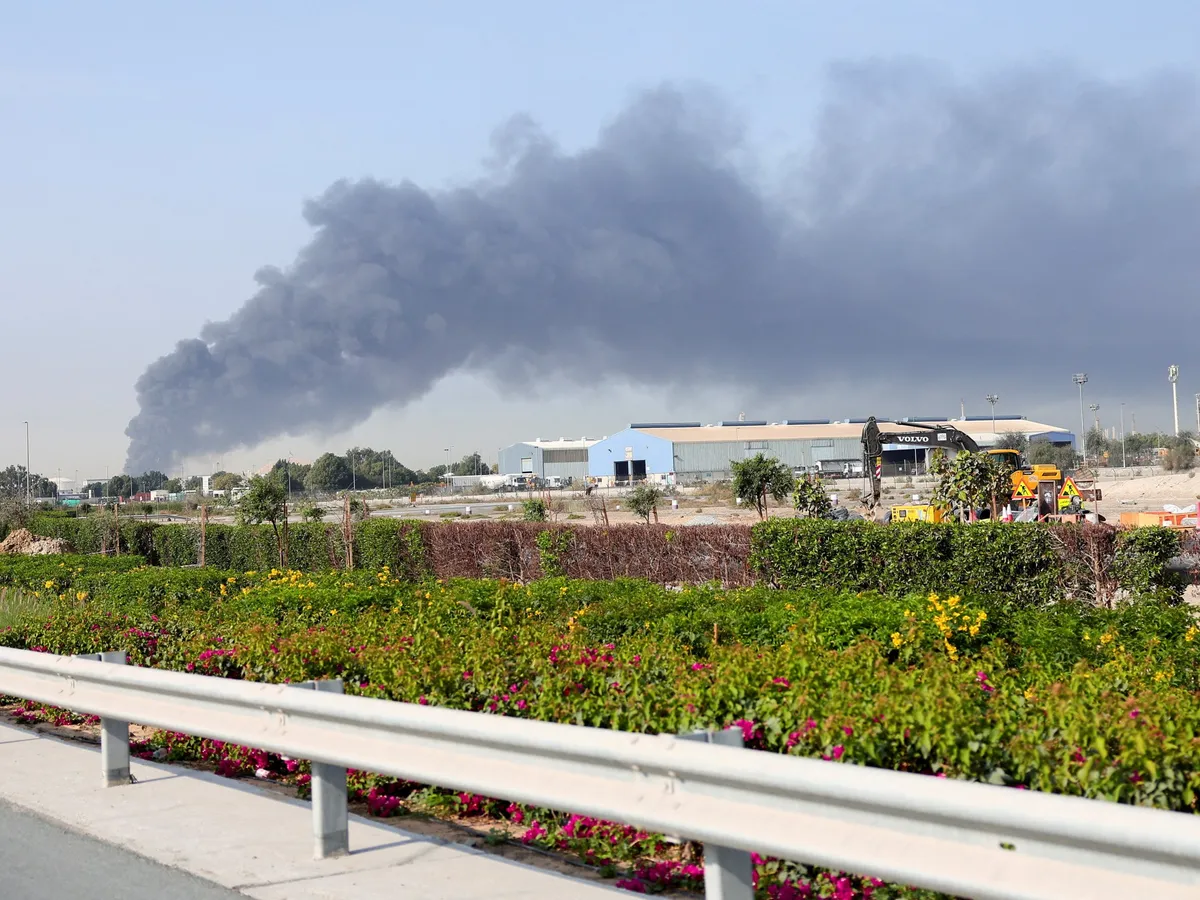
Al JazeeraFIG 01
Reading time
2min
Word count
329words
Sources cited
0cited
Entities identified
12entities
Quality score
100%
§ 01
Briefing Summary
AI-generatedNEWSAR · AI
On March 1, 2026, a US-Israeli war on Iran began, immediately impacting the Middle East, particularly the Gulf region. Iran retaliated against the initial bombardment, striking not only Israel but also Saudi Arabia, Qatar, the UAE, Bahrain, Kuwait, and Oman with missiles and drones, targeting US military bases, airports, ports, and commercial areas. This conflict threatens the established Gulf stability, which relies on US security guarantees, managed rivalry with Iran, and GCC coordination. The prolonged war could force Gulf states to re-evaluate their defense strategies, alliances, and long-term economic plans, potentially disrupting the region's pursuit of stability and economic prosperity. The conflict challenges the recent trend of Gulf diplomacy favoring dialogue and de-escalation.
Confidence 0.90Claims 5Entities 12
§ 02
Article analysis
Model · rule-basedFraming
Conflict
Political Strategy
Tone
Mixed Tone
AI-assessed
CalmNeutralAlarmist
Factuality
0.40 / 1.00
Mixed
LowHigh
Sources cited
0
No named sources
FewMany
§ 03
Key claims
5 extracted01
Saudi Arabia, Qatar, the United Arab Emirates, Bahrain, Kuwait and Oman were all struck by Iranian missiles or drones.
factualnull
Confidence
0.90
02
Tehran has responded by attacking not just Israel but also various countries in the region.
factualnull
Confidence
0.90
03
The US-Israeli bombardment of Iran has killed a number of high-ranking officials as well as Supreme Leader Ali Khamenei.
factualnull
Confidence
0.90
04
A sustained conflict involving the US, Israel and Iran would strain all of that at once.
predictionnull
Confidence
0.80
05
The US-Israeli war on Iran is just one day old, and it is already clear it will have a profound impact on the Middle East and the Gulf in particular.
predictionnull
Confidence
0.70
§ 04
Full report
2 min read · 329 words§ 05
Entities
12 identifiedKey playerOppositionContextPositiveNeutralNegative
Organizations1
§ 06
Keywords & salience
9 termsus-israeli war on iran
1.00
iran
0.90
gulf security
0.90
regional stability
0.80
united states
0.80
gulf cooperation council
0.70
diplomacy
0.60
alliances
0.50
economic prosperity
0.50
§ 07
Topic connections
Interactive graph Network visualization showing 51 related topics
View Full Graph Person Organization Location Event|Click node to navigate|Edge numbers = shared articles