The US and Israel’s air strikes against Iran, accompanied by electronic and cyber capabilities, were a “wake-up call” for China’s intelligence strategy and how its military will use advanced technologies in modern warfare, analysts say.During the weekend air strikes against Iran – dubbed Operation Epic Fury – that killed its supreme leader, Ayatollah Ali Khamenei, the US unleashed an array of weaponry against more than 1,000 Iranian targets, including Tomahawk cruise missiles, stealth fighters and bombers.04:41Iran’s Supreme leader Khamenei confirmed dead after US-Israeli strikesIran’s Supreme leader Khamenei confirmed dead after US-Israeli strikesIn addition to traditional aerial weapons, the US military again showed how important electronic warfare, intelligence gathering and AI-assisted intelligence missions are in modern warfare.After the 12-day war with the US and Israel in June – which US President Donald Trump said “obliterated” Iranian nuclear sites as well as the country’s missile bases, radar installations and command structures – Tehran attempted to build up its air-defence systems with Chinese-made HQ-9B and Russian S-400 surface-to-air missiles.However, these systems were seen as incapable of defending Iranian airspace after failing to intercept the US and Israeli air strikes that killed Khamenei and other senior political and military figures.A similar pattern was observed in January during a US military operation in Venezuela to capture its leader Nicolas Maduro, when the US neutralised the Venezuelan air-defence system using EA-18G Growler electronic warfare aircraft.
SRCSouth China Morning Post
LANGEN
OutletPrivately owned · Hong Kong
WORDS229
ENT11
MON · 2026-03-02 · 08:42 GMTBRIEF NSR-2026-0302-20593
NSR-2026-0302-20593News Report·EN·National Security
Iran attack seen as ‘wake-up call’ for China on electronic warfare and intelligence
Analysts suggest that recent US and Israeli air strikes against Iran, dubbed Operation Epic Fury, serve as a "wake-up call" for China regarding electronic warfare and intelligence strategies. The strikes, which resulted in the death of Iran's Supreme Leader, Ayatollah Ali Khamenei, demonstrated the importance of electronic warfare, intelligence gathering, and AI-assisted intelligence missions in modern warfare, beyond traditional weaponry.
Seong Hyeon Choi,Yuanyue DangSouth China Morning PostFiled 2026-03-02 · 08:42 GMTOutlet · Privately owned · Hong KongRead · 1 min
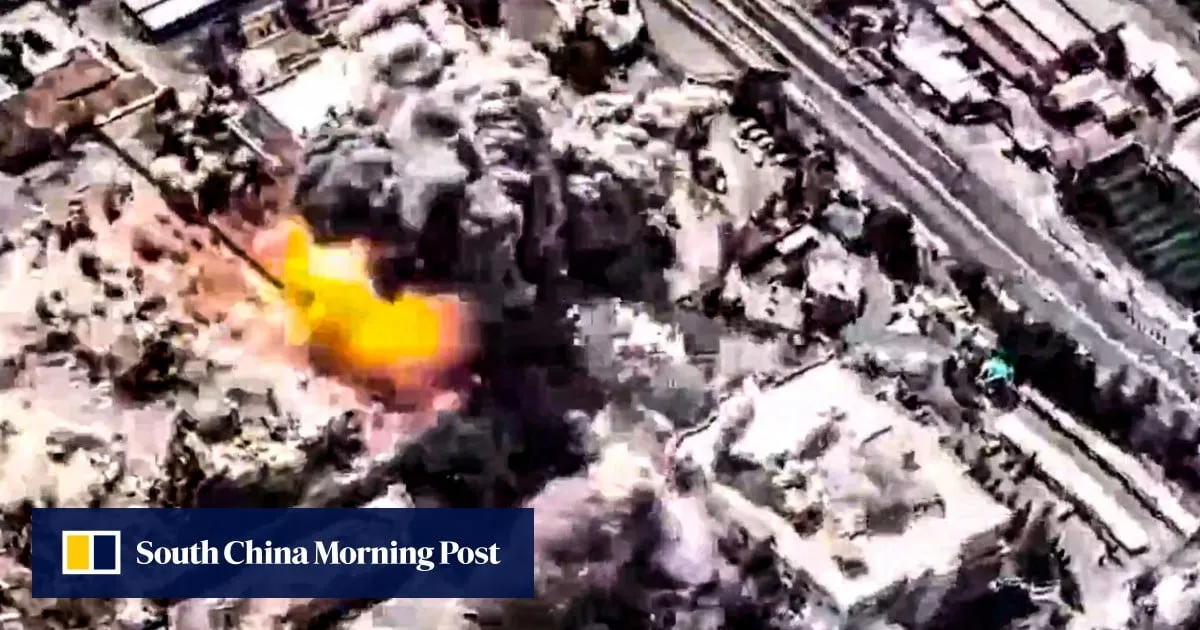
South China Morning PostFIG 01
Reading time
1min
Word count
229words
Sources cited
1cited
Entities identified
11entities
NEWSAR · AI
Analysts suggest that recent US and Israeli air strikes against Iran, dubbed Operation Epic Fury, serve as a "wake-up call" for China regarding electronic warfare and intelligence strategies. The strikes, which resulted in the death of Iran's Supreme Leader, Ayatollah Ali Khamenei, demonstrated the importance of electronic warfare, intelligence gathering, and AI-assisted intelligence missions in modern warfare, beyond traditional weaponry. Despite Iran's attempts to bolster its air defenses with Chinese and Russian missile systems after a previous conflict, these systems proved ineffective against the US and Israeli operation. This event, along with a similar US operation in Venezuela, highlights the vulnerability of air defense systems to electronic warfare and underscores the need for China to re-evaluate its military's use of advanced technologies.
Confidence 0.90Sources 1Claims 5Entities 11
Framing
National Security
Technology
Tone
Mixed Tone
AI-assessed
CalmNeutralAlarmist
Factuality
0.60 / 1.00
Mixed
LowHigh
Sources cited
1
Limited
FewMany
01
Tehran attempted to build up its air-defence systems with Chinese-made HQ-9B and Russian S-400 missiles.
factualnull
Confidence
1.00
02
US President Donald Trump said the strikes “obliterated” Iranian nuclear sites.
quoteDonald Trump
Confidence
0.90
03
Iran’s Supreme leader Khamenei confirmed dead after US-Israeli strikes.
factualnull
Confidence
0.90
04
The US unleashed an array of weaponry against more than 1,000 Iranian targets.
factualnull
Confidence
0.90
05
US and Israel’s air strikes against Iran were a “wake-up call” for China's intelligence strategy.
quoteanalysts
Confidence
0.80
§ 04
Full report
1 min read · 229 wordsKey playerOppositionContextPositiveNeutralNegative
People3
Locations7
electronic warfare
1.00
intelligence gathering
0.80
air strikes
0.70
modern warfare
0.70
air-defence systems
0.60
china
0.60
iran
0.50
us military
0.50
advanced technologies
0.40
§ 07
Connections
Who appears together in the news Not enough entities in this article to draw a network.