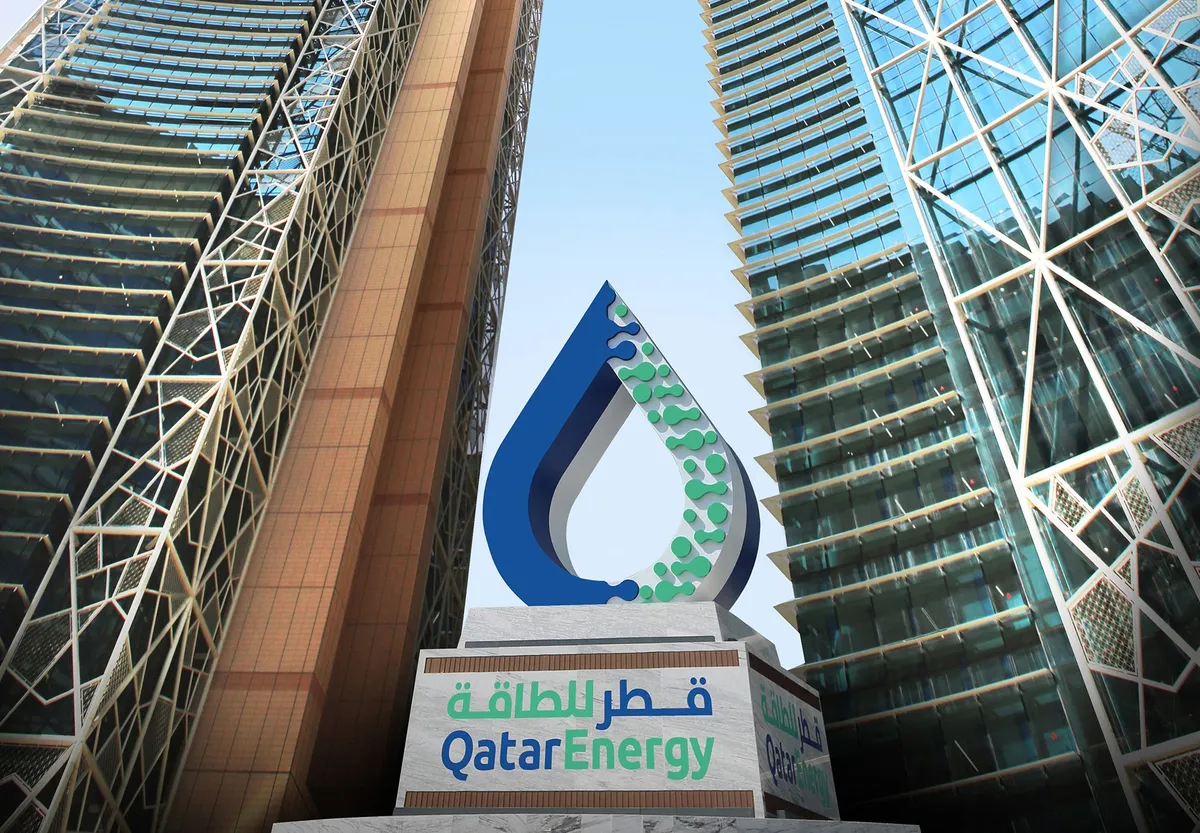
This comes after Saudi Arabia announced temporary closure of one of its largest oil facilities following drone attacks.This handout photo released by QatarEnergy's Public Relations and Communication office shows the headquarters of the Gulf state's main energy facility in the captial Doha on November 8, 2022 [Handout/QatarEnergy via AFP]Published On 2 Mar 2026Qatar’s state-run energy firm says it has halted liquefied natural gas production after Iranian attacks, sending gas prices soaring in Europe, as Saudi Arabia announced it was temporarily shutting down some units of the Ras Tanura oil refinery located near the country’s eastern region after a fire broke out following a drone attack.“Due to military attacks on QatarEnergy’s operating facilities in Ras Laffan Industrial City and Mesaieed Industrial City in the State of Qatar, QatarEnergy has ceased production of liquefied natural gas (LNG) and associated products,” the world’s largest LNG producer said in a statement on Monday.Recommended Stories list of 3 itemslist 1 of 3Explosions across Qatar, UAE, Kuwait as Iran’s retaliatory strikes continuelist 2 of 3British military base in Cyprus targeted in suspected drone attacklist 3 of 3What we know on day three of US-Israeli attacks on Iranend of listShortly after the announcement, natural gas prices in Europe soared by almost 50 percent.Earlier, Qatar’s Defence Ministry said the country was attacked by two drones launched from Iran. “One drone targeted a water tank belonging to a power plant in Mesaieed, and the other targeted an energy facility in Ras Laffan Industrial City, belonging to QatarEnergy, without reporting any human casualties,” it said in a statement.“All damages and losses resulting from the attack will be assessed by the relevant authorities, and an official statement will be issued later,” it added.The Saudi Ministry of Defence, in reports carried by the state-run Saudi Press Agency (SPA), said two drones had “attempted to attack” the Ras Tanura refinery on Monday morning, and that a “small” fire had broken out after they were intercepted.Footage verified by Al Jazeera showed plumes of smoke rising from the oil facility, located on Saudi Arabia’s Gulf coast. The ministry said the refinery “sustained limited damage”, but there were no casualties.Ras Tanura oil refinery, one of the world’s largest oil processing facilities located near the eastern city of Dammam, has a capacity of 550,000 barrels per day. The facility is home to one of the largest refineries in the Middle East and is considered a cornerstone of the kingdom’s energy sector.The attacks come as oil tankers have been piling up on either side of the Strait of Hormuz, through which about a fifth of the world’s seaborne oil and the bulk of Qatari gas flows.The maritime disruptions and fears of a prolonged conflict have led to a sharp rise in global oil prices, which will have a significant impact on the global economy.Iran has been launching retaliatory strikes, mainly targeting Israel and military facilities of the United States across the Middle East, after the US and Israel launched massive air strikes on the country.In a statement published by SPA, the Saudi Ministry of Energy said some operations had been halted as a “precautionary measure” and that it did not foresee “any impact on the supply of petroleum products to local markets”.Saudi Arabia had earlier said it would “take all necessary measures to defend its security and protect its territory, citizens, and residents, including the option of responding to the aggression” after Iran targeted the capital Riyadh and the country’s eastern region with strikes over the weekend.The US, Bahrain, Jordan, Kuwait, Qatar, Saudi Arabia and the United Arab Emirates issued a joint statement on Sunday condemning Iranian attacks across the region and affirming their right to self-defence.Rob Geist Pinfold, lecturer in defence studies at King’s College London, told Al Jazeera that Iran “knows exactly what it’s doing” by attacking the Gulf countries.“These countries have less of an appetite for a fight because, at the end of the day, this is not their war. So, Iran is banking that they will want a ceasefire as soon as possible, that they will be pressuring the Trump administration. But we have no signs of that whatsoever so far,” he said.Pinfold added that there seems to be a “show of force” and “of unity” coming from the Gulf states, at least rhetorically.“They’re trying to get the message across that they are one and that they are united and that they are resilient,” Pinfold said. “But under the surface, there are profound disagreements here about how to engage with Iran and whether to engage with Iran at all.”
SRCAl Jazeera
LANGEN
LEANCenter
WORDS755
ENT10
MON · 2026-03-02 · 13:19 GMTBRIEF NSR-2026-0302-20640
NSR-2026-0302-20640News Report·EN·Economic Impact
Gas prices soar as QatarEnergy halts LNG production after Iran attacks
On March 2, 2026, QatarEnergy halted liquefied natural gas (LNG) production following drone attacks on its facilities in Ras Laffan Industrial City and Mesaieed Industrial City, Qatar. The Qatari Defence Ministry attributed the attacks to Iran, stating that two drones targeted a water tank and an energy facility.
Al Jazeera StaffAl JazeeraFiled 2026-03-02 · 13:19 GMTLean · CenterRead · 4 min
Al JazeeraFIG 01
Reading time
4min
Word count
755words
Sources cited
4cited
Entities identified
10entities
Quality score
100%
§ 01
Briefing Summary
AI-generatedNEWSAR · AI
On March 2, 2026, QatarEnergy halted liquefied natural gas (LNG) production following drone attacks on its facilities in Ras Laffan Industrial City and Mesaieed Industrial City, Qatar. The Qatari Defence Ministry attributed the attacks to Iran, stating that two drones targeted a water tank and an energy facility. Simultaneously, Saudi Arabia temporarily shut down units at the Ras Tanura oil refinery after a drone attack caused a fire. The Saudi Ministry of Defence reported that two drones attempted to attack the refinery, resulting in limited damage and no casualties. As a result of the production halt in Qatar, natural gas prices in Europe soared by almost 50 percent.
Confidence 0.90Sources 4Claims 5Entities 10
§ 02
Article analysis
Model · rule-basedFraming
Economic Impact
Conflict
Tone
Mixed Tone
AI-assessed
CalmNeutralAlarmist
Factuality
0.80 / 1.00
Factual
LowHigh
Sources cited
4
Well sourced
FewMany
§ 03
Key claims
5 extracted01
Ras Tanura oil refinery has a capacity of 550,000 barrels per day.
statistic
Confidence
1.00
02
Two drones had attempted to attack the Ras Tanura refinery.
factualSaudi Ministry of Defence
Confidence
1.00
03
Saudi Arabia announced it was temporarily shutting down some units of the Ras Tanura oil refinery.
factualSaudi Arabia
Confidence
1.00
04
Natural gas prices in Europe soared by almost 50 percent.
factual
Confidence
1.00
05
QatarEnergy has halted liquefied natural gas production after Iranian attacks.
factualQatarEnergy
Confidence
1.00
§ 04
Full report
4 min read · 755 words§ 05
Entities
10 identifiedKey playerOppositionContextPositiveNeutralNegative
Organizations3
§ 06
Keywords & salience
10 termsgas prices
0.90
iranian attacks
0.80
lng production
0.80
qatarenergy
0.70
drone attack
0.70
ras tanura
0.60
oil refinery
0.60
natural gas
0.50
energy facility
0.50
military attacks
0.40
§ 07
Topic connections
Interactive graph Network visualization showing 10 related topics
View Full Graph Person Organization Location Event|Click node to navigate|Edge numbers = shared articles