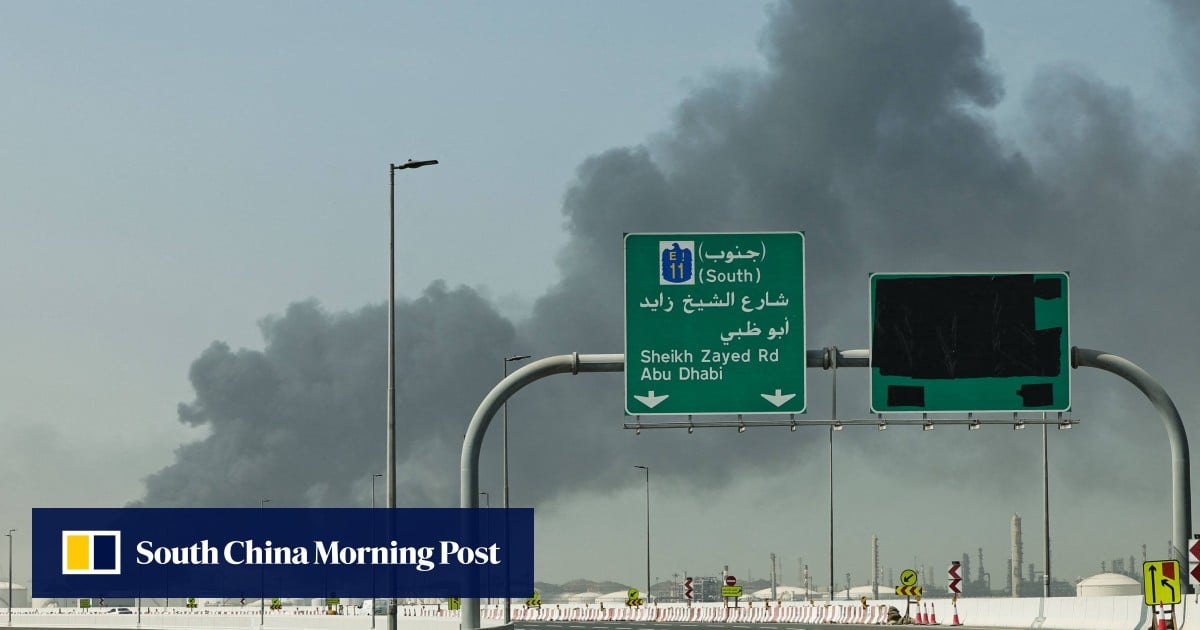
Since Iran came under US and Israeli attack on Saturday, its retaliatory missile and drone barrages have struck Saudi oil refineries, the world’s largest LNG plant in Qatar and the United Arab Emirates’ trade and transit infrastructure.Now the Gulf is signalling it has had enough of just absorbing the hits.None of the six Arab monarchies of the Gulf Cooperation Council wanted this war, analysts say. They had spent months trying to mediate a way out of the confrontation, warning of precisely the kind of regional blowback now unfolding.The destabilising fallout of “Operation Epic Fury” has badly shaken the GCC’s trust in Washington.But Iran’s campaign has forced a harder question on Riyadh, Abu Dhabi, Doha and their partners: how long can a purely defensive posture survive a missile barrage?A satellite image shows plumes of smoke billowing over Dubai on Monday after missile strikes. Photo: Planet Labs PBC/AFP‘Offensive defensive’The clearest sign that the Gulf’s posture was shifting came not from a press conference but from an accident.
SRCSouth China Morning Post
LANGEN
LEANCenter-Right
WORDS165
ENT9
TUE · 2026-03-03 · 07:47 GMTBRIEF NSR-2026-0303-20902
NSR-2026-0303-20902News Report·EN·Conflict
Gulf states take the fight to Iran as missiles target oil, gas and trade
The Gulf states have launched retaliatory missile and drone strikes against Iran, targeting oil refineries in Saudi Arabia, a liquefied natural gas plant in Qatar, and trade and transit infrastructure in the United Arab Emirates. The attacks come after Iran's missile barrages struck these targets on Saturday, following US and Israeli attacks on Iran.
Tom HussainSouth China Morning PostFiled 2026-03-03 · 07:47 GMTLean · Center-RightRead · 1 min
South China Morning PostFIG 01
Reading time
1min
Word count
165words
Sources cited
1cited
Entities identified
9entities
Quality score
100%
§ 01
Briefing Summary
AI-generatedNEWSAR · AI
The Gulf states have launched retaliatory missile and drone strikes against Iran, targeting oil refineries in Saudi Arabia, a liquefied natural gas plant in Qatar, and trade and transit infrastructure in the United Arab Emirates. The attacks come after Iran's missile barrages struck these targets on Saturday, following US and Israeli attacks on Iran. The Gulf Cooperation Council member states had previously tried to mediate a way out of the conflict, but their efforts were unsuccessful. The retaliatory strikes signal that the region is no longer willing to absorb the hits from Iran's attacks. The Gulf states are now forced to consider a more proactive defense strategy against Iranian aggression. This shift in posture marks a significant change for the region.
Confidence 0.90Sources 1Claims 5Entities 9
§ 02
Article analysis
Model · rule-basedFraming
Conflict
National Security
Tone
Mixed Tone
AI-assessed
CalmNeutralAlarmist
Factuality
0.60 / 1.00
Mixed
LowHigh
Sources cited
1
Limited
FewMany
§ 03
Key claims
5 extracted01
A satellite image shows plumes of smoke billowing over Dubai on Monday after missile strikes.
factual
Confidence
1.00
02
Iran's retaliatory missile and drone barrages have struck Saudi oil refineries, the world’s largest LNG plant in Qatar and the United Arab Emirates’ trade and transit infrastructure.
factual
Confidence
0.90
03
Iran came under US and Israeli attack on Saturday.
factual
Confidence
0.90
04
The destabilising fallout of “Operation Epic Fury” has badly shaken the GCC’s trust in Washington.
factual
Confidence
0.80
05
None of the six Arab monarchies of the Gulf Cooperation Council wanted this war.
quoteanalysts
Confidence
0.70
§ 04
Full report
1 min read · 165 words§ 05
Entities
9 identifiedKey playerOppositionContextPositiveNeutralNegative
Locations7
§ 06
Keywords & salience
6 termsgcc
0.90
iran missile strikes
0.90
gulf states
0.80
regional tensions
0.80
oil and gas
0.70
defensive posture
0.60
§ 07
Topic connections
Interactive graph Network visualization showing 51 related topics
View Full Graph Person Organization Location Event|Click node to navigate|Edge numbers = shared articles