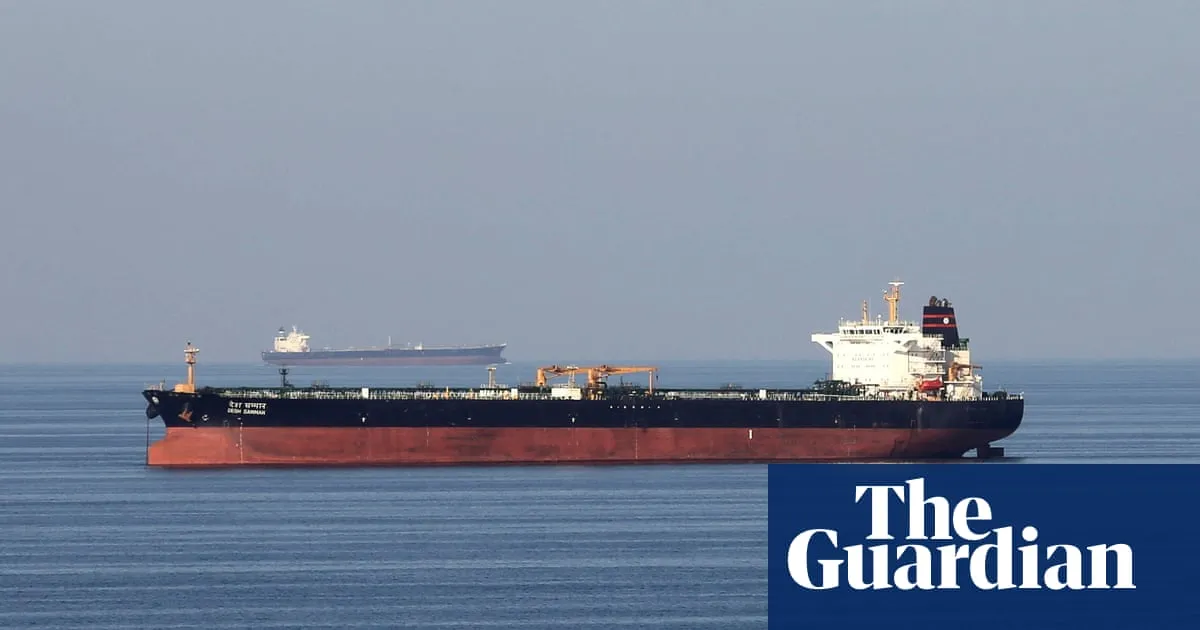
Iran has in effect closed the Strait of Hormuz to oil and gas exports for the past four days with a mixture of drone strikes and fear that has halted commercial maritime traffic despite intense US attacks on Iran’s navy.At least four tankers have been struck and Lloyd’s List Intelligence reported that seaborne traffic had dropped by 80% on Sunday, with little sign of a return as key maritime insurers cancelled cover the next day.In an effort to ratchet up the threat, on Monday, Brig Gen Ebrahim Jabbari, a senior adviser to the commander-in-chief of Iran’s revolution guards, said: “We will attack and set ablaze any ship attempting to cross.”How shipping slowed to a stop through the strait of HormuzHow shipping slowed to a stop through the Strait of HormuzIn fact the most recent reported incidents at sea were on Sunday, according to the UK’s Maritime Trading Organisation. An unknown projectile exploded “in very close proximity” to a vessel 40 miles west of Sharjah in the UAE on 1 March, it said, though no serious casualties were reported.Despite the rhetoric, Tehran’s capacity to attack ships is likely to be sharply reduced. The US Central Command (Centcom) has engaged in a sustained campaign to target Iran’s small navy, and said on Monday it had sunk or crippled all 11 of the ships the navy had operating in the Gulf of Oman to the east of the strait.They include the Shahid Bagheri, a container ship converted over two years to carry, launch and recover drones and helicopters, and, in theory, a means of extending and projecting military power deep into the region, with Iranian officials saying it could remain at sea for 12 months with facilities such as a hospital on board.Gen Dan Caine, the head of the US military, said in a briefing on Monday that the US attack on Iran began with strikes by Tomahawk cruise missiles which “closed in on Iranian naval forces” and were accompanied by “strikes across the southern flank in Iran”. Satellite imagery showed that Iran’s Bandar Abbas naval base was heavily targeted.Tankers off the coast of Fujairah in the UAE. Photograph: Amr Alfiky/ReutersWhile Israel has concentrated on attacking Tehran and politically important regime sites, a key part of the US military effort has been to secure the south of the country, controlling maritime routes and the airspace there.The US military also said it has seen no sign of Iran escalating by attempting to mine the two-mile-wide shipping lanes with the help of its small fleet of submarines. Though details were scant, Centcom said it had targeted the Iranian submarine fleet, also at Bandar Abbas.Nevertheless, tankers laden with oil, natural gas or other fossil fuel products have declined to risk the transit out of the Gulf, though there are reports that some are considering turning off their tracking transponders and risking a transit at night, even though they may not be insured.Conventionally, it is said, about a fifth of the world’s crude oil passes through the Strait of Hormuz. But that masks considerable regional and country variations – while countries in the Americas import 12.5% of their oil via the strait, the proportion rises to 45.7% for China, according to the data agency Kpler.map of gulfMap of the Middle EastIran’s strategy, meanwhile, has quickly evolved to bombing infrastructure and ships at port, with seemingly more effective results. Satellite imagery showed damage to two parts of the Saudi Ras Tanura oil refinery, the country’s largest. It shut down on Monday after two drones were intercepted over the site, their debris causing a fire.Qatar’s state-run energy firm halted liquefied natural gas production “due to military attacks” on Monday. A day later, a fire broke out at Fujairah in the UAE after a drone was intercepted in the city’s port area, a key oil storage and trading centre.The result so far is that oil and gas prices have soared. Brent crude, a global benchmark, surged to $83 a barrel, up 15% from its level on Friday. Meanwhile, Donald Trump is considering proposals for the US government to help oil tankers in the region obtain insurance to restore confidence after a war the US and Israel started.
SRCThe Guardian - World News
LANGEN
LEANCenter-Left
WORDS697
ENT9
TUE · 2026-03-03 · 20:16 GMTBRIEF NSR-2026-0303-21138
NSR-2026-0303-21138News Report·EN·Conflict
Iran has largely halted oil and gas exports through strait of Hormuz
For the past four days, Iran has effectively halted oil and gas exports through the Strait of Hormuz, causing a significant drop in maritime traffic. This disruption follows reported attacks on at least four tankers and warnings from an Iranian military official threatening further attacks on ships attempting to pass through the strait.
Dan Sabbagh Defence and security editorThe Guardian - World NewsFiled 2026-03-03 · 20:16 GMTLean · Center-LeftRead · 3 min
The Guardian - World NewsFIG 01
Reading time
3min
Word count
697words
Sources cited
6cited
Entities identified
9entities
Quality score
100%
§ 01
Briefing Summary
AI-generatedNEWSAR · AI
For the past four days, Iran has effectively halted oil and gas exports through the Strait of Hormuz, causing a significant drop in maritime traffic. This disruption follows reported attacks on at least four tankers and warnings from an Iranian military official threatening further attacks on ships attempting to pass through the strait. In response, the US Central Command has engaged in a sustained campaign targeting Iran's navy, claiming to have sunk or crippled all 11 of its ships operating in the Gulf of Oman. The US military's efforts also include securing southern Iran, controlling maritime routes and airspace, and preventing Iran from mining the shipping lanes. The recent incidents at sea occurred near Sharjah in the UAE, prompting key maritime insurers to cancel coverage.
Confidence 0.90Sources 6Claims 5Entities 9
§ 02
Article analysis
Model · rule-basedFraming
Conflict
Economic Impact
Tone
Mixed Tone
AI-assessed
CalmNeutralAlarmist
Factuality
0.80 / 1.00
Factual
LowHigh
Sources cited
6
Well sourced
FewMany
§ 03
Key claims
5 extracted01
An unknown projectile exploded “in very close proximity” to a vessel 40 miles west of Sharjah in the UAE on 1 March.
factualUK’s Maritime Trading Organisation
Confidence
1.00
02
We will attack and set ablaze any ship attempting to cross.
quoteBrig Gen Ebrahim Jabbari
Confidence
1.00
03
Seaborne traffic had dropped by 80% on Sunday.
statisticLloyd’s List Intelligence
Confidence
1.00
04
US Centcom said it had sunk or crippled all 11 of the ships the navy had operating in the Gulf of Oman.
factualUS Central Command (Centcom)
Confidence
0.90
05
Iran has in effect closed the strait of Hormuz to oil and gas exports for the past four days.
factualnull
Confidence
0.90
§ 04
Full report
3 min read · 697 words§ 05
Entities
9 identifiedKey playerOppositionContextPositiveNeutralNegative
Organizations2
§ 06
Keywords & salience
9 termsstrait of hormuz
1.00
oil and gas exports
0.90
maritime traffic
0.80
us attacks
0.70
iranian navy
0.70
drone strikes
0.60
us central command
0.50
maritime insurers
0.50
shipping lanes
0.40
§ 07
Topic connections
Interactive graph Network visualization showing 51 related topics
View Full Graph Person Organization Location Event|Click node to navigate|Edge numbers = shared articles