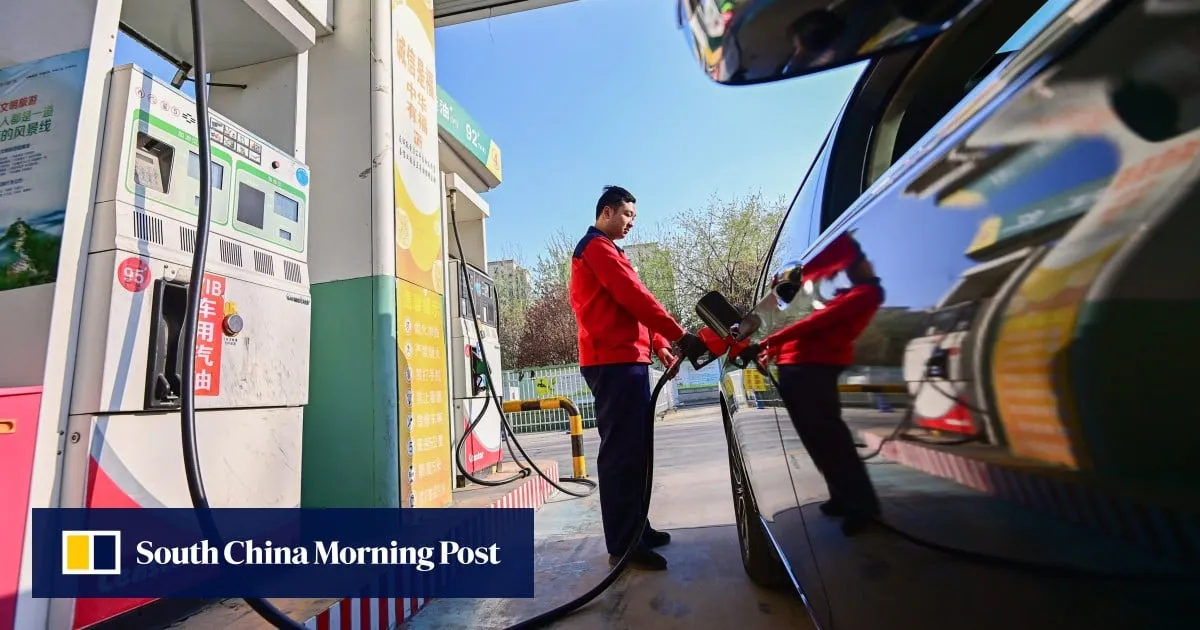
Rising energy costs driven by Middle Eastern geopolitical tensions may provide some relief to China’s years-long struggle with weak prices, but analysts warn that a spike in oil prices could spark a scenario in which stagnant economic growth collides with rising inflation, hindering the nation’s economic recovery.“Rising oil prices [could] lead to stagflation, which helps increase the inflation rate but also leads to a decline in economic growth and an increase in unemployment,” said Su Jian, an economics professor at Peking University.Su, who is also director of the university’s Centre for National Economic Research, pointed to two previous oil crises – during the 1973 Yom Kippur War, and after the Iranian revolution and subsequent Iran-iraq-war" class="entity-link entity-event" data-entity-id="10188" data-entity-type="event">Iran-Iraq War in the late 1970s and early 1980s – that triggered stagflation in oil-importing nations.Higher costs have historically forced factories to cut production and lay off workers, while prices for goods continued to rise even as economies slowed, he noted.The current military confrontation between Iran and US-Israeli forces entered its fifth day on Wednesday, heightening risks to a region that is vital to global energy flows and maritime trade.Oil prices rose further on Wednesday. Brent crude – one of the leading benchmarks for the global crude oil commodity market – traded above US$84 per barrel, up 16 per cent since Friday, before hostilities escalated. And West Texas Intermediate crude, a key United States oil benchmark, had risen 15 per cent to above US$77.
SRCSouth China Morning Post
LANGEN
LEANCenter-Right
WORDS238
ENT9
WED · 2026-03-04 · 10:00 GMTBRIEF NSR-2026-0304-21261
NSR-2026-0304-21261News Report·EN·Economic Impact
Mideast oil crisis revives stagflation spectre, haunting China’s deflation battle
Rising oil prices, spurred by Middle Eastern geopolitical tensions between Iran and US-Israeli forces, are threatening to trigger stagflation in China. While China has been battling deflation, analysts warn that increased energy costs could lead to stagnant economic growth coupled with rising inflation.
Xinyi WuSouth China Morning PostFiled 2026-03-04 · 10:00 GMTLean · Center-RightRead · 1 min
South China Morning PostFIG 01
Reading time
1min
Word count
238words
Sources cited
1cited
Entities identified
9entities
Quality score
100%
§ 01
Briefing Summary
AI-generatedNEWSAR · AI
Rising oil prices, spurred by Middle Eastern geopolitical tensions between Iran and US-Israeli forces, are threatening to trigger stagflation in China. While China has been battling deflation, analysts warn that increased energy costs could lead to stagnant economic growth coupled with rising inflation. Peking University economics professor Su Jian notes historical precedents where oil crises led to stagflation in oil-importing nations, forcing factories to cut production and lay off workers. The price of Brent crude oil has risen 16% since Friday, trading above $84 per barrel, while West Texas Intermediate crude has risen 15% to above $77. The current conflict, now in its fifth day, poses a significant risk to global energy flows and maritime trade.
Confidence 0.90Sources 1Claims 5Entities 9
§ 02
Article analysis
Model · rule-basedFraming
Economic Impact
Conflict
Tone
Measured
AI-assessed
CalmNeutralAlarmist
Factuality
0.70 / 1.00
Factual
LowHigh
Sources cited
1
Limited
FewMany
§ 03
Key claims
5 extracted01
West Texas Intermediate crude had risen 15 per cent to above US$77.
statisticnull
Confidence
1.00
02
Brent crude traded above US$84 per barrel, up 16 per cent since Friday, before hostilities escalated.
statisticnull
Confidence
1.00
03
Rising oil prices [could] lead to stagflation, which helps increase the inflation rate but also leads to a decline in economic growth.
quoteSu Jian, economics professor at Peking University
Confidence
0.90
04
A spike in oil prices could spark a scenario in which stagnant economic growth collides with rising inflation, hindering the nation’s economic recovery.
predictionnull
Confidence
0.80
05
Rising energy costs driven by Middle Eastern geopolitical tensions may provide some relief to China’s years-long struggle with weak prices.
predictionnull
Confidence
0.70
§ 04
Full report
1 min read · 238 words§ 05
Entities
9 identifiedKey playerOppositionContextPositiveNeutralNegative
People1
Organizations1
Locations5
§ 06
Keywords & salience
10 termsstagflation
1.00
oil prices
0.90
economic growth
0.70
inflation
0.70
mideast oil crisis
0.60
china
0.60
economic recovery
0.50
geopolitical tensions
0.50
energy costs
0.40
unemployment
0.40
§ 07
Topic connections
Interactive graph Network visualization showing 51 related topics
View Full Graph Person Organization Location Event|Click node to navigate|Edge numbers = shared articles