The war on Iran and mounting pressure inside Lebanon have turned confrontation with Israel into an existential calculation.Smoke rises after an Israeli strike on Lebanese capital Beirut's southern suburbs, following an escalation between Hezbollah and Israel amid US-Israeli attacks on Iran, March 5, 2026 [Claudia Grec/Reuters]Beirut" class="entity-link entity-organization" data-entity-id="16666" data-entity-type="organization">American University of Beirut, Distinguished Public Policy Fellow.Published On 5 Mar 2026The ongoing United States-Israel attack on Iran, triggered by the assassination of Iran’s supreme leader last Saturday, has rekindled military and political action between Lebanon and Israel, as Hezbollah again takes centre stage while facing the most existential crisis in its history. Every aspect of Hezbollah’s political position in Lebanon, its military capabilities, and its war plans against Israel is now under intense scrutiny from regional and domestic actors.The Lebanon-Israel front had been relatively quiet since the last Hezbollah-Israel ceasefire was agreed in November 2024 – “quiet” meaning that while Hezbollah and the Lebanese government routinely discussed whether and how to implement the government’s plan to disarm it, Israel violated the ceasefire daily, bombing numerous targets and killing dozens of people, and occupied more pieces of Lebanese land.All that changed overnight after Hezbollah earlier this week launched a low-intensity but highly symbolic rockets-and-drones attack against northern Israel, for which Israel retaliated with bombings that killed at least 35 Lebanese and forced the evacuation of tens of thousands of people from some 55 villages across the south. Israel also called up more than 100,000 reserves to participate in a planned military action in Lebanon to silence Hezbollah’s weapons. The Lebanese government, unusually, decisively announced on Monday “the immediate ban of all Hezbollah security and military activities”, which would now be considered “illegal”, and demanded the party surrender its weapons.This rekindling of the Lebanon-Israel front during the US-Israeli attacks on Iran immediately raised questions that are difficult to answer credibly. How capable is Hezbollah militarily after it was severely attacked in 2024? Is it willing to re-enter the war against Israel in an ongoing manner, or was this attack a one-off expression of its solidarity with Iran after its supreme leader was assassinated last Saturday? Did Hezbollah decide on its own to attack Israel, or was the decision made by Iran’s Islamic Revolutionary Guard Corps (IRGC) in Tehran? Will Israel routinely bomb dozens of targets in Lebanon and assassinate Hezbollah and other resistance leaders, or send in a ground force to occupy south Lebanon once again? And will the Lebanese government push ahead with its plan to forcibly disarm Hezbollah, risking severe political and ethnic tension in the country that is already economically bankrupt and deeply divided?The outcome of this heightened moment of tension and strife will impact political and military conditions across the Middle East, because its main actors accurately reflect the most important dynamics that have shaped – and often ravaged – the entire Middle East for the past century. These include: governments and national identities, non-state armed actors and sub-national identities, Israel, Western colonial powers, and Middle Eastern regional powers.Remarkably missing from this list of actors are the ordinary citizens across the Middle East, who normally have little or no say in choosing their governments or shaping their national policies. How these forces interact in Lebanon in the coming weeks and months will help shape wider outcomes in the region, linked to the war against Iran and other dynamics, including future relations with the US and other Western powers, China, and Russia. The month ahead will reveal how effective Hezbollah’s military is, whether in resisting Israeli troops inside Lebanon or attacking Israel by air.The big question now is why Hezbollah decided to re-engage Israel militarily at this moment, given its weakened state and the political pressures it faces inside Lebanon.Part of the explanation appears to be that waiting carried its own risks: further Israeli attacks, deepening political pressure inside Lebanon, and the possibility that a weakened Iran might be less able to sustain its support. The answer becoming clearer by the hour is that both Iran and Hezbollah believe they face an existential moment of survival or doom, given the assault on Iran and Hezbollah’s precarious vulnerability to domestic, Israeli, and American pressures.Hezbollah has lost some public support in Lebanon because of its weaker military status and blowback from many Lebanese who are fed up with having to cope with successive wars, destruction, evacuations, and impoverishment. Crucially, it also seems to be losing the support of its longtime ally Nabih Berri, the Shia speaker of Parliament and leader of Amal, who has long served as a key political bridge between Hezbollah and the Lebanese state. Ministers from Amal voted in the government decision to outlaw Hezbollah militarism.The attack on Iran and its leaders made Hezbollah realise its precarious position among three dynamics: its squeezed political and military space in Lebanon; the possibility that Iran could be so damaged that it could not maintain its support for Hezbollah; and US-Israeli pressure to keep attacking Lebanon while pushing the Beirut government towards some form of agreement with Israel, if not a full peace treaty then at least a non-belligerency arrangement.If Hezbollah waited too long to resume resisting Israel militarily, it could find itself in a hole from which it could not emerge intact. This reality caused the party to renege on its promise to Berri months ago that it would not restart the war with Israel, which made Berri feel slighted, weakening their traditional alliance.Hezbollah also recognises that the Iranian-led “axis of resistance” – which includes itself, Iran, Hamas, Ansar Allah in Yemen, and Popular Mobilisation Forces in Iraq – is weakeneddue to the military attacks against all the component groups. Hezbollah-Iran are its critical core, and they both now feel they must fight with all their capabilities to force US-Israel into a ceasefire, or else be doomed.The critical unanswered question now is whether Iran and Hezbollah’s military capabilities are sufficient to withstand the vicious and relentless attacks against them , and so toforce a ceasefire. Their will to fight is not in doubt. However the current battles across the region end for Hezbollah and Iran – in defeat, victory, or damaged after a stalemate-induced truce – the Middle East will witness structural changes in regional and global alliances that reflect new political and ideological balances across the region.The views expressed in this article are the author’s own and do not necessarily reflect Al Jazeera’s editorial stance.
SRCAl Jazeera
LANGEN
LEANCenter
WORDS1 062
ENT7
THU · 2026-03-05 · 11:10 GMTBRIEF NSR-2026-0305-21678
NSR-2026-0305-21678Analysis·EN·Conflict
Hezbollah’s risky return to the battlefield
Following the assassination of Iran's supreme leader and the subsequent US-Israeli attacks on Iran in March 2026, Hezbollah launched a symbolic attack against northern Israel, reigniting conflict between Lebanon and Israel. Israel retaliated with bombings in Lebanon, resulting in casualties and evacuations.
Rami G KhouriAl JazeeraFiled 2026-03-05 · 11:10 GMTLean · CenterRead · 5 min
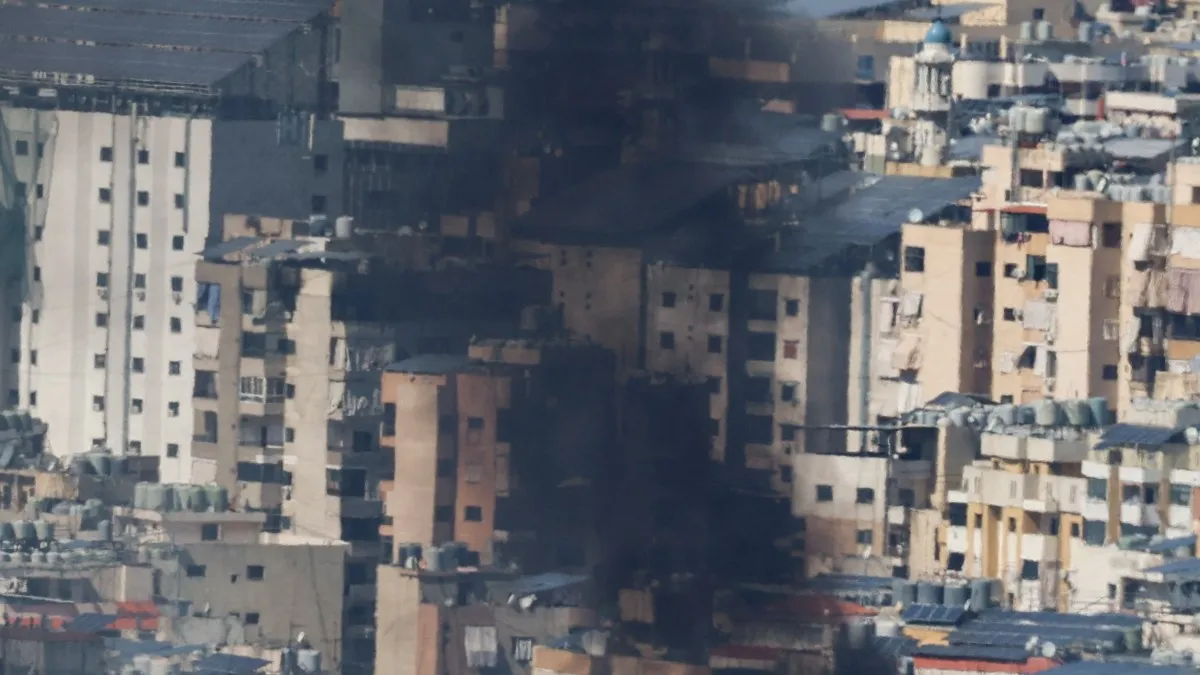
Al JazeeraFIG 01
Reading time
5min
Word count
1 062words
Sources cited
1cited
Entities identified
7entities
Quality score
100%
§ 01
Briefing Summary
AI-generatedNEWSAR · AI
Following the assassination of Iran's supreme leader and the subsequent US-Israeli attacks on Iran in March 2026, Hezbollah launched a symbolic attack against northern Israel, reigniting conflict between Lebanon and Israel. Israel retaliated with bombings in Lebanon, resulting in casualties and evacuations. The Lebanese government responded by banning Hezbollah's security and military activities and demanding disarmament. This escalation raises questions about Hezbollah's military capabilities after the 2024 attacks, its willingness to engage in sustained conflict with Israel, and the extent of Iran's influence on Hezbollah's decision to attack. The situation places Hezbollah in an existential crisis, facing scrutiny from both regional and domestic actors.
Confidence 0.90Sources 1Claims 5Entities 7
§ 02
Article analysis
Model · rule-basedFraming
Conflict
Political Strategy
Tone
Mixed Tone
AI-assessed
CalmNeutralAlarmist
Factuality
0.60 / 1.00
Mixed
LowHigh
Sources cited
1
Limited
FewMany
§ 03
Key claims
5 extracted01
The Lebanese government, unusually, decisively announced on Monday “the immediate ban of all Hezbollah security and military activities”.
factual
Confidence
0.90
02
Israel retaliated with bombings that killed at least 35 Lebanese and forced the evacuation of tens of thousands of people from some 55 villages across the south.
factual
Confidence
0.90
03
Hezbollah earlier this week launched a low-intensity but highly symbolic rockets-and-drones attack against northern Israel.
factual
Confidence
0.90
04
The ongoing United States-Israel attack on Iran, triggered by the assassination of Iran’s supreme leader last Saturday, has rekindled military and political action between Lebanon and Israel.
factual
Confidence
0.90
05
The Lebanon-Israel front had been relatively quiet since the last Hezbollah-Israel ceasefire was agreed in November 2024.
factual
Confidence
0.80
§ 04
Full report
5 min read · 1 062 words§ 05
Entities
7 identifiedKey playerOppositionContextPositiveNeutralNegative
Organizations2
§ 06
Keywords & salience
9 termshezbollah
1.00
israel
0.90
lebanon
0.80
iran
0.70
military action
0.70
us-israeli attacks
0.60
existential crisis
0.60
ceasefire
0.50
political position
0.40
§ 07
Topic connections
Interactive graph Network visualization showing 51 related topics
View Full Graph Person Organization Location Event|Click node to navigate|Edge numbers = shared articles