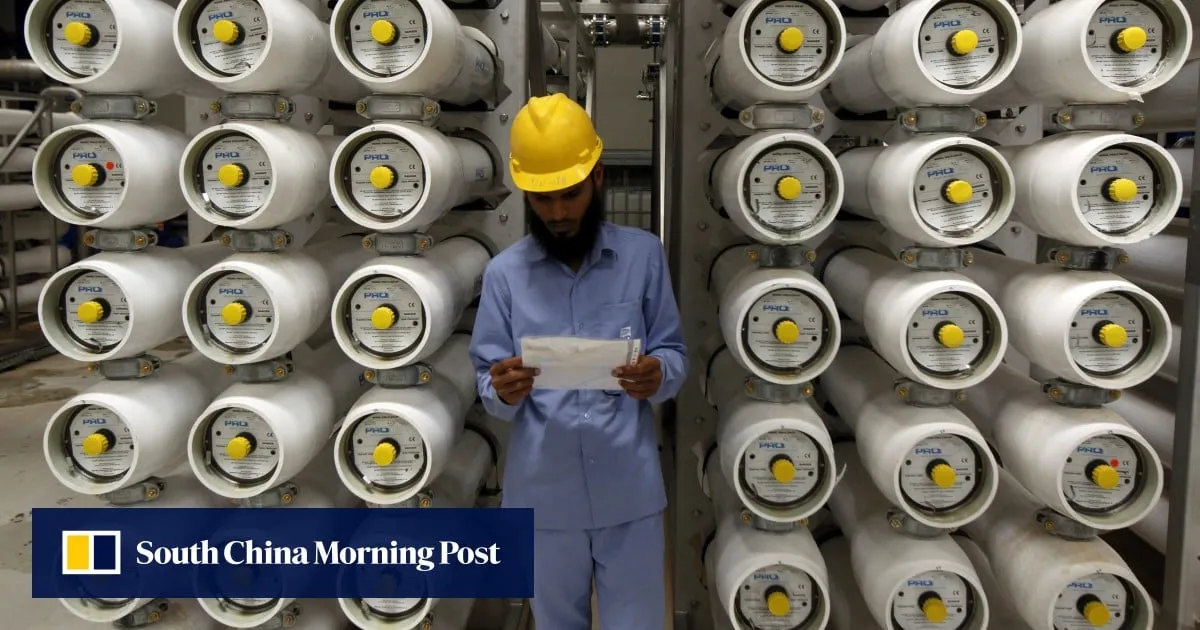
As missiles and drones curtail energy production across the Persian Gulf, analysts warn that water, not oil, may be the resource most at risk in the energy-rich but arid region.Hundreds of desalination plants sit along the Persian Gulf coast, putting individual systems that supply water to millions within range of Iranian missile or drone strikes. Without them, major cities could not sustain their current populations.In Kuwait, about 90 per cent of drinking water comes from desalination, along with roughly 86 per cent in Oman and about 70 per cent in Saudi Arabia. The technology removes salt from seawater – most commonly by pushing it through ultrafine membranes in a process known as reverse osmosis – to produce the freshwater that sustains cities, hotels, industry and some agriculture across one of the world’s driest regions.For people living outside the Middle East, the main concern of the Iran war has been the impact on energy prices. The Gulf produces about a third of the world’s crude exports, and energy revenues underpin national economies. Fighting has already halted tanker traffic through key shipping routes and disrupted port activity, forcing some producers to curb exports as storage tanks fill.But the infrastructure that keeps Gulf cities supplied with drinking water may be equally vulnerable.“Everyone thinks of Saudi Arabia and their neighbours as petrostates. But I call them saltwater kingdoms. They’re man-made fossil-fuelled water superpowers,” said Michael Christopher Low, director of the Middle East Center at the University of Utah. “It’s both a monumental achievement of the 20th century and a certain kind of vulnerability.”Early signs of risk
SRCSouth China Morning Post
LANGEN
LEANCenter-Right
WORDS262
ENT7
SUN · 2026-03-08 · 13:22 GMTBRIEF NSR-2026-0308-22557
NSR-2026-0308-22557News Report·EN·National Security
Iran strikes on desalination plants threaten Arab states’ water supplies
Analysts warn that Iranian missile and drone strikes pose a significant threat to water supplies in Arab states along the Persian Gulf. These nations, including Kuwait, Oman, and Saudi Arabia, rely heavily on desalination plants for drinking water, with some countries sourcing up to 90% of their water this way.
Associated PressSouth China Morning PostFiled 2026-03-08 · 13:22 GMTLean · Center-RightRead · 2 min
South China Morning PostFIG 01
Reading time
2min
Word count
262words
Sources cited
1cited
Entities identified
7entities
Quality score
100%
§ 01
Briefing Summary
AI-generatedNEWSAR · AI
Analysts warn that Iranian missile and drone strikes pose a significant threat to water supplies in Arab states along the Persian Gulf. These nations, including Kuwait, Oman, and Saudi Arabia, rely heavily on desalination plants for drinking water, with some countries sourcing up to 90% of their water this way. The plants, which remove salt from seawater, are vulnerable to attack, potentially leaving major cities unable to sustain their populations. While the focus has been on the impact of conflict on energy prices and oil exports, the vulnerability of desalination infrastructure presents an equally critical risk to the region's stability, highlighting the dependence of these "saltwater kingdoms" on this technology.
Confidence 0.90Sources 1Claims 5Entities 7
§ 02
Article analysis
Model · rule-basedFraming
National Security
Economic Impact
Tone
Mixed Tone
AI-assessed
CalmNeutralAlarmist
Factuality
0.70 / 1.00
Factual
LowHigh
Sources cited
1
Limited
FewMany
§ 03
Key claims
5 extracted01
They’re man-made fossil-fuelled water superpowers.
quoteMichael Christopher Low, director of the Middle East Center at the University of Utah
Confidence
1.00
02
The Gulf produces about a third of the world’s crude exports.
statistic
Confidence
1.00
03
In Kuwait, about 90 per cent of drinking water comes from desalination.
statistic
Confidence
1.00
04
Hundreds of desalination plants sit along the Persian Gulf coast.
factual
Confidence
1.00
05
Without them, major cities could not sustain their current populations.
prediction
Confidence
0.80
§ 04
Full report
2 min read · 262 words§ 05
Entities
7 identifiedKey playerOppositionContextPositiveNeutralNegative
Organizations1
§ 06
Keywords & salience
9 termsdesalination plants
1.00
water supplies
0.90
persian gulf
0.80
iran strikes
0.70
water security
0.70
reverse osmosis
0.60
middle east
0.50
energy production
0.50
saltwater kingdoms
0.40
§ 07
Topic connections
Interactive graph Network visualization showing 51 related topics
View Full Graph Person Organization Location Event|Click node to navigate|Edge numbers = shared articles