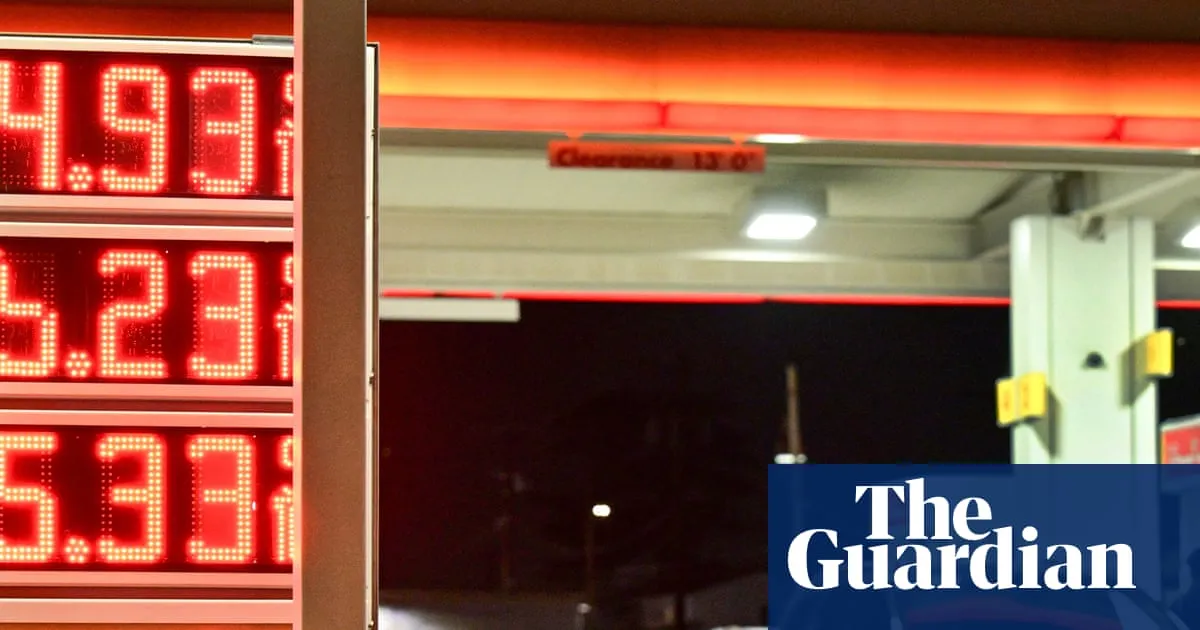
Across the US, the average cost of a gallon of regular gasoline has jumped nearly 27 cents in a week, to $3.25, and American consumers are bracing for higher prices at the gas pump as the US-Israel conflict with Iran threatens to disrupt the global oil supply.That fear has entered the White House too, where Donald Trump’s chief of staff, Susie Wiles, is reportedly hunting for ideas to lower gasoline prices and officials are getting “screamed at” to bring good news, according to Politico.War in oil-rich countries used to cause panic at US gas stations. Those fears have subsided somewhat as the US has become the world’s largest crude oil producer. And, despite this week’s price hikes, American consumers are somewhat insulated from the global energy shock. The supply cushion has its limits, but those limits are high: US producers can ramp up production quickly if high oil prices are sustained, and the White House is under immense pressure to keep prices low as the conflict continues.The US is forecast to pump a near-record 13.6m barrels of crude oil per day in 2026, according to the US Energy Information Administration (EIA). Saudi Arabia is the next biggest producer at 9.87m barrels, according to the International Energy Agency. Iran produces 3% of global oil supplies.High American production means that US consumers may be partially insulated from energy shocks, though they’re not completely immune.Oil is a globally traded market, and prices are influenced by global events. After the US-Israel strikes, Iran effectively shut down traffic through the strait of Hormuz, a key shipping area for energy to Europe and Asia where about 20% of the world’s oil and natural gas flows through.After Trump announced on Tuesday that the US will provide insurance guarantees and naval escorts for oil tankers through the strait, oil prices were pulled off their peaks. They pushed higher on Friday with Brent crude oil, the global benchmark, passing $90 after Trump said there would “be no deal with Iran except UNCONDITIONAL SURRENDER!”Higher US crude oil prices have already flowed to pump prices. Even if oil prices stayed at current levels, Patrick De Haan, head of petroleum analysis at Gas Buddy, expects retail prices could gain another 20 to 25 cents a gallon, which could push the nationwide average to $3.40.As hard as that is to swallow for US drivers, Joseph Brusuelas, chief economist for RSM, a middle-market assurance, tax and consulting firm, said the resilience of the US economy suggests US oil prices need to hit $125 a barrel, or $4.25 a gallon for gasoline, to inflict economic damage.“The US economy is a dynamic and resilient, $30tn beast. It’s got a lot of runway here, in terms of how much pain it can absorb from oil prices and volatility across the energy complex,” Brusuelas said. “But even that $30tn beast has its pain points.”If US oil prices rise to $125 barrel, US gross domestic product (GDP) could drop at least 0.8% and consumer inflation could go up to 4%, he said. Every $10 increase in the price of a barrel of oil can lead to a 0.1% drop in overall growth and 0.2% increase in price levels.The last time gas prices jumped high enough to cause consumers to cut back on spending was in June 2022, Brusuelas said, following Russia’s invasion of Ukraine. At that time, US gasoline prices averaged $5.01 a gallon.It’s possible that oil prices will not reach that level. Higher prices could entice shale-oil producers to increase output. Though the EIA forecast of 13.6m barrels produced per day in the US is a near-record, it is largely unchanged from 2025’s output.“Recent history does provide some comfort that this could happen,” Brusuelas said, referring to the US response to oil shocks after Russia invaded Ukraine.The US could step up output if the strait of Hormuz remains closed. The US has been a net energy exporter since 2019 and could expand oil production to meet demand, industry experts say, and it would likely head to Europe. That could lower global oil prices.But prices would need to stay above $70 a barrel for a while before shale oil producers would start considering upping production, said Rob Thummel, senior portfolio manager at Tortoise Capital.“They could gradually add half a million barrels a day, start with that and see what demand does, but there is potential for the US to continue to grow production from shale,” he said.
SRCThe Guardian - World News
LANGEN
LEANCenter-Left
WORDS738
ENT11
SUN · 2026-03-08 · 12:00 GMTBRIEF NSR-2026-0308-22590
NSR-2026-0308-22590News Report·EN·Economic Impact
White House worries as gas prices jump amid ongoing US-Israel war on Iran
Gas prices in the US have risen sharply, increasing nearly 27 cents per gallon in one week to an average of $3.25, due to concerns that the US-Israel conflict with Iran could disrupt the global oil supply. The White House is reportedly seeking solutions to lower gasoline prices amid pressure to keep them down.
Debbie CarlsonThe Guardian - World NewsFiled 2026-03-08 · 12:00 GMTLean · Center-LeftRead · 3 min
The Guardian - World NewsFIG 01
Reading time
3min
Word count
738words
Sources cited
4cited
Entities identified
11entities
Quality score
100%
§ 01
Briefing Summary
AI-generatedNEWSAR · AI
Gas prices in the US have risen sharply, increasing nearly 27 cents per gallon in one week to an average of $3.25, due to concerns that the US-Israel conflict with Iran could disrupt the global oil supply. The White House is reportedly seeking solutions to lower gasoline prices amid pressure to keep them down. While the US is the world's largest crude oil producer, offering some insulation from global energy shocks, it is not entirely immune, especially after Iran effectively shut down traffic through the strait of Hormuz, a key shipping area for energy to Europe and Asia. Despite measures like insurance guarantees and naval escorts for oil tankers, prices remain volatile, and experts predict further increases of 20-25 cents per gallon are possible, potentially pushing the national average to $3.40.
Confidence 0.90Sources 4Claims 5Entities 11
§ 02
Article analysis
Model · rule-basedFraming
Economic Impact
Political Strategy
Tone
Measured
AI-assessed
CalmNeutralAlarmist
Factuality
0.70 / 1.00
Factual
LowHigh
Sources cited
4
Well sourced
FewMany
§ 03
Key claims
5 extracted01
Iran produces 3% of global oil supplies.
factual
Confidence
1.00
02
The US is forecast to pump a near-record 13.6m barrels of crude oil per day in 2026.
statisticUS Energy Information Administration (EIA)
Confidence
1.00
03
The average cost of a gallon of regular gasoline has jumped nearly 27 cents in a week, to $3.25.
factual
Confidence
1.00
04
Retail prices could gain another 20 to 25 cents a gallon, which could push the nationwide average to $3.40.
predictionPatrick De Haan, head of petroleum analysis at Gas Buddy
Confidence
0.80
05
US oil prices need to hit $125 a barrel, or $4.25 a gallon for gasoline, to inflict economic damage.
predictionJoseph Brusuelas, chief economist for RSM
Confidence
0.70
§ 04
Full report
3 min read · 738 words§ 05
Entities
11 identifiedKey playerOppositionContextPositiveNeutralNegative
Organizations3
§ 06
Keywords & salience
8 termsgas prices
1.00
oil prices
0.90
us-iran conflict
0.80
oil supply
0.70
crude oil production
0.60
strait of hormuz
0.50
energy shock
0.50
global market
0.40
§ 07
Topic connections
Interactive graph Network visualization showing 51 related topics
View Full Graph Person Organization Location Event|Click node to navigate|Edge numbers = shared articles