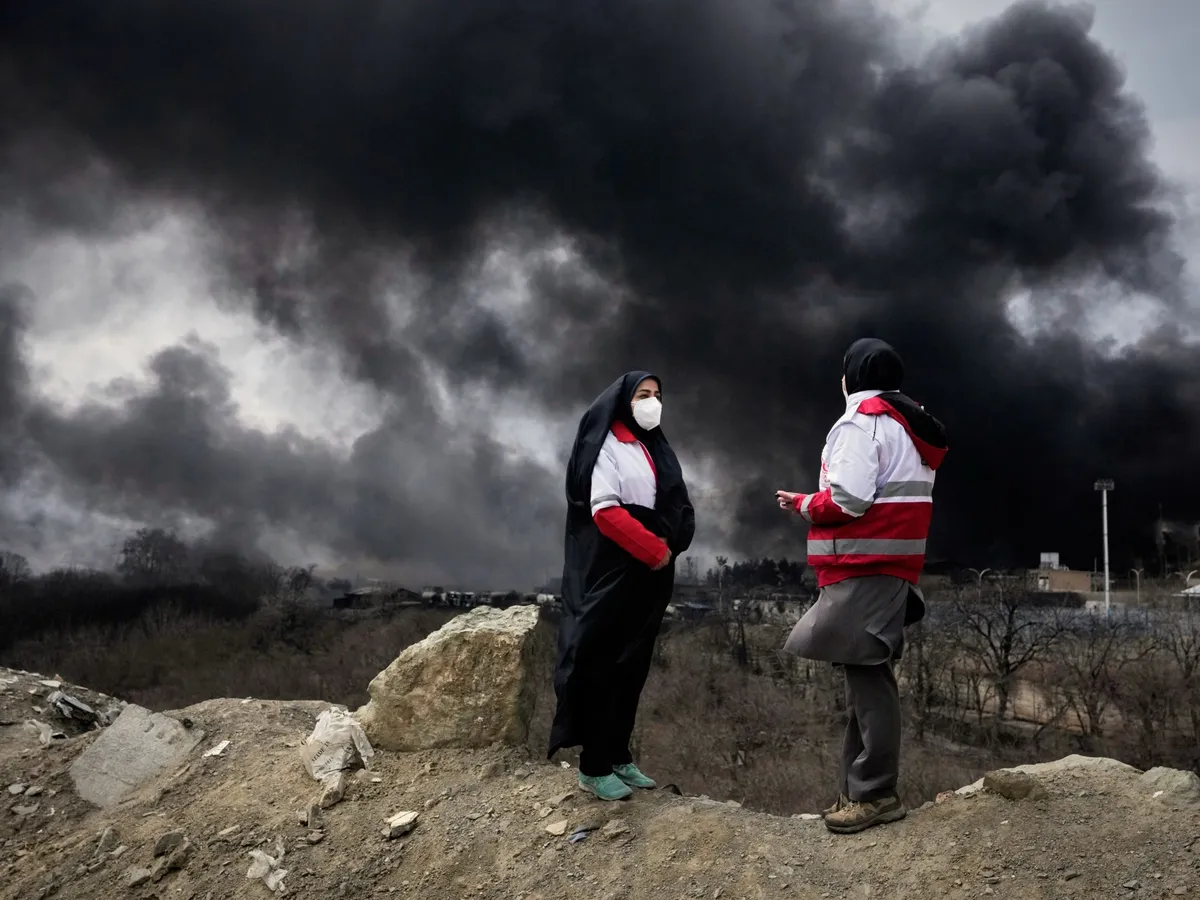
As toxic clouds smother Tehran and rain falls, analysts say Israel’s aim is to break the resilience of the Iranian people.Published On 9 Mar 2026Israeli strikes on fuel depots and petroleum logistic sites in Tehran on Sunday saw apocalyptic images coming out of the Iranian capital, as the spilled oil ignited a river of fire, and thick black smoke blanketed the city of 10 million, leaving streets and vehicles covered with soot.Israel and the United States claimed they were targeting Iranian military and government sites, but government officials and people say civilian structures such as schools, hospitals and major landmarks are increasingly coming under attack. At least 1,255 people have been killed in the strikes since February 28.What Israeli and US military planners frame as a calculated degradation of state infrastructure is being described by local officials and environmental experts as an act of total warfare, and collective punishment.Shina Ansari, head of Iran’s Department of Environment, described the systematic destruction of the oil depots as a blatant act of ecocide.The attacks systematically targeted four major storage facilities and a distribution centre, including the Tehran-refinery" class="entity-link entity-location" data-entity-id="41074" data-entity-type="location">Tehran refinery in the south and depots in Aghdasieh, Shahran, and Karaj. In the Shahran district, witnesses reported unrefined oil leaking directly into the streets as temperatures hovered around 13C (55F).Ansari from Iran’s Department of Environment stated that the environment remains the silent victim of the war, noting that the incineration of vast fuel reserves has trapped the capital under a suffocating shroud of pollutants.The medical and environmental fallout is immediate and severe. The Iranian Red Crescent Society warned that the smoke contains high concentrations of toxic hydrocarbons, sulphur, and nitrogen oxides. The organisation noted that any rainfall passing through these plumes becomes highly acidic, posing risks of skin burns and severe lung damage upon contact or inhalation.
SRCAl Jazeera
LANGEN
LEANCenter
WORDS301
ENT11
MON · 2026-03-09 · 14:34 GMTBRIEF NSR-2026-0309-22817
NSR-2026-0309-22817News Report·EN·Conflict
Israeli attacks on Iran fuel sites aim ‘to break resilience of people’
Israeli strikes on fuel depots and petroleum sites in Tehran on Sunday, March 9, 2026, have resulted in significant environmental damage and casualties. The attacks, which began on February 28th, have killed at least 1,255 people and targeted civilian structures, according to Iranian officials.
Mohammad MansourAl JazeeraFiled 2026-03-09 · 14:34 GMTLean · CenterRead · 2 min
Al JazeeraFIG 01
Reading time
2min
Word count
301words
Sources cited
3cited
Entities identified
11entities
Quality score
100%
§ 01
Briefing Summary
AI-generatedNEWSAR · AI
Israeli strikes on fuel depots and petroleum sites in Tehran on Sunday, March 9, 2026, have resulted in significant environmental damage and casualties. The attacks, which began on February 28th, have killed at least 1,255 people and targeted civilian structures, according to Iranian officials. The strikes targeted major storage facilities and a distribution center, including the Tehran refinery, leading to widespread oil spills and toxic smoke. Iranian officials and environmental experts are calling the attacks "ecocide" and collective punishment, while Israel and the U.S. claim they are targeting military and government sites. The Iranian Red Crescent Society warns of severe health risks from the toxic smoke and acid rain.
Confidence 0.90Sources 3Claims 5Entities 11
§ 02
Article analysis
Model · rule-basedFraming
Conflict
Environmental
Tone
Sensational
AI-assessed
CalmNeutralAlarmist
Factuality
0.60 / 1.00
Mixed
LowHigh
Sources cited
3
Well sourced
FewMany
§ 03
Key claims
5 extracted01
The Iranian Red Crescent Society warned that the smoke contains high concentrations of toxic hydrocarbons, sulphur, and nitrogen oxides.
quoteThe Iranian Red Crescent Society
Confidence
1.00
02
The attacks systematically targeted four major storage facilities and a distribution centre.
factualnull
Confidence
1.00
03
Shina Ansari described the systematic destruction of the oil depots as a blatant act of ecocide.
quoteShina Ansari, head of Iran’s Department of Environment
Confidence
1.00
04
At least 1,255 people have been killed in the strikes since February 28.
statisticnull
Confidence
1.00
05
Israeli strikes on fuel depots and petroleum logistic sites in Tehran occurred on Sunday.
factualnull
Confidence
1.00
§ 04
Full report
2 min read · 301 words§ 05
Entities
11 identifiedKey playerOppositionContextPositiveNeutralNegative
Organizations2
§ 06
Keywords & salience
10 termsisraeli attacks
0.90
fuel sites
0.80
iran
0.80
environmental impact
0.70
ecocide
0.60
toxic clouds
0.60
state infrastructure
0.50
air pollution
0.50
collective punishment
0.50
tehran
0.40
§ 07
Topic connections
Interactive graph Network visualization showing 51 related topics
View Full Graph Person Organization Location Event|Click node to navigate|Edge numbers = shared articles