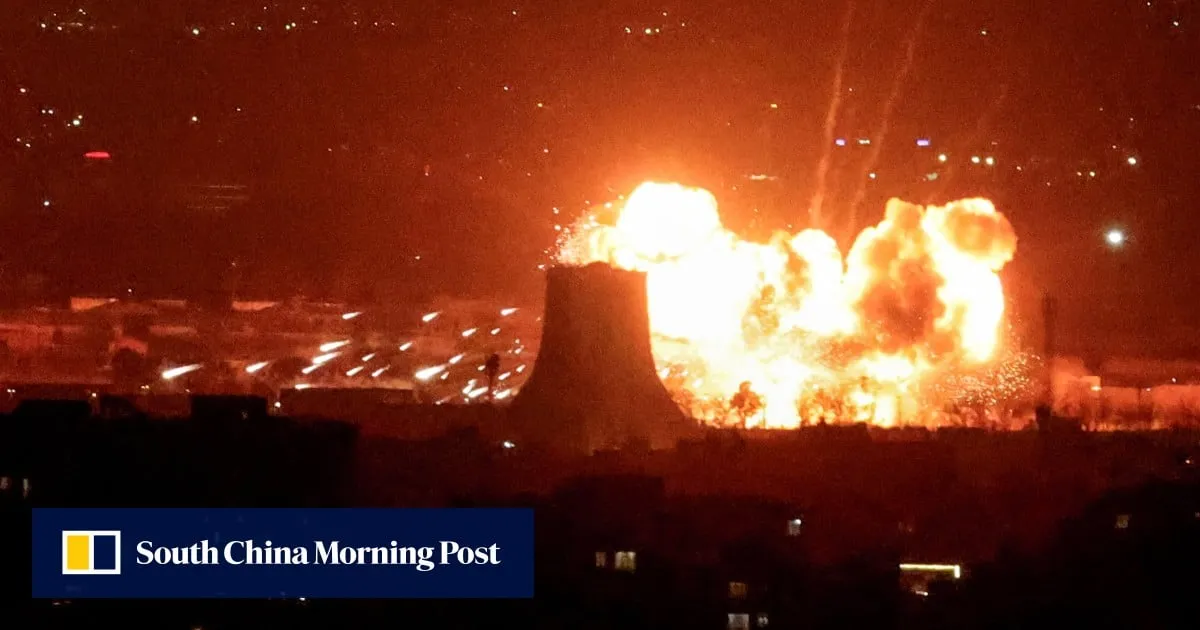
The World Health Organization warned on Tuesday that the “black rain” and toxic compounds in the air in Iran after strikes on oil facilities could cause respiratory problems, and it backed Iran’s advisory urging people to remain indoors.The UN health agency, which has an office in Iran and works with authorities on health emergencies, said it has received multiple reports of oil-laden rain this week.Tehran was choked in black smoke on Monday after an oil refinery was hit, in an escalation in strikes on Iran’s domestic energy supplies as part of the US-Israeli campaign.“The black rain and the acidic rain coming with it is indeed a danger for the population, respiratory mainly,” WHO spokesman Christian Lindmeier told a press briefing in Geneva, adding that Iran had advised people to stay indoors.Asked whether the WHO backed that advice, he said: “Given what is at risk right now, the oil storage facilities, the refineries that have been struck, triggering fires, bringing serious air quality concerns, that is definitely a good idea.”He said the strikes had caused “the massive release of toxic hydrocarbons, sulphur oxides and nitrogen compounds, into the air”.Tall plumes of smoke billow from fires near Azadi Tower in Tehran on Saturday. Photo: AFP
SRCSouth China Morning Post
LANGEN
LEANCenter-Right
WORDS203
ENT8
TUE · 2026-03-10 · 17:57 GMTBRIEF NSR-2026-0310-23227
NSR-2026-0310-23227News Report·EN·Public Health
WHO warns of toxic ‘black rain’ in Iran after strikes on oil facilities
Following strikes on Iranian oil facilities, the World Health Organization (WHO) has warned of potential respiratory problems due to "black rain" and toxic compounds released into the air. The WHO confirmed receiving reports of oil-laden rain and noted the release of hydrocarbons, sulfur oxides, and nitrogen compounds.
ReutersSouth China Morning PostFiled 2026-03-10 · 17:57 GMTLean · Center-RightRead · 1 min
South China Morning PostFIG 01
Reading time
1min
Word count
203words
Sources cited
1cited
Entities identified
8entities
Quality score
100%
§ 01
Briefing Summary
AI-generatedNEWSAR · AI
Following strikes on Iranian oil facilities, the World Health Organization (WHO) has warned of potential respiratory problems due to "black rain" and toxic compounds released into the air. The WHO confirmed receiving reports of oil-laden rain and noted the release of hydrocarbons, sulfur oxides, and nitrogen compounds. This follows strikes, reportedly part of a US-Israeli campaign, that caused fires and black smoke in Tehran. The WHO supports Iran's advisory for people to remain indoors to avoid exposure to the polluted air. The strikes have raised serious air quality concerns due to the damage to oil storage facilities and refineries.
Confidence 0.90Sources 1Claims 4Entities 8
§ 02
Article analysis
Model · rule-basedFraming
Public Health
Environmental
Tone
Mixed Tone
AI-assessed
CalmNeutralAlarmist
Factuality
0.80 / 1.00
Factual
LowHigh
Sources cited
1
Limited
FewMany
§ 03
Key claims
4 extracted01
Strikes had caused “the massive release of toxic hydrocarbons, sulphur oxides and nitrogen compounds, into the air”.
quoteChristian Lindmeier, WHO spokesman
Confidence
1.00
02
WHO backs Iran’s advisory urging people to remain indoors.
factualWorld Health Organization
Confidence
1.00
03
WHO warns that 'black rain' and toxic compounds in Iran could cause respiratory problems after strikes on oil facilities.
factualWorld Health Organization
Confidence
1.00
04
Tehran was choked in black smoke on Monday after an oil refinery was hit.
factualnull
Confidence
0.90
§ 04
Full report
1 min read · 203 words§ 05
Entities
8 identifiedKey playerOppositionContextPositiveNeutralNegative
Organizations1
§ 06
Keywords & salience
10 termsblack rain
1.00
toxic compounds
0.90
air quality
0.80
oil facilities
0.80
respiratory problems
0.70
who
0.70
iran
0.60
strikes
0.60
toxic hydrocarbons
0.50
oil refinery
0.40
§ 07
Topic connections
Interactive graph Network visualization showing 51 related topics
View Full Graph Person Organization Location Event|Click node to navigate|Edge numbers = shared articles