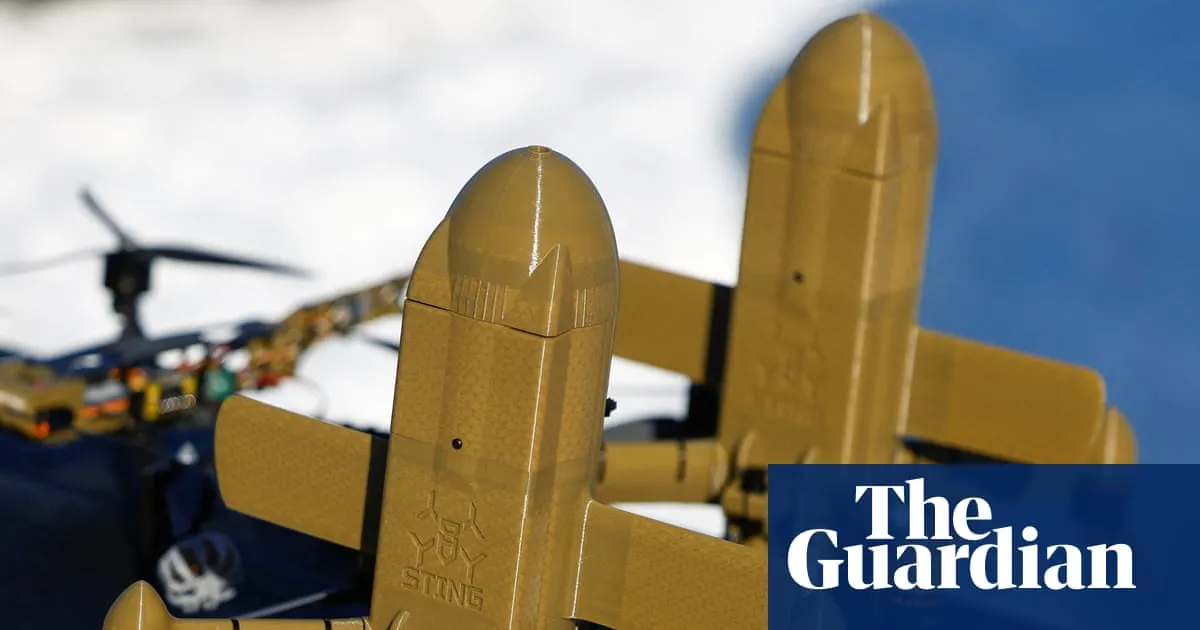
Ukraine’s president has said he dispatched interceptor drones and operators to protect US bases in Jordan last week, one of 11 countries that had asked Kyiv for help as the US-Israeli war against Iran continued into its 10th day.Volodymyr Zelenskyy said in an interview that he had responded to a US request for help in defending Jordan last week as Ukraine seeks to improve relations with Gulf and Middle Eastern countries coming under attack from Iran.Zelenskyy posted on social media that “there are 11 requests from countries neighbouring Iran, European states, and the US” and that some had been met with “concrete decisions and specific support”.Help for Jordan, where the US has maintained a sizeable presence at the Muwaffaq Salti airbase, was requested on Thursday, Zelenskyy told the New York Times. A Ukrainian team departed the next day.Satellite imagery indicates that the radar used by a US Thaad air defence system at the base in Jordan was damaged or even knocked out by Iranian attacks, one of several apparently hit across the region.Orysia Lutsevych, at the Chatham House thinktank, said Ukraine was “trying to show it is an asset, including to the US and other allies” by offering to share its war experience in exchange for help and goodwill.Map of strikes in US-Israeli war on Iran Zelenskyy also recognises that Iran and Russia are friendly, amid US reports that Moscow is sharing targeting information with Tehran. “If Russia sends intelligence to Iran – Ukraine will send specialists and interceptors to defend these bases and energy and water infrastructure,” Lutsevych added.Over the past week, the Ukrainian president has spoken to the leaders of Saudi Arabia, the UAE, Kuwait, Bahrain, Qatar and Jordan, according to Kyiv. “It is very important to coordinate for security both in Europe and in the Middle East,” Zelenskyy said after speaking to the Saudi crown prince, Mohammed bin Salman.Ukraine has faced near-nightly attacks from swarms of Shahed-136 drones since September 2024. Originally designed in Iran, the technology was transferred to Russia, allowing Moscow to make them in large numbers.Tackling them forced Kyiv to develop low-cost air defence capabilities to prevent large numbers of the delta-winged attack craft getting through, with interception rates of over 85% or 90%. On Saturday morning, Ukraine’s airforce reported stopping 453 out of 480 incoming drones.Initially Ukraine relied heavily on ground-based machine gun crews plus small numbers of fighter planes to halt them, but in the past six months it has begun using cheap high-speed Shahed interceptors, which are piloted from the ground.They include the Sting missile made by Wild Hornets, which cost $2,000 (£1,500) a unit. In February, interceptor drones destroyed more than 70% of Shahed-type attack drones over Kyiv and its outskirts, according to the head of the armed forces, Oleksandr Syrskyi.The strategy contrasts with Gulf and Middle Eastern countries, which have been making heavy use of US-made Patriot and Thaad air defence systems to deal with missiles and drones fired by Iran.A Shahed-136 costs about $50,000, while Patriot interceptors cost about $4m each. Zelenskyy said “more than 800” Patriots had been used in three days of the war last week, roughly a year’s worth of global supply, though many will have been deployed against incoming high-speed ballistic missiles.The total fired, however, is greater than the 600 that Kyiv said it had received throughout its entire four-year war with Russia – and raises the possibility that there could be a severe shortage in the Middle East and for Ukraine in the future.There are two types of Patriot interceptors. Pac-2, which rely on explosive blast fragmentation to knock out targets, are manufactured at a rate of 300 a year by Raytheon. Pac-3 “hit to kill” missiles, made by Lockheed Martin and considered to be more capable, are manufactured at a rate of 600 a year.However, Iran’s rate of fire has also plunged since the US and Israel attacked on 28 February. Iran fired 137 missiles and 209 drones that day towards the UAE, but only 15 missiles and 18 drones today. That suggests stocks of Patriot and other interceptors will not deplete at anything like last week’s levels.Israel’s military reported that Iran’s rate of missile fire towards the country had fallen by 80% since the start of the war, from more than 100 to lower than 20 on Saturday, approximately in line with its claim to have knocked out 75% of Iran’s missile launchers.Thaad missiles are more expensive, costing $12.8m each, according to the most recent US figures, and are intended only to be used against ballistic missile threats. Lockheed Martin said in January it made 96 a year, though it intended to increase that to 400 over the coming years.
SRCThe Guardian - World News
LANGEN
LEANCenter-Left
WORDS779
ENT11
MON · 2026-03-09 · 17:14 GMTBRIEF NSR-2026-0309-22901
NSR-2026-0309-22901News Report·EN·National Security
Ukraine sent drone experts to protect US bases in Jordan, says Zelenskyy
Following a US request, Ukraine sent drone interceptor experts and equipment to Jordan last week to protect US bases amid escalating tensions between the US-Israeli alliance and Iran. President Zelenskyy stated this was one of 11 requests for assistance Ukraine received from countries bordering Iran, European nations, and the US.
Dan Sabbagh Defence and security editorThe Guardian - World NewsFiled 2026-03-09 · 17:14 GMTLean · Center-LeftRead · 4 min
The Guardian - World NewsFIG 01
Reading time
4min
Word count
779words
Sources cited
4cited
Entities identified
11entities
Quality score
100%
§ 01
Briefing Summary
AI-generatedNEWSAR · AI
Following a US request, Ukraine sent drone interceptor experts and equipment to Jordan last week to protect US bases amid escalating tensions between the US-Israeli alliance and Iran. President Zelenskyy stated this was one of 11 requests for assistance Ukraine received from countries bordering Iran, European nations, and the US. The deployment aims to improve relations with Gulf and Middle Eastern countries while showcasing Ukraine's expertise in countering drone attacks, particularly those similar to Iranian-designed Shahed-136 drones used against Ukraine. This action comes as Ukraine seeks to demonstrate its value to allies and counter the growing cooperation between Russia and Iran, with concerns that Russia is sharing intelligence with Iran. Zelenskyy has also been in contact with leaders from Saudi Arabia, the UAE, and other Middle Eastern nations to coordinate security efforts.
Confidence 0.90Sources 4Claims 5Entities 11
§ 02
Article analysis
Model · rule-basedFraming
National Security
Diplomatic
Tone
Measured
AI-assessed
CalmNeutralAlarmist
Factuality
0.70 / 1.00
Factual
LowHigh
Sources cited
4
Well sourced
FewMany
§ 03
Key claims
5 extracted01
Ukraine has faced near-nightly attacks from swarms of Shahed-136 drones since September 2024.
factualnull
Confidence
0.90
02
A Ukrainian team departed to Jordan on Friday.
factualVolodymyr Zelenskyy
Confidence
0.90
03
There are 11 requests from countries neighbouring Iran, European states, and the US for help.
factualVolodymyr Zelenskyy
Confidence
0.90
04
Ukraine sent interceptor drones and operators to protect US bases in Jordan last week.
factualVolodymyr Zelenskyy
Confidence
0.90
05
Satellite imagery indicates that the radar used by a US Thaad air defence system at the base in Jordan was damaged or even knocked out by Iranian attacks.
factualnull
Confidence
0.80
§ 04
Full report
4 min read · 779 words§ 05
Entities
11 identifiedKey playerOppositionContextPositiveNeutralNegative
People3
Organizations1
§ 06
Keywords & salience
9 termsdrone defense
0.90
ukraine
0.80
us bases
0.70
jordan
0.70
air defense
0.60
interceptor drones
0.60
russia
0.50
iran
0.50
middle east
0.40
§ 07
Topic connections
Interactive graph Network visualization showing 51 related topics
View Full Graph Person Organization Location Event|Click node to navigate|Edge numbers = shared articles