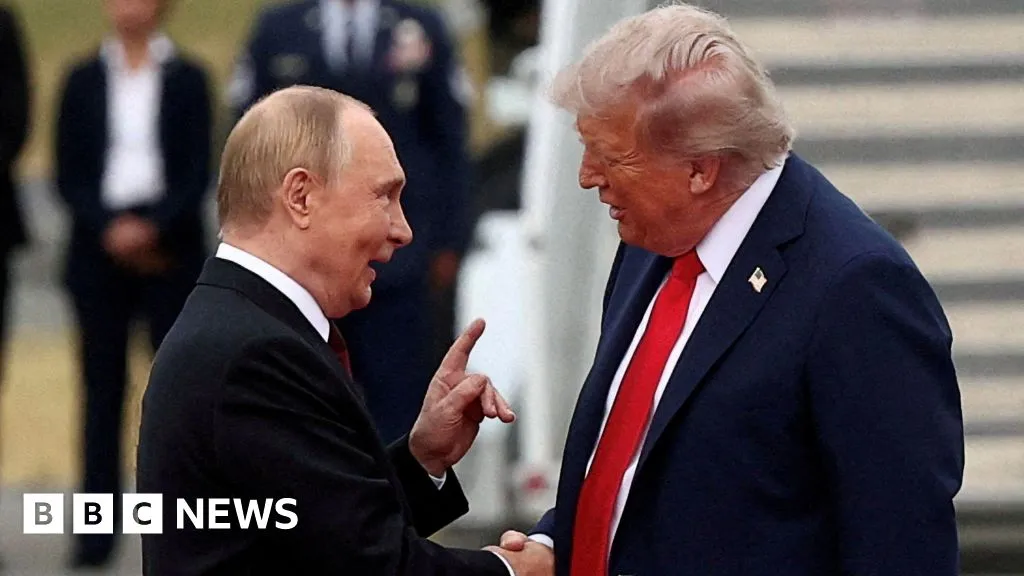
4 hours agoSteve RosenbergRussia editorReuters/File photoIt's happened twice now in a week.A telephone conversation between the presidents of Russia and Iran.As the US and Israel continue their strikes on Iran, Russian President Vladimir Putin is styling himself as international peacemaker.That's not an easy sell.After all, it was the Kremlin leader who ordered Russia's full-scale invasion of an independent sovereign nation in 2022.Back then, the UN General Assembly had condemned the invasion of Ukraine as a violation of the UN Charter.And while the Kremlin is now calling for "a swift de-escalation and political resolution [of the Iran conflict]", Russia is continuing its war of attrition against Ukraine.Moscow has a "Comprehensive Strategic Partnership" agreement with Iran. Only this week Putin reaffirmed the Kremlin's "unwavering support" for Tehran. But their strategic partnership falls far short of a mutual defence treaty.Instead, Moscow has offered to mediate in the conflict.In Monday's telephone conversation with US President Donald Trump, according to the Kremlin, Putin "expressed several thoughts aimed at a swift diplomatic resolution of the Iran conflict, based among other things on contacts with leaders of Gulf states, the president of Iran, and leaders of other countries".For Russia it's a chance to boost its profile in the Gulf and the Middle East - and to present itself as a power with influence.It's an opportunity too to deepen its relationship with Washington. The Kremlin is keen to retain good working relations with Trump. It views its ties with the Trump administration as beneficial to Moscow's war aims in Ukraine.That explains why Putin has been careful not to criticise Trump personally and publicly over the Iran war."[Putin] wants to be helpful," Trump said on Monday after his telephone conversation with Putin."I said, 'You could be more helpful by getting the Ukraine-Russia war over with. That would be more helpful.'"And yet, while the Kremlin calls for 'de-escalation' in Iran, the conflict provides other opportunities for Moscow.Economic ones for starters.The recent jump in global oil prices provides a much-needed boost to Russian government revenues and - amid a prolonged period of high prices - will help Russia continue funding its war on Ukraine.Russia's federal budget is based on the country exporting oil at $59 a barrel. In recent months oil prices dropped well below that level. This week, crude oil surged dramatically to almost $120 a barrel. They've since fallen back but oil prices remain well above the $59 mark.What's more, Trump has suggested that the US will waive oil-related sanctions "on some countries" to ease the shortage caused by the Iran war. If oil sanctions are eased on Russia, Moscow can look forward to an even greater financial windfall. Ukraine's President Volodymyr Zelensky said that would be a "serious blow" for Kyiv and urged Trump against it.Today's edition of the pro-Kremlin Komsomolskaya Pravda newspaper was optimistic."Expensive oil is a reason [for the West] to cancel sanctions," declared the headline.The Kremlin may not be criticising America's president but some Russian newspapers have been slamming Trump and the Iran war."The 'peace president' has simply lost his mind," declared Tuesday's edition of the tabloid Moskovsky Komsomolets."The Emperor has no clothes. Or rather, no sanity."
SRCBBC News - World
LANGEN
LEANCenter
WORDS522
ENT12
TUE · 2026-03-10 · 19:35 GMTBRIEF NSR-2026-0310-23284
NSR-2026-0310-23284Analysis·EN·Political Strategy
Steve Rosenberg: Russia seeks diplomatic and economic gains from Iran war
Amidst escalating tensions between the US, Israel, and Iran, Russia, led by President Vladimir Putin, is positioning itself as a potential mediator. Putin has engaged in telephone conversations with both the Iranian and US presidents, advocating for a swift de-escalation and political resolution.
BBC News - WorldFiled 2026-03-10 · 19:35 GMTLean · CenterRead · 3 min
BBC News - WorldFIG 01
Reading time
3min
Word count
522words
Sources cited
2cited
Entities identified
12entities
Quality score
100%
§ 01
Briefing Summary
AI-generatedNEWSAR · AI
Amidst escalating tensions between the US, Israel, and Iran, Russia, led by President Vladimir Putin, is positioning itself as a potential mediator. Putin has engaged in telephone conversations with both the Iranian and US presidents, advocating for a swift de-escalation and political resolution. Russia aims to enhance its influence in the Gulf and Middle East, deepen its relationship with Washington, and maintain beneficial ties with the Trump administration. Furthermore, the conflict and subsequent rise in global oil prices offer economic advantages to Russia, boosting government revenues and aiding in funding its ongoing war in Ukraine. While calling for de-escalation, Russia seeks to capitalize diplomatically and economically from the situation.
Confidence 0.90Sources 2Claims 5Entities 12
§ 02
Article analysis
Model · rule-basedFraming
Political Strategy
Economic Impact
Tone
Measured
AI-assessed
CalmNeutralAlarmist
Factuality
0.60 / 1.00
Mixed
LowHigh
Sources cited
2
Limited
FewMany
§ 03
Key claims
5 extracted01
Russia's federal budget is based on the country exporting oil at $59 a barrel.
factualSteve Rosenberg
Confidence
1.00
02
Moscow has a 'Comprehensive Strategic Partnership' agreement with Iran, but it falls far short of a mutual defence treaty.
factualSteve Rosenberg
Confidence
1.00
03
The recent jump in global oil prices provides a much-needed boost to Russian government revenues.
factualSteve Rosenberg
Confidence
0.90
04
Putin expressed thoughts aimed at a swift diplomatic resolution of the Iran conflict to Trump.
quoteKremlin
Confidence
0.90
05
Russian President Vladimir Putin is styling himself as international peacemaker in the Iran conflict.
factualSteve Rosenberg
Confidence
0.80
§ 04
Full report
3 min read · 522 words§ 05
Entities
12 identifiedKey playerOppositionContextPositiveNeutralNegative
People3
§ 06
Keywords & salience
10 termsrussia
1.00
iran
0.90
diplomatic resolution
0.80
ukraine war
0.70
economic gains
0.70
de-escalation
0.60
oil prices
0.60
trump
0.50
putin
0.50
strategic partnership
0.40
§ 07
Topic connections
Interactive graph Network visualization showing 51 related topics
View Full Graph Person Organization Location Event|Click node to navigate|Edge numbers = shared articles