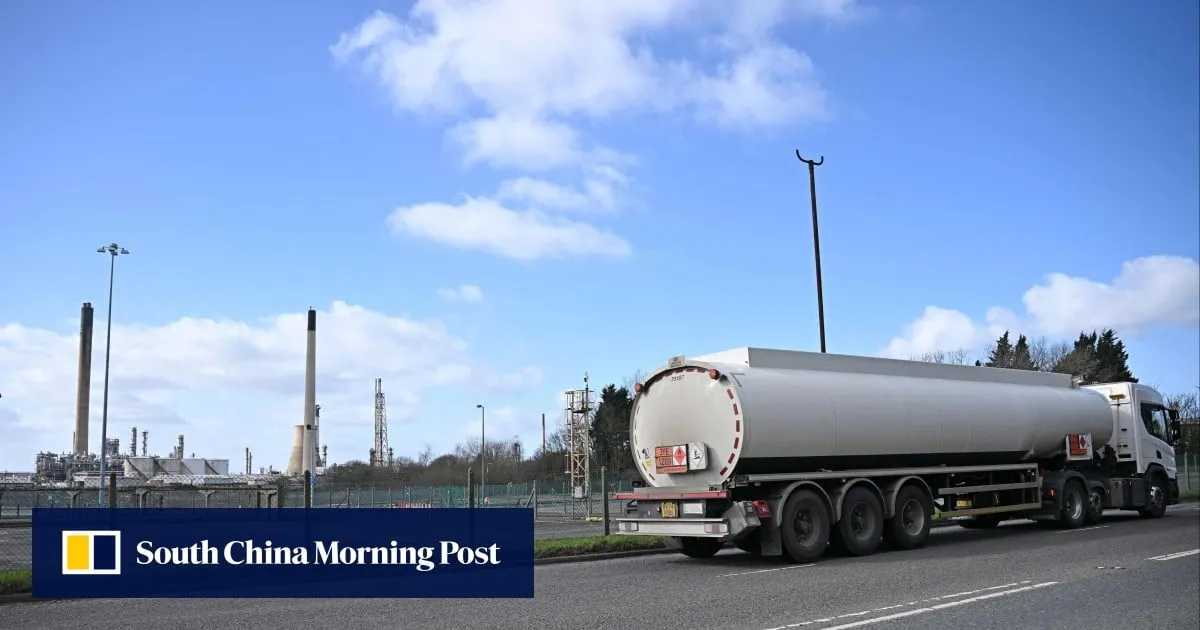
The International Energy Agency agreed on Wednesday to release the largest volume of emergency oil reserves in its history, in a bid to counter the effects on energy markets of the war in the Middle East.The Paris-based organisation said it will make 400 million barrels of oil available from its members’ emergency reserves. It’s a larger stock than the 182.7 million barrels that were released in 2022 by the IEA’s 32 member countries in response to Russia’s invasion of Ukraine.IEA member countries currently hold over 1.2 billion barrels of public emergency oil stocks, with a further 600 million barrels of industry stocks held under government obligation.In response to US and Israel strikes, Iran has attacked commercial ships across the Persian Gulf, escalating a campaign of squeezing the oil-rich region as global energy concerns mount.Iran has effectively stopped cargo traffic in the narrow Hormuz Strait through which about a fifth of all oil is shipped from the Persian Gulf towards the Indian Ocean. It has also targeted oilfields and refineries in Gulf Arab nations, aiming at generating enough global economic pain to pressure the United States and Israel to end their strikes.02:00Iran war sends oil prices surging, prompting panic buying and rationing in parts of Asia
SRCSouth China Morning Post
LANGEN
LEANCenter-Right
WORDS205
ENT12
WED · 2026-03-11 · 14:36 GMTBRIEF NSR-2026-0311-23515
NSR-2026-0311-23515News Report·EN·Economic Impact
IEA agrees to record release of emergency oil reserves to calm surging prices
The International Energy Agency (IEA) has agreed to release 400 million barrels of emergency oil reserves, the largest release in its history, to stabilize energy markets amidst escalating tensions in the Middle East. This decision, made on Wednesday by the Paris-based organization, aims to counteract the impact of recent attacks by Iran on commercial ships and oil infrastructure in the Persian Gulf, which have disrupted oil shipments through the Hormuz Strait.
Associated PressSouth China Morning PostFiled 2026-03-11 · 14:36 GMTLean · Center-RightRead · 1 min
South China Morning PostFIG 01
Reading time
1min
Word count
205words
Sources cited
1cited
Entities identified
12entities
Quality score
100%
§ 01
Briefing Summary
AI-generatedNEWSAR · AI
The International Energy Agency (IEA) has agreed to release 400 million barrels of emergency oil reserves, the largest release in its history, to stabilize energy markets amidst escalating tensions in the Middle East. This decision, made on Wednesday by the Paris-based organization, aims to counteract the impact of recent attacks by Iran on commercial ships and oil infrastructure in the Persian Gulf, which have disrupted oil shipments through the Hormuz Strait. These attacks, a response to US and Israel strikes, have caused oil prices to surge and prompted panic buying in parts of Asia. The IEA's member countries hold over 1.2 billion barrels of public emergency oil stocks, in addition to 600 million barrels of industry stocks. The release is intended to alleviate global economic pressure by ensuring a stable oil supply.
Confidence 0.90Sources 1Claims 5Entities 12
§ 02
Article analysis
Model · rule-basedFraming
Economic Impact
Conflict
Tone
Mixed Tone
AI-assessed
CalmNeutralAlarmist
Factuality
0.80 / 1.00
Factual
LowHigh
Sources cited
1
Limited
FewMany
§ 03
Key claims
5 extracted01
About a fifth of all oil is shipped from the Persian Gulf towards the Indian Ocean.
statistic
Confidence
1.00
02
IEA member countries currently hold over 1.2 billion barrels of public emergency oil stocks.
statisticIEA
Confidence
1.00
03
IEA agreed to release 400 million barrels of oil from its members’ emergency reserves.
factualThe Paris-based organisation
Confidence
1.00
04
Iran has attacked commercial ships across the Persian Gulf.
factual
Confidence
0.90
05
Iran has effectively stopped cargo traffic in the narrow Hormuz Strait.
factual
Confidence
0.80
§ 04
Full report
1 min read · 205 words§ 05
Entities
12 identifiedKey playerOppositionContextPositiveNeutralNegative
Locations11
I
Iran
CountryOpposition
3x
90
SO
Strait of Hormuz
StrategicContext
80
PG
Persian Gulf
RegionContext
2x
80
I
Israel
CountryContext
2x
70
ME
Middle East
RegionContext
70
US
United States
CountryContext
2x
70
R
Russia
CountryOpposition
60
GA
Gulf Arab nations
locationContext
60
U
Ukraine
CountryContext
50
P
Paris
CityContext
40
IO
Indian Ocean
RegionContext
40
§ 06
Keywords & salience
10 termsemergency oil reserves
1.00
international energy agency
0.80
oil prices
0.80
war
0.70
middle east
0.70
oil supply
0.60
energy markets
0.60
iran
0.50
persian gulf
0.50
hormuz strait
0.40
§ 07
Topic connections
Interactive graph Network visualization showing 28 related topics
View Full Graph Person Organization Location Event|Click node to navigate|Edge numbers = shared articles