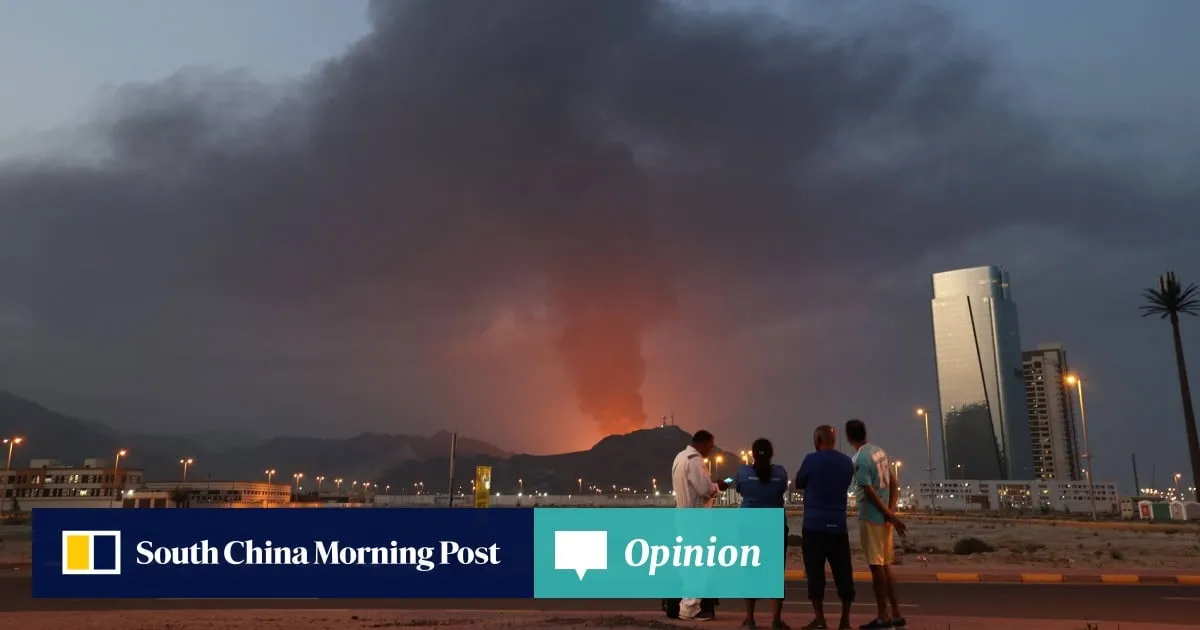
For decades, geopolitical risk in the Gulf was largely synonymous with oil. Pipelines, export terminals and processing facilities were viewed as the obvious tender spots in times of regional escalation. In an oil-reliant economy, hydrocarbons were both the engine of growth and the primary vulnerability. Risk assessments, insurance premiums and sovereign spreads were managed accordingly.The episodic risks in the oil and gas industry led to a conventional playbook for navigating crises. Gulf producers maintain strategic reserves, redundant export routes and rapid repair capabilities. Strong sovereign balance sheets also provide additional shock absorbers. Over time, markets adapted and temporary disruption became part of the pricing model for an energy-dependent region.That playbook no longer holds. Recent Iranian attacks have broadened the definition of what constitutes strategic infrastructure in the Gulf. Oil and gas assets remain exposed, but so are the logistics corridors, data centres and business districts that anchor the region’s post-oil future.Drone attacks on March 1 struck three separate data centre facilities operated by Amazon Web Services in the United Arab Emirates and Bahrain, causing serious damage. The three incidents across two jurisdictions suggest more than collateral disruption and point to intentionality. Iranian attacks are not just targeting the Gulf’s traditional assets but instead seek to hinder its post-oil future.Even the renewed targeting of traditional oil and gas infrastructure no longer only risks depriving external markets of energy sources. Rather, it threatens the backbone that provides the Gulf’s artificial intelligence ambitions with a critical competitive advantage of cheap, abundant and reliable power.04:04How US-Israeli strikes on Iran are sending shock waves through global energy marketsHow US-Israeli strikes on Iran are sending shock waves through global energy marketsAbu Dhabi and Dubai have attracted hyperscale commitments in the past two years, from multi-hundred-megawatt expansions to headline-grabbing campus proposals. As part of a US$1.4 trillion economic partnership, AI investment schemes in the UAE involved state and sovereign investors along with large cloud providers who raced to lock in land, power and government workloads.
SRCSouth China Morning Post
LANGEN
LEANCenter-Right
WORDS328
ENT8
WED · 2026-03-11 · 12:30 GMTBRIEF NSR-2026-0311-23524
NSR-2026-0311-23524Analysis·EN·National Security
Iran’s data centre attacks in the Gulf are strikes on confidence
Recent Iranian attacks in the Gulf have expanded beyond traditional oil and gas infrastructure to include data centers, signaling a shift in targeting strategic assets. On March 1st, drone attacks damaged three Amazon Web Services data centers in the United Arab Emirates and Bahrain.
Islam AlhalawanySouth China Morning PostFiled 2026-03-11 · 12:30 GMTLean · Center-RightRead · 2 min
South China Morning PostFIG 01
Reading time
2min
Word count
328words
Sources cited
0cited
Entities identified
8entities
Quality score
100%
§ 01
Briefing Summary
AI-generatedNEWSAR · AI
Recent Iranian attacks in the Gulf have expanded beyond traditional oil and gas infrastructure to include data centers, signaling a shift in targeting strategic assets. On March 1st, drone attacks damaged three Amazon Web Services data centers in the United Arab Emirates and Bahrain. These attacks suggest a deliberate effort to undermine the Gulf's post-oil future, particularly its ambitions in artificial intelligence. The region's AI investments, supported by partnerships and cloud providers, rely on cheap and reliable power, which is now threatened. This new focus on data centers poses a risk to the Gulf's economic diversification efforts.
Confidence 0.90Claims 5Entities 8
§ 02
Article analysis
Model · rule-basedFraming
National Security
Economic Impact
Tone
Measured
AI-assessed
CalmNeutralAlarmist
Factuality
0.60 / 1.00
Mixed
LowHigh
Sources cited
0
No named sources
FewMany
§ 03
Key claims
5 extracted01
Drone attacks on March 1 struck three separate data centre facilities operated by Amazon Web Services in the United Arab Emirates and Bahrain.
factual
Confidence
1.00
02
AI investment schemes in the UAE involved state and sovereign investors along with large cloud providers.
factual
Confidence
0.90
03
Oil and gas assets remain exposed, but so are the logistics corridors, data centres and business districts that anchor the region’s post-oil future.
factual
Confidence
0.80
04
Recent Iranian attacks have broadened the definition of what constitutes strategic infrastructure in the Gulf.
factual
Confidence
0.80
05
The three incidents across two jurisdictions suggest more than collateral disruption and point to intentionality.
factual
Confidence
0.70
§ 04
Full report
2 min read · 328 words§ 05
Entities
8 identifiedKey playerOppositionContextPositiveNeutralNegative
Organizations1
§ 06
Keywords & salience
9 termsdata centre attacks
0.90
gulf region
0.80
iranian attacks
0.80
post-oil future
0.70
strategic infrastructure
0.70
artificial intelligence
0.60
geopolitical risk
0.50
energy markets
0.50
amazon web services
0.40
§ 07
Topic connections
Interactive graph Network visualization showing 51 related topics
View Full Graph Person Organization Location Event|Click node to navigate|Edge numbers = shared articles