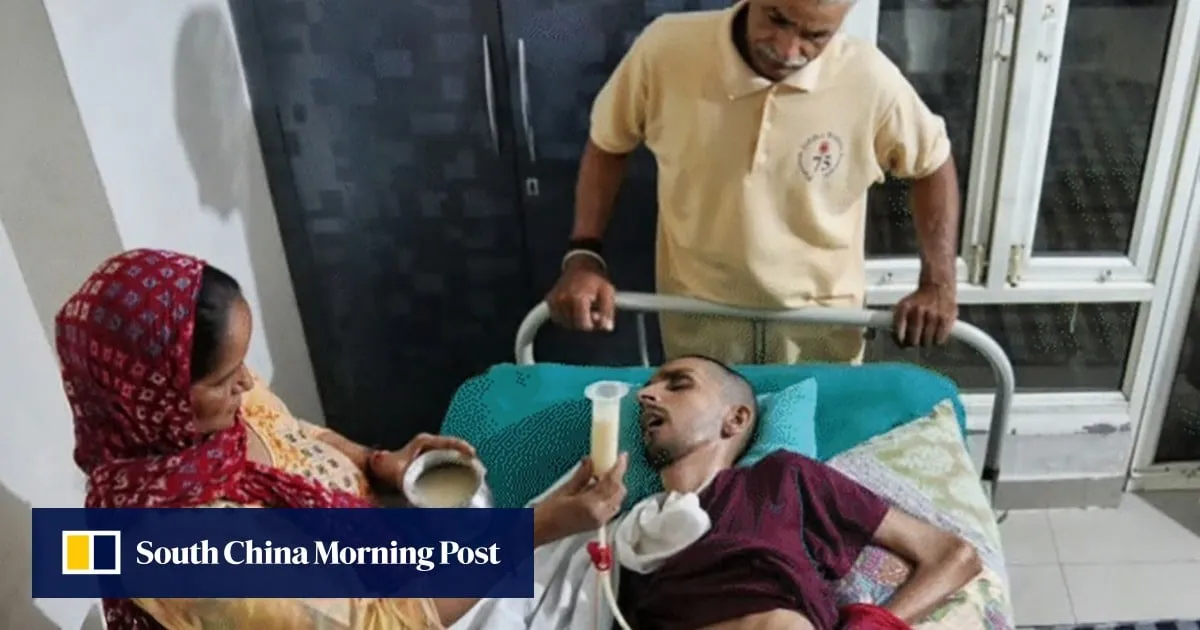
India’s Supreme Court has allowed the parents of a 31-year-old man to withdraw life-sustaining treatment after more than a decade in a vegetative state, a ruling experts say could shape how the country implements its legal framework for passive euthanasia.The decision in the case of Harish Rana is widely seen as one of the clearest real-world applications of the principle that patients have a right to die with dignity under India’s constitution.Rana, an engineering student, had been in a vegetative state for the last 13 years after falling from the fourth floor of his hostel in the northern Indian city of Chandigarh.After emergency treatment, doctors declared him a quadriplegic.Bedridden and dependent on feeding tubes for survival, his mother Nirmala and father Ashok became his primary carers.A high court in New Delhi denied the couple permission to withdraw life support in 2024, prompting them to seek legal recourse from the Supreme Court.
SRCSouth China Morning Post
LANGEN
LEANCenter-Right
WORDS151
ENT7
FRI · 2026-03-13 · 12:23 GMTBRIEF NSR-2026-0313-24243
NSR-2026-0313-24243News Report·EN·Legal & Judicial
Indian man in 13-year vegetative state allowed to die by Supreme Court
India's Supreme Court has granted permission for the parents of Harish Rana, a 31-year-old man, to withdraw his life support after he spent 13 years in a vegetative state following a fall in Chandigarh. Rana, a quadriplegic dependent on feeding tubes, had his parents as primary caregivers after a high court initially denied their request in 2024.
Biman MukherjiSouth China Morning PostFiled 2026-03-13 · 12:23 GMTLean · Center-RightRead · 1 min
South China Morning PostFIG 01
Reading time
1min
Word count
151words
Sources cited
1cited
Entities identified
7entities
Quality score
100%
§ 01
Briefing Summary
AI-generatedNEWSAR · AI
India's Supreme Court has granted permission for the parents of Harish Rana, a 31-year-old man, to withdraw his life support after he spent 13 years in a vegetative state following a fall in Chandigarh. Rana, a quadriplegic dependent on feeding tubes, had his parents as primary caregivers after a high court initially denied their request in 2024. The Supreme Court's decision is viewed as a significant application of the right to die with dignity under the Indian constitution. Experts believe this ruling will likely influence the implementation of India's legal framework for passive euthanasia. The case highlights the complex ethical and legal considerations surrounding end-of-life care in India.
Confidence 0.85Sources 1Claims 5Entities 7
§ 02
Article analysis
Model · rule-basedFraming
Legal & Judicial
Human Rights
Tone
Measured
AI-assessed
CalmNeutralAlarmist
Factuality
0.80 / 1.00
Factual
LowHigh
Sources cited
1
Limited
FewMany
§ 03
Key claims
5 extracted01
A high court in New Delhi denied the couple permission to withdraw life support in 2024.
factual
Confidence
1.00
02
Doctors declared him a quadriplegic after emergency treatment.
factual
Confidence
1.00
03
Harish Rana had been in a vegetative state for 13 years after falling from the fourth floor of his hostel.
factual
Confidence
1.00
04
India’s Supreme Court has allowed the parents of a 31-year-old man to withdraw life-sustaining treatment.
factual
Confidence
1.00
05
The decision could shape how the country implements its legal framework for passive euthanasia.
predictionexperts
Confidence
0.70
§ 04
Full report
1 min read · 151 words§ 05
Entities
7 identifiedKey playerOppositionContextPositiveNeutralNegative
Organizations1
§ 06
Keywords & salience
9 termsvegetative state
1.00
right to die
0.90
passive euthanasia
0.80
life-sustaining treatment
0.80
india
0.70
supreme court
0.70
medical ethics
0.60
quadriplegic
0.50
legal framework
0.40
§ 07
Topic connections
Interactive graph No topic relationship data available yet. This graph will appear once topic relationships have been computed.