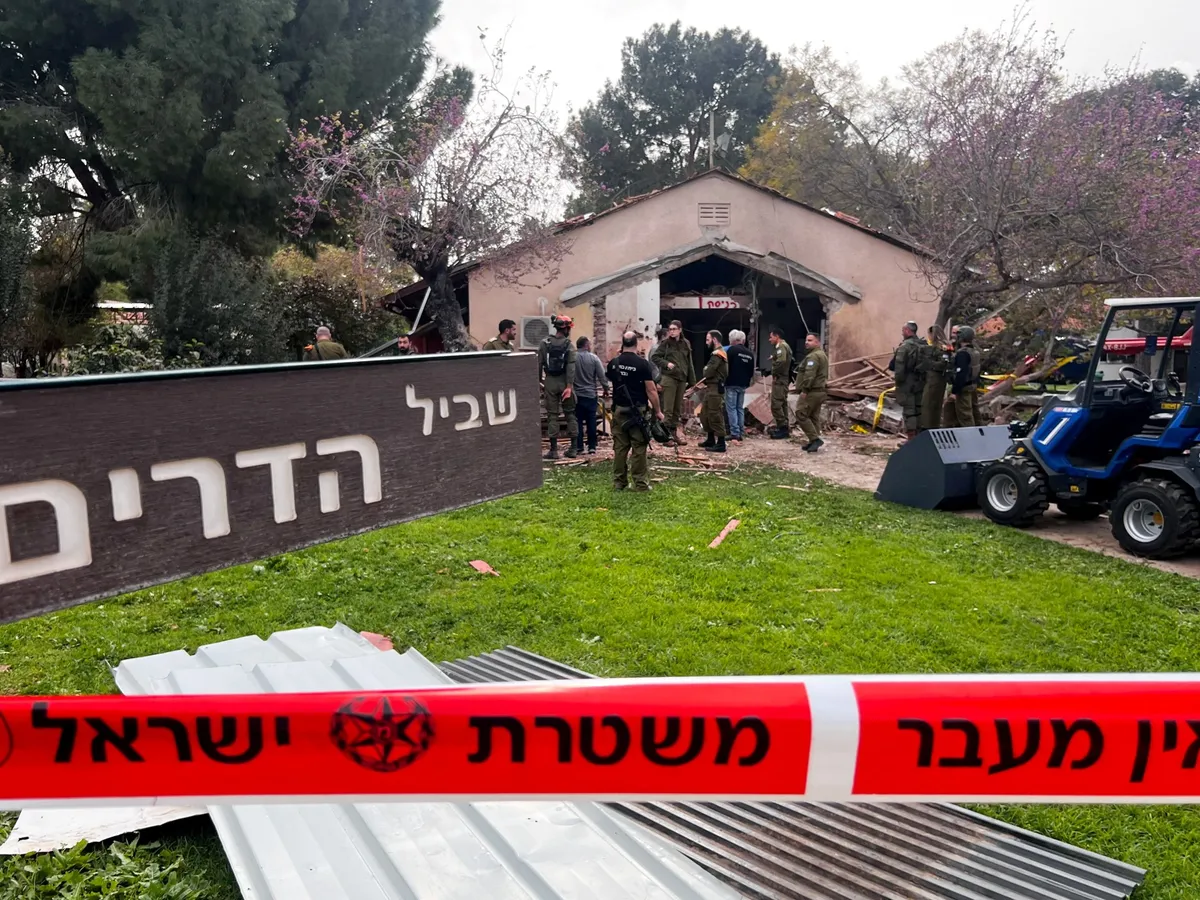
Israeli public overwhelmingly supports war with Iran, rallying behind Netanyahu despite political divisions.Israeli rescue and security personnel work beside damaged buildings, following projectile barrages towards Israel from Hezbollah in Lebanon, in northern Israel, on March 13, 2026 [Avi Ohayon/Reuters]Published On 13 Mar 2026Alon-Lee Green, the cofounder of the Palestinian-Jewish activist group Standing Together tried to organise a protest against his country’s war on Iran on Thursday. It was the second attempt, he said, after the first had been broken up by the police.They had anticipated official objections to the protest on the grounds of public safety and booked space in an underground theatre that could double as a shelter. It wasn’t ideal, he said, but in times like these, it was better than nothing.Recommended Stories list of 4 itemslist 1 of 4Netanyahu says Israel ‘stronger than ever’ in first speech since Iran warlist 2 of 4Iran war: What is happening on day 14 of US-Israel attacks?list 3 of 4More than two dozen killed in Lebanon as Israel attacks Beirut, south, eastlist 4 of 4Netanyahu wants to ‘create conditions’ for Iran regime changeend of listThe police and the right-wing protesters were waiting.“They said they’d come to monitor us,” Green said of the police presence. The protesters, he assumed, had just come to jeer. “[The police] checked our ID and said they were there to make sure we didn’t say anything we weren’t allowed to. It was clear they were there to intimidate,” he said. “There’s nothing new in that. It’s ongoing.”Much of Israeli society has supported the war with Iran in a similar manner to the backing given to the genocidal war on Gaza following the October 7 attack on southern Israel, Green said.A poll by the Israel Democracy Institute (IDI) earlier this month suggested overwhelming support for the war, with 93 percent of Jewish respondents backing the attack on Iran, an enemy the Israeli public has been told for years was intent upon their destruction.“It’s strange,” Green said from Tel Aviv, pointing to the paradoxes of an opposition supporting a war their political opponents had started. Israel’s opposition leader Yair Lapid, for example, has said that he will no longer back motions of no confidence against the government amid a “just war”.“Apart from the Palestinian parties, all of the opposition are united behind the war,” Green said. “On the one hand they’re claiming they’re for the war, but against [Israeli Prime Minister, Benjamin] Netanyahu. At the same time, [they are] not acknowledging that it’s the war that’s helping support Netanyahu. It’s a complete failure of politics.”Netanyahu on Thursday framed the war using characteristically epochal terms, telling a news conference that the conflict against Iran would be “recorded in the annals of Israel”, one that he said was being fought for “future generations” and even “the future of humanity”.A thirst for warRallying around the flag is to be expected in the first few days of any war, Chatham House’s Yossi Mekelberg told Al Jazeera, even if what many in Israel have come to think of the oppressive and threatening nature of the Iranian regime made that easier.“In many ways it’s the psychology of war,” he said. “It helps that all of Israel’s political parties are offering uncritical support of a war against a country that’s been arming [Lebanon’s] Hezbollah, Yemen’s Houthis and has been calling for the death of Israel for decades. That’s something people can understand,” he said, adding that details over negotiations, sanctions and the effectiveness of the nuclear deal that the United States pulled out of in 2018, were lost in the rush to war.Critical examination of the war, or any clear understanding of its end, has largely been absent from public discussions that prefer instead to focus upon the longstanding reasons for its cause, analysts said.“There is a big gap between how this war is portrayed inside Israel and anywhere else,” London-based Israeli academic and media analyst Ayala Panievsky told Al Jazeera. “There is little to no criticism of the war in the Israeli mainstream media, and after October 7, it has become even easier to convince Israelis that if they don’t attack first – somebody else will”.For Panievsky, military force had come to be seen as the only answer to the Israeli public‘s concern over safety, with what she described as Netanyahu’s takeover of the media fuelling the process, “and while he and his government have not been popular for years, this current war unfortunately is”.“The term ‘regime change’ also doesn’t trigger the same kind of trauma and fear that it does for Americans or Brits,” she said of the disasters that have characterised previous Western attempts at regime change in Iraq, Libya and Afghanistan.Israel’s opposition leader Yair Lapid said he will no longer back motions of no confidence against the government amid a ‘just war’ [Ariel Schalit/AP]“People aren’t interested in reflection or analysis,” Mekelberg said.“Iran is [perceived as] the aggressor, it always has been, so this can make even an attack appear like self-defence,” he said, adding that the killings of thousands of people in Iran in January had added to the perception within Israel of a “heroic” war, partly aimed at supporting the Iranian opposition.In Tel Aviv, Green wasn’t so sure. While he has no love for the government in Tehran, neither did he or other members of Standing Together feel that waging war on Iran was the best way of liberating its people. Neither was he convinced that the Israeli public’s support for a war with no clear end was a given.“They told us in June that they’d completely destroyed Iran’s missiles and ability to attack us, but here we are,” he said of the 12-day war between Israel and Iran in June 2025. “They said last year that they’d destroyed Hezbollah, but they launched more than 200 rockets at Israel yesterday.“People are beginning to question and criticise,” he said, “and I think that’s going to increase.”
SRCAl Jazeera
LANGEN
LEANCenter
WORDS984
ENT11
FRI · 2026-03-13 · 17:14 GMTBRIEF NSR-2026-0313-24270
NSR-2026-0313-24270News Report·EN·Conflict
Success uncertain, but Israelis continue to back ‘heroic’ war with Iran
In March 2026, despite political divisions, a large majority of the Israeli public supports the ongoing war with Iran. A poll by the Israel Democracy Institute indicated 93% of Jewish respondents back the attack.
Simon Speakman CordallAl JazeeraFiled 2026-03-13 · 17:14 GMTLean · CenterRead · 4 min
Al JazeeraFIG 01
Reading time
4min
Word count
984words
Sources cited
3cited
Entities identified
11entities
Quality score
100%
§ 01
Briefing Summary
AI-generatedNEWSAR · AI
In March 2026, despite political divisions, a large majority of the Israeli public supports the ongoing war with Iran. A poll by the Israel Democracy Institute indicated 93% of Jewish respondents back the attack. Opposition parties, excluding Palestinian parties, have largely united behind the war effort, halting motions of no confidence against the government. Attempts to protest the war have been met with police presence and right-wing counter-protesters, creating an atmosphere of intimidation. Activists highlight the similarity in public support for the war with Iran to the backing given to the war on Gaza following the October 7th attack.
Confidence 0.90Sources 3Claims 5Entities 11
§ 02
Article analysis
Model · rule-basedFraming
Conflict
Political Strategy
Tone
Mixed Tone
AI-assessed
CalmNeutralAlarmist
Factuality
0.60 / 1.00
Mixed
LowHigh
Sources cited
3
Well sourced
FewMany
§ 03
Key claims
5 extracted01
Israel’s opposition leader Yair Lapid has said that he will no longer back motions of no confidence against the government amid a “just war”.
quoteYair Lapid
Confidence
1.00
02
Netanyahu framed the war as one that was being fought for “future generations” and even “the future of humanity”.
quoteNetanyahu
Confidence
1.00
03
A poll by the Israel Democracy Institute (IDI) earlier this month suggested overwhelming support for the war, with 93 percent of Jewish respondents backing the attack on Iran.
statisticIsrael Democracy Institute (IDI)
Confidence
0.90
04
Israeli public overwhelmingly supports war with Iran, rallying behind Netanyahu despite political divisions.
factualArticle's own claim
Confidence
0.80
05
Apart from the Palestinian parties, all of the opposition are united behind the war.
quoteAlon-Lee Green
Confidence
0.70
§ 04
Full report
4 min read · 984 words§ 05
Entities
11 identifiedKey playerOppositionContextPositiveNeutralNegative
People3
Organizations3
§ 06
Keywords & salience
7 termswar with iran
1.00
israeli public support
0.80
political divisions
0.60
protest
0.60
netanyahu
0.50
public safety
0.40
hezbollah
0.40
§ 07
Topic connections
Interactive graph Network visualization showing 51 related topics
View Full Graph Person Organization Location Event|Click node to navigate|Edge numbers = shared articles