4 hours agoLucy WilliamsonMiddle East correspondent, JerusalemEPAThere is a new and concerted effort from Israel's military and political leaders to frame the achievements of the Iran war as having changed the Middle East, even without the regime change in Tehran that Israel's prime minister has focused on.Benjamin Netanyahu has spent decades preparing for this showdown with Iran; his long political career is anchored in his vow to defend Israel against its Iranian nemesis.Having seized the chance to wage war directly on the regime, alongside the world's most powerful military, his rhetoric around the war has been extravagant, describing it as "a fateful campaign for our very existence".The Israeli military's chief of staff has called it "an operation to secure our existence and our future in the land of our forefathers for generations to come".One of Netanyahu's former national security advisers has described it as "a golden opportunity to change the direction of the whole Middle East"."This is the culmination of what [Netanyahu] has tried to rebrand as the War of Redemption, which in his mind started on October 7, 2023. And this is - if not the last war - then the big war against Iran," said Neri Zilber, a journalist based in Tel Aviv and a policy advisor to the Israel-policy-forum" class="entity-link entity-organization" data-entity-id="11097" data-entity-type="organization">Israel Policy Forum, a US-Israeli think tank."Benjamin Netanyahu is still selling a major victory," he added, pointing out that Israel had continued talking about the potential for regime change long after the Trump administration had stopped.Regime change would deprive many of Israel's regional enemies - like Hezbollah in Lebanon, or Hamas in Gaza – of Iranian funding, training, and weapons, potentially transforming Israel's security.But after assassinating Iran's Supreme Leader Ayatollah Ali Khamanei in an air strike, and making repeated calls to the Iranian people to use this moment to rise up, Netanyahu has now signalled the war may end with the regime still in place.In his first press conference since the war began, he told Israelis that the bombing campaign had already changed the balance of power in the Middle East in Israel's favour."We can already say with certainty: this is no longer the same Iran, this is no longer the same Middle East, and this is not the same Israel," he said.GPOBenjamin Netanyahu held his first press conference of the conflict on Thursday nightSome in Israel will read that as a sign that Israel is being asked to wind up the war, amid signs that spiralling oil prices are putting the US government under pressure to call an end to the conflict.Strong Israeli support for this war rested partly on the idea that it would end repeated campaigns against Iran and its proxy forces across the region.After the last war against Iran in June 2025, Israel's prime minister heralded a "historic victory" that would "stand for generations", saying it had "removed two existential threats" in Iran's nuclear weapons - which Tehran has denied seeking to develop - and its ballistic missiles.Israel had returned to war just eight months later, he said, because Iran was rapidly rebuilding its missile programme, and planning to move it - and its nuclear programme - deep underground.WANA/via ReutersThe US president has signalled the war in Iran could be coming to an end soonThe question Netanyahu faces now is: without regime change in Tehran, how long before the next time?Military officials say the damage to Iran's weapons programmes this time is far deeper than before - with its production sites and leadership targeted alongside missile stocks and launchers."Some of it is permanent, and some of it is semi-permanent," said Lt Col Nadav Shoshani, spokesman for the Israel Defense Forces (IDF), describing the military objective as removing threats "for a prolonged period of time".Maj Gen Yaakov Amidror, a former Israeli national security adviser and senior fellow at the Jerusalem Institute for Strategy and Security think tank, says that even without Iranians taking to the streets, Israel can achieve its core goals by leaving the regime too weak to threaten it."If we could achieve regime change, that would change the Middle East. But we know our limitations, we're not a superpower, and we have to be humble in our decisions," he said.ReutersThe US and Israel planned their joint attack on Iran together over several monthsThe defence correspondent for one of Israel's biggest circulation papers, Yedioth Ahronoth, has said unnamed military officials are reporting early signs of strain within Iran's security apparatus, "including internal tensions within the Revolutionary Guard and isolated cases of desertion".Netanyahu has suggested that, having created the conditions for regime change, Israel could now withdraw and wait for Iran's internal pressures to take their course.But there is a political risk for Netanyahu in leaving the regime intact.Neri Zilber, the analyst, says the danger for Netanyahu is that his grand pronouncements about "total victory" against Iran's network of allies across the region are just empty bombastic statements."Hamas still controls roughly half of Gaza. Hezbollah is now putting up a much bigger fight than many people here had been led to believe after the ceasefire in 2024, [and] after last June's war against Iran, Israel and the US are back in an even bigger war against Iran," he said."That's where the danger lies for Netanyahu - that his past promises will come back to haunt him, and even the current campaign, fought at such scale alongside the most powerful military in the world, will not actually bring about the results that he's promised the Israeli public."ReutersIsraelis have been sheltering from missile, drone and rocket attacks by Iran and HezbollahIsrael's unresolved conflicts with Hamas and Hezbollah on its own borders are a sharp reminder of the limitations of military power, even after the dramatic shift in Israel's defence strategy in the wake of the 7 October 2023 Hamas attacks."We want to be in a position from now on that no beasts can grow on our borders," said Amidror. "We should take pre-emptive wars as something we use whenever we identify on the other side of the border, a beast that is becoming slowly stronger."But launching wars has historically been far easier than ending them here.Israel is currently fighting on a second front against Hezbollah in Lebanon, after the Iran-backed group responded to the killing of Khamenei and joined Iran's attacks on Israel.After decades of repeated wars with Hezbollah, and a fierce campaign in 2024 that left the group weakened, many in Israel see this moment as an opportunity to end the threat on their northern border once and for all.Israeli forces are pushing into southern Lebanon, in what they say is, so far, a defensive operation. But their chief of staff, Lt Gen Eyal Zamir, has said his objective is to disarm Hezbollah, and that what was needed now above all was "persistence and patience"."This will take considerable time," he said, describing the current conflict as "the war of our generation: a critical war, a decisive war [that] will determine our future and our security for many years to come."Senior military officials say privately that a ground invasion across a large swathe of Lebanese territory is among the plans being considered.ReutersThe Israeli military is expanding its operation against Hezbollah in LebanonA key question is whether Israel will continue fighting on this front, even if Washington calls an end to the campaign in Iran. And whether military advantage - whether in Gaza or in Lebanon - can lead to peace without trusted political partners and political agreements.Despite widespread war-weariness after more than two years of constant conflicts, public opinion in Israel has remained strongly in support of this regional war. And Benjamin Netanyahu is widely expected to leverage this moment to redeem his own political legacy, after the security failings that led to the 7 October attacks, and bring forward elections due later this year.The so-called War of Redemption that Netanyahu began in the aftermath of those attacks has already reshaped the Middle East, and brought Israel into direct conflict with its enemy in Tehran.Netanyahu has made a career out of defending against the Iranian threat. He is now facing a new political chapter after this conflict, whether or not that threat remains.
SRCBBC News - World
LANGEN
LEANCenter
WORDS1 355
ENT12
FRI · 2026-03-13 · 15:35 GMTBRIEF NSR-2026-0313-24299
NSR-2026-0313-24299Analysis·EN·Political Strategy
As hopes of regime change in Iran fade, Netanyahu faces political test
As hopes for regime change in Iran fade, Israeli Prime Minister Benjamin Netanyahu faces a political test. Netanyahu, who has long positioned himself as Israel's defender against Iran, launched a direct war on the regime.
BBC News - WorldFiled 2026-03-13 · 15:35 GMTLean · CenterRead · 6 min
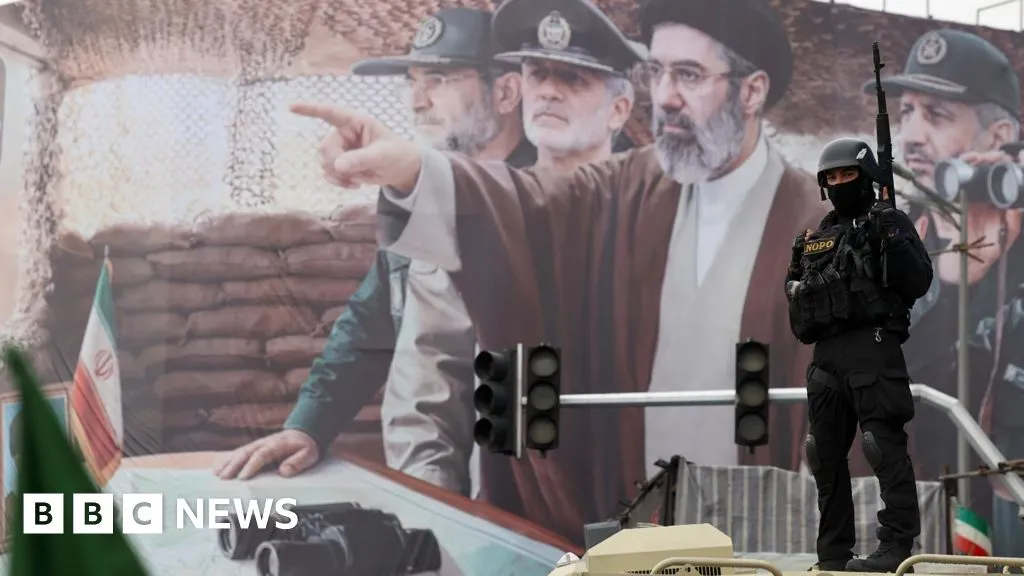
BBC News - WorldFIG 01
Reading time
6min
Word count
1 355words
Sources cited
3cited
Entities identified
12entities
Quality score
100%
§ 01
Briefing Summary
AI-generatedNEWSAR · AI
As hopes for regime change in Iran fade, Israeli Prime Minister Benjamin Netanyahu faces a political test. Netanyahu, who has long positioned himself as Israel's defender against Iran, launched a direct war on the regime. Despite extravagant rhetoric about a "fateful campaign," the Iranian regime remains in place. Netanyahu now claims the war has shifted the balance of power in the Middle East in Israel's favor, even without regime change. Some interpret this as a sign Israel is preparing to end the war, amid concerns about rising oil prices. The war's outcome will likely impact Netanyahu's political standing, as his career is deeply tied to his stance against Iran.
Confidence 0.90Sources 3Claims 5Entities 12
§ 02
Article analysis
Model · rule-basedFraming
Political Strategy
National Security
Tone
Measured
AI-assessed
CalmNeutralAlarmist
Factuality
0.60 / 1.00
Mixed
LowHigh
Sources cited
3
Well sourced
FewMany
§ 03
Key claims
5 extracted01
The Israeli military's chief of staff has called it 'an operation to secure our existence'.
quoteIsraeli military's chief of staff
Confidence
1.00
02
Netanyahu signaled the war may end with the regime still in place.
factualLucy Williamson
Confidence
0.90
03
Regime change would deprive many of Israel's regional enemies of Iranian funding.
factualLucy Williamson
Confidence
0.90
04
Israel continued talking about regime change long after the Trump administration had stopped.
factualNeri Zilber
Confidence
0.80
05
Netanyahu has spent decades preparing for a showdown with Iran.
factualLucy Williamson
Confidence
0.80
§ 04
Full report
6 min read · 1 355 words§ 05
Entities
12 identifiedKey playerOppositionContextPositiveNeutralNegative
People2
Organizations3
§ 06
Keywords & salience
9 termsiran
1.00
benjamin netanyahu
0.90
regime change
0.80
middle east
0.70
israel
0.70
political test
0.60
war
0.60
balance of power
0.50
security
0.40
§ 07
Topic connections
Interactive graph Network visualization showing 51 related topics
View Full Graph Person Organization Location Event|Click node to navigate|Edge numbers = shared articles