Washington’s redeployment of elements of its missile defence systems from South Korea to the Middle East could be read by China as a short-term capability gap in the region, analysts said.They said the move also underlined US flexibility to move its assets across theatres of operation.A Washington Post report on Tuesday citing two unnamed US government officials said that the United States had been moving parts of its Terminal High Altitude Area Defence (THAAD) anti-missile system stationed in South Korea to the Middle East, where the US is fighting a war against Iran.According to South Korean media reports, the US has also begun sending Patriot missile defence systems to Saudi Arabia and the United Arab Emirates.Seoul has indirectly confirmed the moves.During a cabinet meeting on Tuesday, South Korean President Lee Jae Myung said that while the movement of the US air defence systems out of South Korea would “absolutely not” undermine Seoul’s deterrence strategy against North Korea, it was a “stark reality” that South Korea’s opinions would not be heeded.
SRCSouth China Morning Post
LANGEN
LEANCenter-Right
WORDS170
ENT12
SAT · 2026-03-14 · 14:00 GMTBRIEF NSR-2026-0314-24468
NSR-2026-0314-24468News Report·EN·National Security
The US is shifting THAAD from South Korea to the Mideast. What does that mean for China?
The United States is redeploying elements of its THAAD missile defense system from South Korea to the Middle East, according to US government officials. This move, along with the reported transfer of Patriot missile defense systems to Saudi Arabia and the UAE, is intended to bolster US defenses in the Middle East.
Seong Hyeon ChoiSouth China Morning PostFiled 2026-03-14 · 14:00 GMTLean · Center-RightRead · 1 min
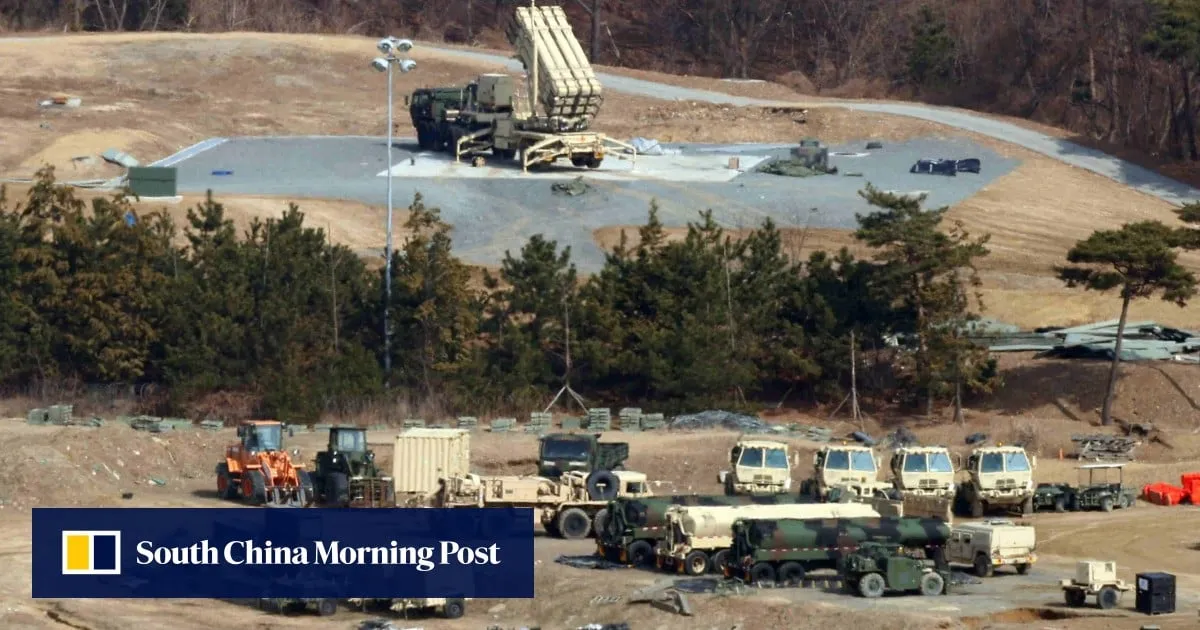
South China Morning PostFIG 01
Reading time
1min
Word count
170words
Sources cited
3cited
Entities identified
12entities
Quality score
100%
§ 01
Briefing Summary
AI-generatedNEWSAR · AI
The United States is redeploying elements of its THAAD missile defense system from South Korea to the Middle East, according to US government officials. This move, along with the reported transfer of Patriot missile defense systems to Saudi Arabia and the UAE, is intended to bolster US defenses in the Middle East. Analysts suggest China may view this as a temporary weakening of US defense capabilities in South Korea. South Korea's President acknowledged the redeployment but asserted it would not impact the country's deterrence against North Korea, while also noting South Korea's limited influence over the decision. The redeployment highlights the US military's ability to shift assets between different regions.
Confidence 0.90Sources 3Claims 5Entities 12
§ 02
Article analysis
Model · rule-basedFraming
National Security
Political Strategy
Tone
Measured
AI-assessed
CalmNeutralAlarmist
Factuality
0.70 / 1.00
Factual
LowHigh
Sources cited
3
Well sourced
FewMany
§ 03
Key claims
5 extracted01
The movement of US air defense systems out of South Korea would "absolutely not" undermine Seoul’s deterrence strategy against North Korea.
quoteSouth Korean President Lee Jae Myung
Confidence
1.00
02
The US has been moving parts of its THAAD anti-missile system from South Korea to the Middle East.
factualWashington Post, citing unnamed US government officials
Confidence
0.90
03
The US has also begun sending Patriot missile defence systems to Saudi Arabia and the United Arab Emirates.
factualSouth Korean media reports
Confidence
0.80
04
The move underlined US flexibility to move its assets across theatres of operation.
factualanalysts
Confidence
0.70
05
China could read the redeployment as a short-term capability gap in the region.
predictionanalysts
Confidence
0.60
§ 04
Full report
1 min read · 170 words§ 05
Entities
12 identifiedKey playerOppositionContextPositiveNeutralNegative
Organizations2
Locations8
§ 06
Keywords & salience
9 termsthaad
1.00
missile defence systems
0.90
south korea
0.80
middle east
0.80
us
0.70
redeployment
0.60
china
0.60
deterrence strategy
0.50
north korea
0.40
§ 07
Topic connections
Interactive graph No topic relationship data available yet. This graph will appear once topic relationships have been computed.