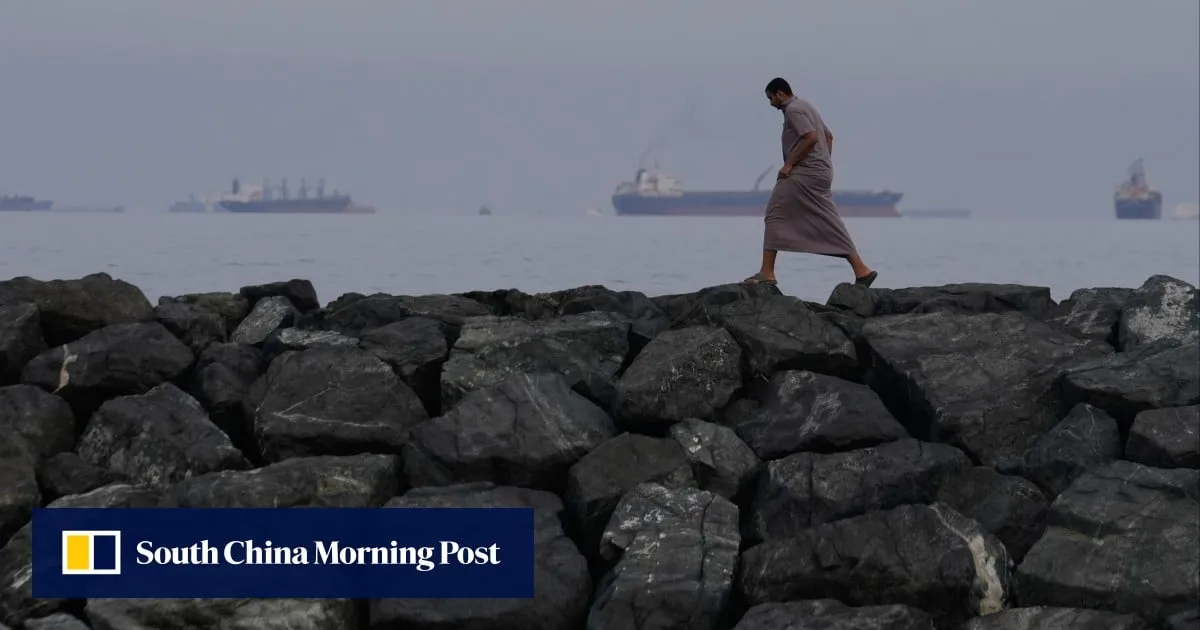
Maritime tracking data showed that no ships passed through the Strait of Hormuz on Saturday, marking the first full day without any confirmed commercial traffic in either direction since February 28, when the US and Israel began military strikes on Iran.Crossings dropped to zero, below the previous seven-day average of 2.57 daily transits, according to maritime analytics firm Windward. Although no vessels entered the waterway that day, about 400 ships sailed in the Gulf of Oman on Friday, it said.“The concentration suggests that many vessels are holding position outside the Strait of Hormuz, rather than dispersing globally, potentially reflecting expectations that the corridor may reopen,” the company said.Several ships linked to Pakistan and Turkey were confirmed to have passed through the corridor on Friday under apparent authorisation or special circumstances, Windward said.Global shipping routes are shifting amid the turmoil in the Middle East. Traffic around the Cape of Good Hope increased, flows through the Bab el-Mandeb Strait between Yemen and the Horn of Africa remained stable, and transits through the Suez Canal dropped sharply, the firm said.“Taken together, the current maritime picture is defined by visible paralysis inside the Strait of Hormuz, conditional exceptions for selected vessels, continued global re-routing and widening disruption across energy infrastructure, logistics and maritime policy frameworks,” Windward said.
SRCSouth China Morning Post
LANGEN
LEANCenter-Right
WORDS213
ENT12
MON · 2026-03-16 · 09:30 GMTBRIEF NSR-2026-0316-24922
NSR-2026-0316-24922News Report·EN·Conflict
No ships cross Strait of Hormuz for first time since conflict began, data shows
For the first time since February 28, when the US and Israel began military strikes on Iran, no ships crossed the Strait of Hormuz on Saturday, according to maritime tracking data. This marks a significant drop from the previous seven-day average of 2.57 daily transits.
Mia Nurmamat,Carol YangSouth China Morning PostFiled 2026-03-16 · 09:30 GMTLean · Center-RightRead · 1 min
South China Morning PostFIG 01
Reading time
1min
Word count
213words
Sources cited
1cited
Entities identified
12entities
Quality score
100%
§ 01
Briefing Summary
AI-generatedNEWSAR · AI
For the first time since February 28, when the US and Israel began military strikes on Iran, no ships crossed the Strait of Hormuz on Saturday, according to maritime tracking data. This marks a significant drop from the previous seven-day average of 2.57 daily transits. Maritime analytics firm Windward noted that approximately 400 ships were positioned in the Gulf of Oman, suggesting they are waiting for the Strait to reopen. While some ships linked to Pakistan and Turkey passed through the corridor on Friday, global shipping routes are shifting, with increased traffic around the Cape of Good Hope and decreased transits through the Suez Canal. The situation reflects disruption across energy infrastructure, logistics, and maritime policy frameworks.
Confidence 0.90Sources 1Claims 5Entities 12
§ 02
Article analysis
Model · rule-basedFraming
Conflict
Economic Impact
Tone
Measured
AI-assessed
CalmNeutralAlarmist
Factuality
0.80 / 1.00
Factual
LowHigh
Sources cited
1
Limited
FewMany
§ 03
Key claims
5 extracted01
About 400 ships sailed in the Gulf of Oman on Friday.
factualWindward
Confidence
1.00
02
Crossings dropped to zero, below the previous seven-day average of 2.57 daily transits.
statisticWindward
Confidence
1.00
03
This is the first full day without traffic since February 28.
factualArticle's own claim
Confidence
1.00
04
No ships passed through the Strait of Hormuz on Saturday.
factualArticle's own claim
Confidence
1.00
05
Many vessels are holding position outside the Strait of Hormuz.
quoteWindward
Confidence
0.80
§ 04
Full report
1 min read · 213 words§ 05
Entities
12 identifiedKey playerOppositionContextPositiveNeutralNegative
Organizations1
Locations11
SO
Strait of Hormuz
StrategicKey Player
4x
95
I
Israel
CountryOpposition
70
I
Iran
CountryOpposition
70
US
United States
CountryOpposition
70
GO
Gulf of Oman
StrategicContext
60
T
Turkey
Country
50
P
Pakistan
Country
50
BE
Bab el-Mandeb Strait
StrategicContext
40
CO
Cape of Good Hope
StrategicContext
40
Y
Yemen
CountryContext
35
SC
Suez Canal
StrategicContext
35
§ 06
Keywords & salience
8 termsstrait of hormuz
1.00
maritime traffic
0.80
shipping routes
0.70
middle east
0.60
global re-routing
0.50
gulf of oman
0.50
maritime analytics
0.50
energy infrastructure
0.40
§ 07
Topic connections
Interactive graph Network visualization showing 51 related topics
View Full Graph Person Organization Location Event|Click node to navigate|Edge numbers = shared articles