About 90 ships cross the Strait of Hormuz as Iran exports millions of barrels of oil despite the war 1 of 4 | Oil tankers and cargo ships line up in the Strait of Hormuz as seen from Khor Fakkan, United Arab Emirates, Wednesday, March 11, 2026. (AP Photo/Altaf Qadri) 2 of 4 | Liberia-flagged tanker Shenlong Suezmax, carrying crude oil from Saudi Arabia, that arrived clearing the Strait of Hormuz, is seen at the Mumbai-port" class="entity-link entity-location" data-entity-id="45942" data-entity-type="location">Mumbai Port in Mumbai, India, Thursday, March 12, 2026. (AP Photo/Rafiq Maqbool) 3 of 4 | Liberia-flagged tanker Shenlong Suezmax, carrying crude oil from Saudi Arabia, that arrived clearing the Strait of Hormuz, is seen at the Mumbai-port" class="entity-link entity-location" data-entity-id="45942" data-entity-type="location">Mumbai Port in Mumbai, India, Thursday, March 12, 2026. (AP Photo/Rafiq Maqbool) 4 of 4 | Liberia-flagged tanker Shenlong Suezmax, carrying crude oil from Saudi Arabia, that arrived clearing the Strait of Hormuz, is seen at the Mumbai-port" class="entity-link entity-location" data-entity-id="45942" data-entity-type="location">Mumbai Port in Mumbai, India, Thursday, March 12, 2026. (AP Photo/Rafiq Maqbool) 1 of 4 Oil tankers and cargo ships line up in the Strait of Hormuz as seen from Khor Fakkan, United Arab Emirates, Wednesday, March 11, 2026. (AP Photo/Altaf Qadri) Add AP News on Google Add AP News as your preferred source to see more of our stories on Google. 2 of 4 Liberia-flagged tanker Shenlong Suezmax, carrying crude oil from Saudi Arabia, that arrived clearing the Strait of Hormuz, is seen at the Mumbai-port" class="entity-link entity-location" data-entity-id="45942" data-entity-type="location">Mumbai Port in Mumbai, India, Thursday, March 12, 2026. (AP Photo/Rafiq Maqbool) Add AP News on Google Add AP News as your preferred source to see more of our stories on Google. 3 of 4 Liberia-flagged tanker Shenlong Suezmax, carrying crude oil from Saudi Arabia, that arrived clearing the Strait of Hormuz, is seen at the Mumbai-port" class="entity-link entity-location" data-entity-id="45942" data-entity-type="location">Mumbai Port in Mumbai, India, Thursday, March 12, 2026. (AP Photo/Rafiq Maqbool) Add AP News on Google Add AP News as your preferred source to see more of our stories on Google. 4 of 4 Liberia-flagged tanker Shenlong Suezmax, carrying crude oil from Saudi Arabia, that arrived clearing the Strait of Hormuz, is seen at the Mumbai-port" class="entity-link entity-location" data-entity-id="45942" data-entity-type="location">Mumbai Port in Mumbai, India, Thursday, March 12, 2026. (AP Photo/Rafiq Maqbool) Add AP News on Google Add AP News as your preferred source to see more of our stories on Google. Updated [hour]:[minute] [AMPM] [timezone], [monthFull] [day], [year] HONG KONG (AP) — About 90 ships including oil tankers have crossed the Strait of Hormuz since the outset of the war with Iran and it is still exporting millions of barrels of oil at a time when the waterway has been effectively closed, according to maritime and trade data platforms.Many of the vessels that passed through the strait were so-called “dark” transits evading Western government sanctions and oversight that likely have ties to Iran, maritime data firm Lloyd’s List Intelligence said. More recently, vessels with ties to India and Pakistan have also successfully crossed the strait as governments stepped up negotiations.As crude prices spiked above $100 a barrel, U.S. President Donald Trump pressured allies and trade partners to send warships and reopen the strait, hoping to bring oil prices lower.Most shipping traffic through the Strait of Hormuz, a waterway for global oil and gas transport that supplies roughly one-fifth of the world’s crude oil, has been halted since early March, after the war started. About 20 vessels have been attacked in the area. However, Iran has still managed to export well above 16 million barrels of oil since the beginning of March, trade data and analytics platform Kpler estimated. Due to Western sanctions and associated risks, China has been the biggest buyer of Iranian oil. There has been ”continued resilience” in Iran’s oil export volumes, said Kpler trade risk analyst Ana Subasic. Iran has managed to profit from oil sales and also “preserve its own export artery” by using control over the chokepoint, said Kun Cao, client director at consulting firm Reddal. Iran’s oil export data estimates are largely aligned with maritime traffic data.At least 89 ships crossed the Strait of Hormuz between March 1 and 15 – including 16 oil tankers, according to Lloyd’s List Intelligence, down from roughly 100 to 135 vessel passages per day before the war. More than one-fifth of the 89 vessels were believed to be Iran-affiliated, while Chinese and Greece affiliated ships are among the rest, it said. Other vessels also have been getting through.The Pakistan-flagged crude oil tanker Karachi, controlled by the Pakistan National Shipping Corp., passed through the strait on Sunday, Lloyd’s List Intelligence said.Shariq Amin, a spokesman at the Pakistan Port Trust, refused to confirm or deny which route the MT Karachi had used but he said the ship would soon safely reach Pakistan.The India-flagged liquefied petroleum gas (LPG) carriers Shivalik and Nanda Devi, both owned by state-owned Shipping Corp. of India, also traveled through the strait around March 13 or 14, according to Lloyd’s List Intelligence. LPG is used as a primary cooking fuel by millions of Indian households.India’s foreign minister, Subrahmanyam Jaishankar, told the Financial Times the two vessels’ were able to pass following talks with Iran. Iraq was also in talks with Iran to allow Iraqi oil tankers through the Strait of Hormuz, its state-run news agency reported.Vessels may be transiting “with at least some level of diplomatic intervention,” said Richard Meade, editor-in-chief of Lloyd’s List. So, Iran may have “effectively created a safe corridor” with some ships passing close to the Iranian coast. Some vessels near or in the strait were found to have declared themselves as China-linked or with all Chinese crew to reduce risks of being attacked, based on an earlier analysis on ship tracking platform MarineTraffic. Analysts believe they were taking advantage of China’s closer ties with Iran.Oil prices have jumped more than 40% to above $100 per barrel since the Iran war began, and Iran has threatened it won’t allow “even a single liter of oil” destined for the U.S., and Israel and their allies to pass through.To try to stabilize oil prices, the U.S. said it was allowing Iranian oil tankers to cross the strait. “The Iranian ships have been getting out already, and we’ve let that happen to supply the rest of the world,” Treasury Secretary Scott Bessent said in an interview with CNBC on Monday. The U.S. bombed military sites on Kharg Island off the Iranian coast, which is key for Iran’s oil network and exports, but President Donald Trump said he had left its oil infrastructure alone for now.The latest passages through the Strait of Hormuz show the strait was not simply “closed,” Cao said. “It is better understood as closed selectively against some traffic, while still functioning for Iranian exports and a narrow set of tolerated non-Iranian movements,” he said.However, if Iran’s plan is to “inflict pain through higher energy prices, the number of tankers it allows through the Strait of Hormuz may be very limited,” Dutch bank ING’s strategists Warren Patterson and Ewa Manthey wrote in a research note.___Saaliq reported from New Delhi. AP Writer Munir Ahmed contributed from Islamabad, Pakistan. Chan writes about business and economy in China for The Associated Press, reporting on key sectors of the world’s second-largest economy from trade and technology to autos. He is based in Hong Kong. Saaliq covers news across India and the South Asia region for The Associated Press, often focusing on politics, democracy, conflict and religion. He is based in New Delhi.
SRCAssociated Press (AP)
LANGEN
LEANCenter
WORDS1 232
ENT11
WED · 2026-03-18 · 05:23 GMTBRIEF NSR-2026-0318-25548
NSR-2026-0318-25548News Report·EN·Economic Impact
About 90 ships cross the Strait of Hormuz as Iran exports millions of barrels of oil despite the war
Despite ongoing conflict, Iran continues to export millions of barrels of oil. Approximately 90 ships, including oil tankers, have traversed the Strait of Hormuz since the war began.
By
CHAN HO-HIM and SHEIKH SAALIQAssociated Press (AP)Filed 2026-03-18 · 05:23 GMTLean · CenterRead · 5 min
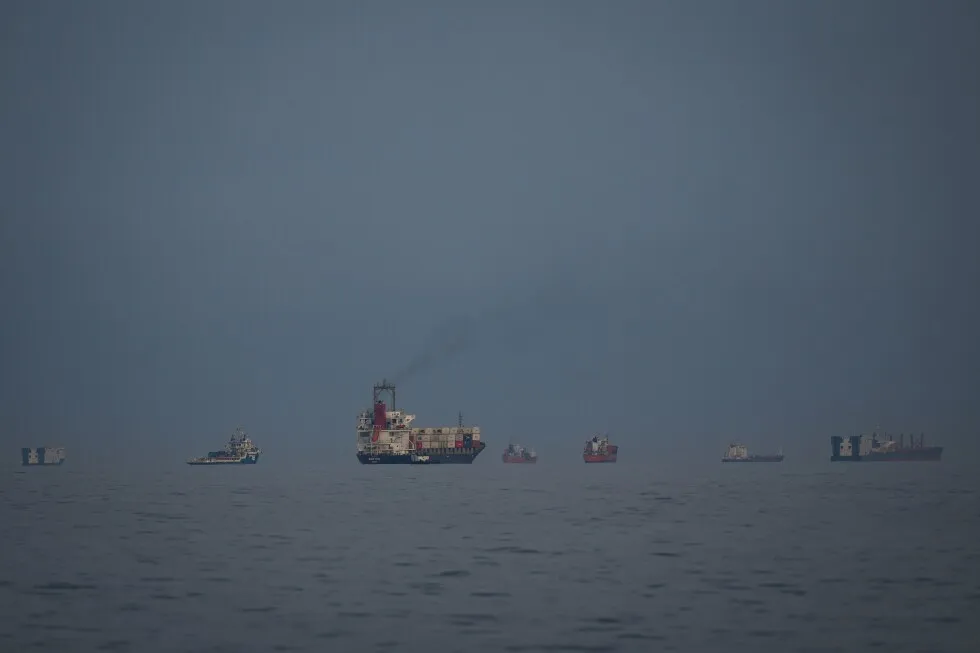
Associated Press (AP)FIG 01
Reading time
5min
Word count
1 232words
Sources cited
1cited
Entities identified
11entities
Quality score
100%
§ 01
Briefing Summary
AI-generatedNEWSAR · AI
Despite ongoing conflict, Iran continues to export millions of barrels of oil. Approximately 90 ships, including oil tankers, have traversed the Strait of Hormuz since the war began. The Associated Press reported the activity on March 12, 2026, with images showing ships in the Strait of Hormuz and at the Mumbai Port in India. The Strait of Hormuz, a crucial waterway for oil transport, remains a key route for Iranian exports despite the ongoing war. The continued oil exports suggest Iran's efforts to maintain its economy amidst conflict.
Confidence 0.90Sources 1Claims 5Entities 11
§ 02
Article analysis
Model · rule-basedFraming
Economic Impact
Political Strategy
Tone
Measured
AI-assessed
CalmNeutralAlarmist
Factuality
0.80 / 1.00
Factual
LowHigh
Sources cited
1
Limited
FewMany
§ 03
Key claims
5 extracted01
Crude prices spiked above $100 a barrel.
factualAP
Confidence
1.00
02
Iran is still exporting millions of barrels of oil.
factualAP
Confidence
1.00
03
About 90 ships including oil tankers have crossed the Strait of Hormuz since the outset of the war with Iran.
factualAP
Confidence
1.00
04
Vessels with ties to India and Pakistan have also successfully crossed the strait.
factualAP
Confidence
0.90
05
Many of the vessels that passed through the strait were so-called “dark” transits.
factualLloyd’s List Intelligence
Confidence
0.90
§ 04
Full report
5 min read · 1 232 words§ 05
Entities
11 identifiedKey playerOppositionContextPositiveNeutralNegative
§ 06
Keywords & salience
7 termsstrait of hormuz
1.00
oil exports
0.90
oil tankers
0.80
maritime shipping
0.70
war
0.60
crude oil
0.50
cargo ships
0.40
§ 07
Topic connections
Interactive graph Network visualization showing 51 related topics
View Full Graph Person Organization Location Event|Click node to navigate|Edge numbers = shared articles