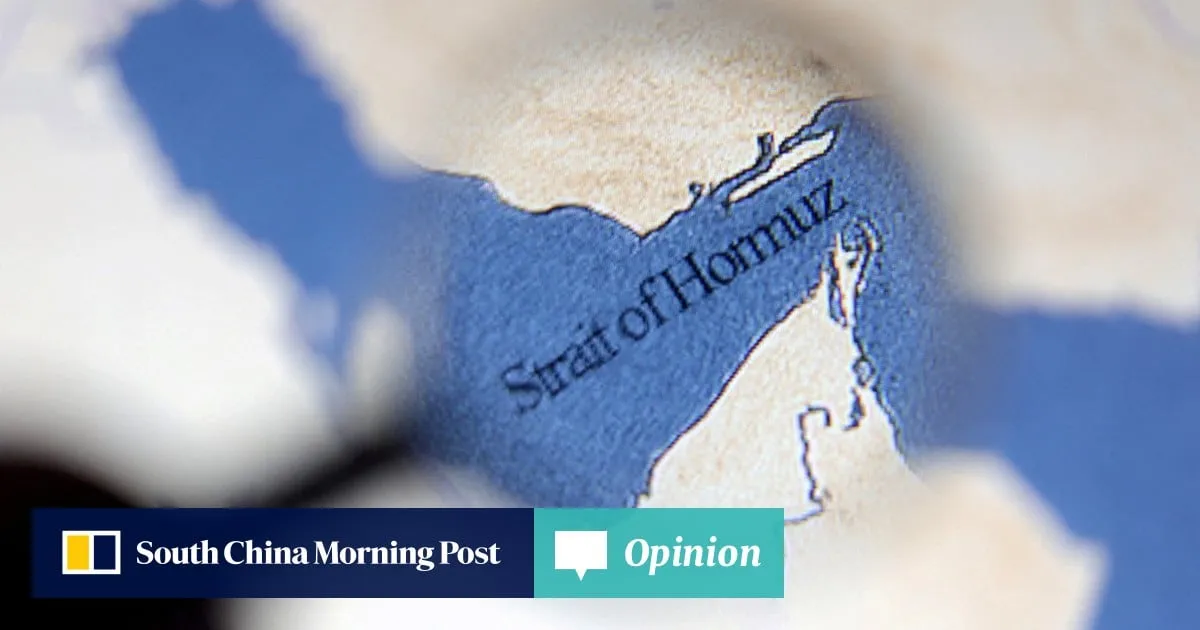
War in Iran disrupting established trade flows raises an important question: how serious could the consequences be, and for whom will they be most severe?To answer this, it is useful to look at history. During the fifth and fourth centuries BC, Athens, a major centre, depended heavily on grain imports. Whenever routes were blocked during wars, Athens almost immediately faced the threat of a food crisis. In the Middle Ages, Venice became one of Europe’s richest cities and a crucial hub linking European and eastern trade. When wars disrupted routes, the effects were felt almost instantly in the Venetian economy.For centuries, trade between China and Europe moved along the Silk Road. As trade networks expanded, disruptions to key routes began to have far wider consequences. In response to the 1973 Yom Kippur War, Arab oil-producing countries imposed an embargo on the United States and several Western economies. Oil supplies fell sharply, prices surged, global inflation accelerated and many major economies slipped into recession.A similar pattern appeared in 1956 when Egypt nationalised the Suez Canal, disrupting European trade with Asia. The canal’s closure again from 1967 to 1975 forced global shipping to reorganise routes. In 2021, the container ship Ever Given blocked the Suez Canal for six days, leaving hundreds of vessels waiting and delaying supply chains around the world. During the 1980s Iran-iraq-war" class="entity-link entity-event" data-entity-id="10188" data-entity-type="event">Iran-Iraq War, attacks on shipping in the Persian Gulf led to the deployment of international naval escorts.These examples tell us that whenever a narrow trade corridor carries strategically important goods, blocking that corridor tends to produce consequences far beyond the immediate region. From the Bosphorus Strait to the Strait of Malacca, world trade has long depended on vulnerable chokepoints.04:04How US-Israeli strikes on Iran are sending shock waves through global energy marketsHow US-Israeli strikes on Iran are sending shock waves through global energy marketsWhy, then, does the current situation around the Strait of Hormuz appear potentially even more serious? The modern global economy is far more complex than in the past. Supply chains are deeply interconnected, economic shocks spread faster, and major transport routes now carry a wide range of goods, many of them critical to modern production and energy systems.
SRCSouth China Morning Post
LANGEN
LEANCenter-Right
WORDS362
ENT12
SUN · 2026-03-22 · 12:30 GMTBRIEF NSR-2026-0322-28970
NSR-2026-0322-28970Analysis·EN·Economic Impact
Hormuz crisis underlines vulnerability of global trade chokepoints
The article examines the vulnerability of global trade chokepoints, highlighting the potential consequences of disruptions using historical examples. It cites instances such as the blocking of trade routes to Athens, disruptions to Venetian trade, the Arab oil embargo of 1973, the Suez Canal closures, and the Iran-Iraq war to illustrate how blockages of key corridors have widespread economic repercussions.
Albert BakhtizinSouth China Morning PostFiled 2026-03-22 · 12:30 GMTLean · Center-RightRead · 2 min
South China Morning PostFIG 01
Reading time
2min
Word count
362words
Sources cited
0cited
Entities identified
12entities
Quality score
100%
§ 01
Briefing Summary
AI-generatedNEWSAR · AI
The article examines the vulnerability of global trade chokepoints, highlighting the potential consequences of disruptions using historical examples. It cites instances such as the blocking of trade routes to Athens, disruptions to Venetian trade, the Arab oil embargo of 1973, the Suez Canal closures, and the Iran-Iraq war to illustrate how blockages of key corridors have widespread economic repercussions. The article emphasizes that modern supply chains are deeply interconnected, making the current situation around the Strait of Hormuz particularly serious. It concludes that disruptions to these narrow trade corridors, which carry strategically important goods, can have far-reaching consequences beyond the immediate region due to the complexity of the modern global economy.
Confidence 0.90Claims 5Entities 12
§ 02
Article analysis
Model · rule-basedFraming
Economic Impact
Political Strategy
Tone
Measured
AI-assessed
CalmNeutralAlarmist
Factuality
0.70 / 1.00
Factual
LowHigh
Sources cited
0
No named sources
FewMany
§ 03
Key claims
5 extracted01
In 2021, the container ship Ever Given blocked the Suez Canal for six days, delaying supply chains around the world.
factual
Confidence
1.00
02
During the 1980s Iran-Iraq war, attacks on shipping in the Persian Gulf led to the deployment of international naval escorts.
factual
Confidence
1.00
03
Supply chains are deeply interconnected, economic shocks spread faster, and major transport routes now carry a wide range of goods.
factual
Confidence
0.90
04
Disruptions to key trade routes have had far wider consequences as trade networks expanded.
factual
Confidence
0.90
05
The modern global economy is far more complex than in the past.
factual
Confidence
0.80
§ 04
Full report
2 min read · 362 words§ 05
Entities
12 identifiedKey playerOppositionContextPositiveNeutralNegative
Locations10
§ 06
Keywords & salience
8 termstrade chokepoints
1.00
global trade
0.90
supply chains
0.80
strait of hormuz
0.70
trade routes
0.60
global economy
0.50
economic shocks
0.50
vulnerability
0.40
§ 07
Topic connections
Interactive graph Network visualization showing 51 related topics
View Full Graph Person Organization Location Event|Click node to navigate|Edge numbers = shared articles