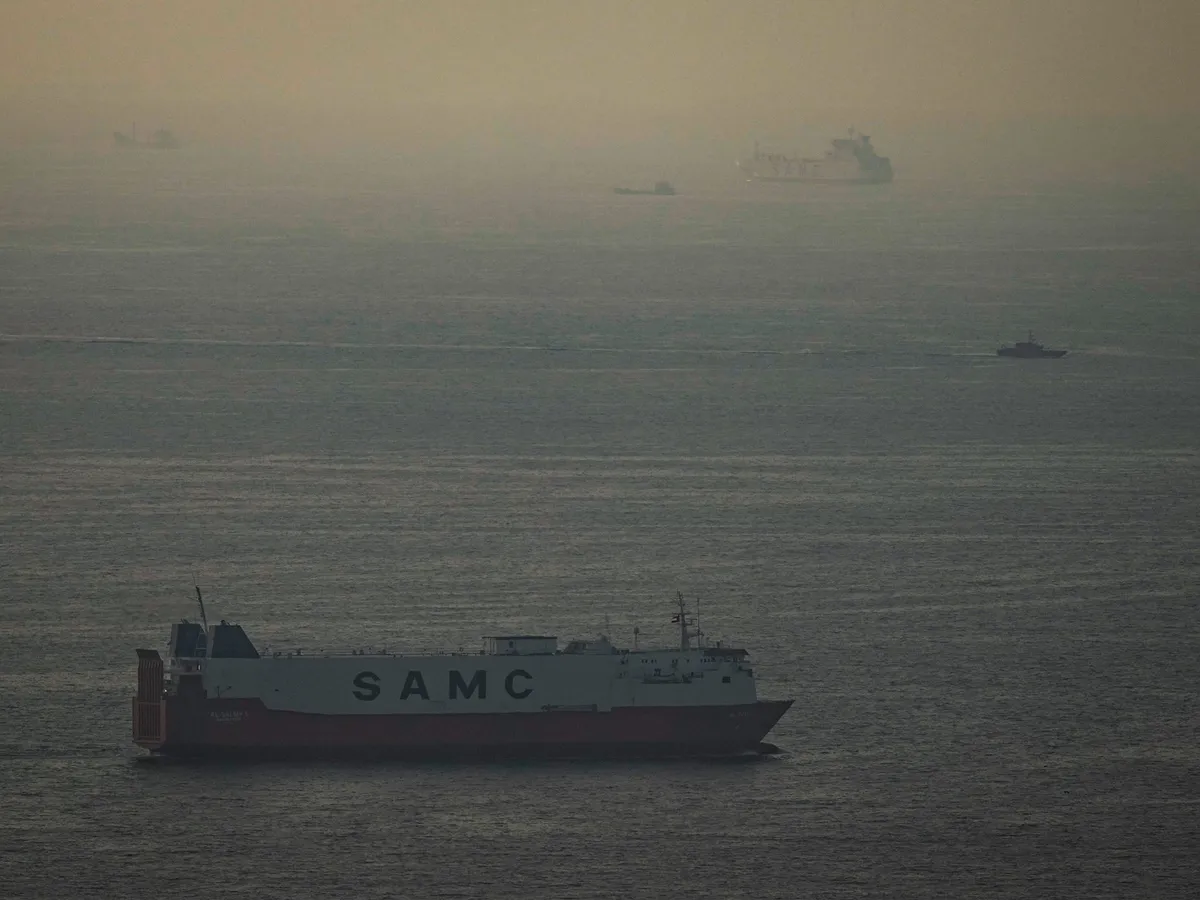
Tehran’s statement on opening of key waterway comes as US President Donald Trump says talks are taking place to end the war.Iran has said that “non-hostile” ships may transit the Strait of Hormuz amid a collapse of maritime traffic through the waterway that has prompted the biggest global energy crisis in decades.In a statement on Tuesday, Iran’s mission to the United Nations said vessels may avail of “safe passage” through the waterway, “provided that they neither participate in nor support acts of aggression against Iran and fully comply with the declared safety and security regulations.”Recommended Stories list of 4 itemslist 1 of 4Explosion, fire at Erbil high-rise amid Iranian attackslist 2 of 4Trump keeps up claims of talks with ‘the right people’ in Iranlist 3 of 4Activists label Larry Ellison’s yacht ‘The Trump Propagandist’list 4 of 4Russian weapons, tactics seen in Ukraine are shaping Myanmar’s civil warend of listShips will be allowed to transit the strait “in coordination with the competent Iranian authorities”, the statement posted on social media said.Iran earlier shared a similar statement about the status of the strait with the International Maritime Organization (IMO), the UN body responsible for the safety and security of international shipping.Tehran did not elaborate in the statements on what regulations vessels need to follow to safely navigate the strait, through which about one-fifth of global supplies of oil and liquified natural gas usually transit.Iran’s remarks came as United States President Donald Trump said negotiations were under way to end the US-Israel war on Iran, despite Tehran’s previous denials that the sides were in talks.While a small number of ships are passing through the strait each day, traffic remains at a fraction of the levels seen before the US and Israel launched their war on Iran on February 28.Five vessels were tracked transiting the waterway via their automatic identification systems on Monday, down from an average of 120 daily transits before the conflict, according to maritime intelligence firm Windward.
SRCAl Jazeera
LANGEN
LEANCenter
WORDS326
ENT8
WED · 2026-03-25 · 03:31 GMTBRIEF NSR-2026-0325-33879
NSR-2026-0325-33879News Report·EN·National Security
Iran says ‘non-hostile’ ships can pass safely through Strait of Hormuz
Iran has stated that "non-hostile" ships can safely pass through the Strait of Hormuz, a crucial waterway for global oil and gas supplies. The announcement, made via the UN and IMO, stipulates that vessels must not participate in or support aggression against Iran and must comply with Iranian safety regulations.
John PowerAl JazeeraFiled 2026-03-25 · 03:31 GMTLean · CenterRead · 2 min
Al JazeeraFIG 01
Reading time
2min
Word count
326words
Sources cited
2cited
Entities identified
8entities
Quality score
100%
§ 01
Briefing Summary
AI-generatedNEWSAR · AI
Iran has stated that "non-hostile" ships can safely pass through the Strait of Hormuz, a crucial waterway for global oil and gas supplies. The announcement, made via the UN and IMO, stipulates that vessels must not participate in or support aggression against Iran and must comply with Iranian safety regulations. This comes amid significantly reduced maritime traffic in the Strait following the start of the US-Israel war on Iran on February 28th. While a few ships transit daily, numbers are far below the pre-conflict average of 120. The statement coincides with claims by US President Donald Trump that negotiations are underway to end the conflict, despite previous denials from Tehran. Iran did not elaborate on the specific regulations ships must follow for safe passage.
Confidence 0.90Sources 2Claims 5Entities 8
§ 02
Article analysis
Model · rule-basedFraming
National Security
Economic Impact
Tone
Measured
AI-assessed
CalmNeutralAlarmist
Factuality
0.80 / 1.00
Factual
LowHigh
Sources cited
2
Limited
FewMany
§ 03
Key claims
5 extracted01
US President Donald Trump said negotiations were under way to end the US-Israel war on Iran.
quoteDonald Trump
Confidence
1.00
02
Ships will be allowed to transit the strait “in coordination with the competent Iranian authorities”.
quoteIran's mission to the UN
Confidence
1.00
03
Iran has said that “non-hostile” ships may transit the Strait of Hormuz.
quoteIran
Confidence
1.00
04
Five vessels were tracked transiting the waterway on Monday, down from an average of 120 daily transits before the conflict.
statisticWindward
Confidence
0.90
05
About one-fifth of global supplies of oil and liquified natural gas usually transit through the Strait of Hormuz.
factualnull
Confidence
0.90
§ 04
Full report
2 min read · 326 words§ 05
Entities
8 identifiedKey playerOppositionContextPositiveNeutralNegative
Organizations3
§ 06
Keywords & salience
9 termsstrait of hormuz
1.00
maritime traffic
0.80
safe passage
0.70
iran
0.70
energy crisis
0.60
shipping
0.60
maritime security
0.50
us-iran war
0.50
vessel transit
0.40
§ 07
Topic connections
Interactive graph Network visualization showing 51 related topics
View Full Graph Person Organization Location Event|Click node to navigate|Edge numbers = shared articles