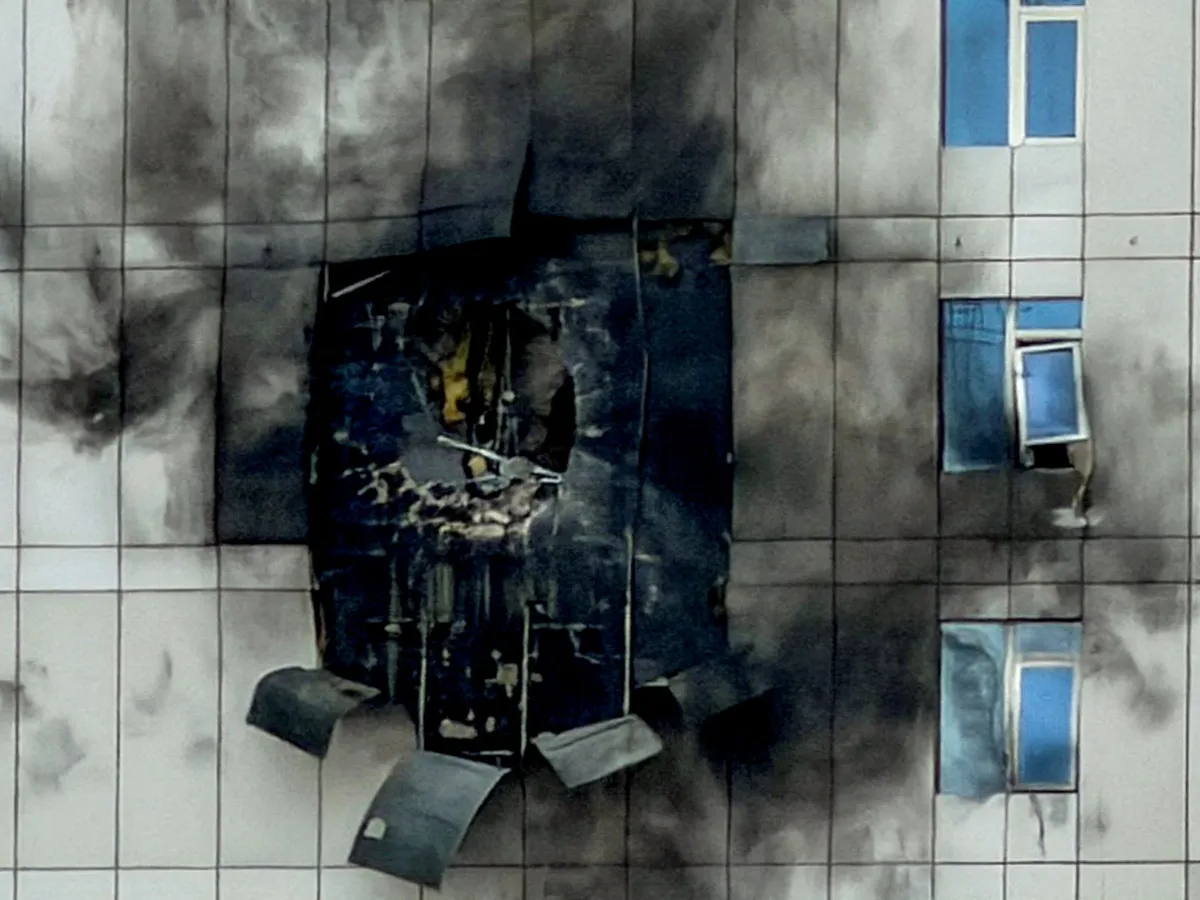
UN Human Rights Council passes resolution demanding end to Iran’s ‘unprovoked attacks’ on countries in the Middle East.A building damaged by an Iranian drone attack in Manama, Bahrain [File: Hamad I Mohammed/Reuters]Published On 25 Mar 2026Gulf officials have told the United Nations Human Rights Council that Iranian attacks on their countries amount to a gross violation of state sovereignty, demanding full reparations as the United States-Israeli war on Iran approaches the one-month mark.Saudi Arabia’s representative to the UN, Abdulmohsen Majed bin Khothaila, condemned Iran’s strikes during an emergency meeting in Geneva on Wednesday, saying Gulf Cooperation Council (GCC) member states were being attacked despite not being involved in the conflict.Recommended Stories list of 3 itemslist 1 of 3US talking to itself, says Iran as Trump claims wheels of diplomacy turninglist 2 of 3Is Iran’s negotiating position stronger than when US-Israeli war started?list 3 of 3US Democrats condemn war on Iran as Senate resolution failsend of list“[Iranian attacks] violate the UN Charter and international law. We must call things by their name,” Majed bin Khothaila said.“To target a neighbour is a violation of the principles of good neighbourly relations. To target a mediator betrays all efforts aimed at peace and undermines any constructive initiative. To target states that are not party to the hostilities amounts to unacceptable and unjustifiable attacks that cannot be passed over in silence.”At the end of the meeting, the 47-member council backed a resolution brought by the GCC and Jordan condemning Tehran’s actions aimed at closing the Strait of Hormuz, a critical Gulf waterway through which about one-fifth of the world’s oil and gas supplies transit.The resolution, which is not legally binding, also demanded that Iran immediately “cease all unprovoked attacks” and called for full and swift “reparation” to all victims of its strikes.Wednesday’s session in Geneva came as US-Israeli attacks on Iran – and Iranian missile and drone strikes across the wider Middle East – continued amid escalating international mediation efforts to end the deadly conflict.At the meeting, Qatar’s representative to the UN, Hend bint Abd al-Rahman al-Muftah, said Iran’s attacks had “grave repercussions” that were “not only affecting peace and security in the world, but also human rights”.“These attacks amount to a great source of concern for us, and we can no longer remain silent,” she said.“To attack the electricity and desalination plants also involves serious environmental consequences and undermines rights that should be guaranteed by human rights provisions.”The Qatari representative also noted that the de facto closure of the Strait of Hormuz was “a source of great concern, given the dire consequences it can have on the economy and supply routes”.Kuwait’s ambassador, Naser Abdullah Alhayen, told the council that the Gulf was “seeing an existential threat to international and regional security”.“This aggressive approach is undermining international law and sovereignty,” Alhayen added.‘Dangerous and unpredictable’Meanwhile, the UN’s human rights chief, Volker Turk, warned that the war has created an “extremely dangerous and unpredictable” situation that is pushing the Middle East towards an “unmitigated catastrophe”.“The only guaranteed way to prevent this is to end the conflict, and I urge all states, and particularly those with influence, to do everything in their power to achieve this,” he said.Al Jazeera’s Zein Basravi, reporting from Dubai, said the “GCC countries are looking for a seat at the table” at negotiations between the US and Iran.“As Iran is going to look for guarantees going forward from the US and Israel, Gulf states will be looking for guarantees from Iran,” he said.Basravi added that while the volume of incoming attacks in Gulf countries seemed to be decreasing in recent days, a small attack from Iran “can still create the same level of disruption since the beginning of the war”.
SRCAl Jazeera
LANGEN
LEANCenter
WORDS617
ENT12
WED · 2026-03-25 · 13:00 GMTBRIEF NSR-2026-0325-35119
NSR-2026-0325-35119News Report·EN·National Security
Iranian attacks amount to violation of sovereignty, Gulf states tell UN
In March 2026, Gulf states addressed the UN Human Rights Council in Geneva to condemn Iranian attacks on their countries amidst the ongoing US-Israeli war on Iran. Gulf officials, including representatives from Saudi Arabia and Qatar, stated that Iran's actions violate state sovereignty and international law, demanding reparations.
Al Jazeera StaffAl JazeeraFiled 2026-03-25 · 13:00 GMTLean · CenterRead · 3 min
Al JazeeraFIG 01
Reading time
3min
Word count
617words
Sources cited
5cited
Entities identified
12entities
Quality score
100%
§ 01
Briefing Summary
AI-generatedNEWSAR · AI
In March 2026, Gulf states addressed the UN Human Rights Council in Geneva to condemn Iranian attacks on their countries amidst the ongoing US-Israeli war on Iran. Gulf officials, including representatives from Saudi Arabia and Qatar, stated that Iran's actions violate state sovereignty and international law, demanding reparations. The UN Human Rights Council, composed of 47 members, passed a resolution brought by the Gulf Cooperation Council (GCC) and Jordan condemning Iran's actions, specifically targeting the Strait of Hormuz. The resolution demands Iran cease all unprovoked attacks and provide reparations to victims. The meeting occurred as international mediation efforts intensify to end the conflict.
Confidence 0.90Sources 5Claims 5Entities 12
§ 02
Article analysis
Model · rule-basedFraming
National Security
Human Rights
Tone
Measured
AI-assessed
CalmNeutralAlarmist
Factuality
0.70 / 1.00
Factual
LowHigh
Sources cited
5
Well sourced
FewMany
§ 03
Key claims
5 extracted01
Iran’s actions aimed at closing the Strait of Hormuz, a critical Gulf waterway.
factual
Confidence
1.00
02
The resolution demanded that Iran immediately “cease all unprovoked attacks”.
quoteUN Human Rights Council
Confidence
1.00
03
Saudi Arabia’s representative condemned Iran’s strikes during an emergency meeting in Geneva.
factualAbdulmohsen Majed bin Khothaila
Confidence
1.00
04
Gulf officials told the UN Human Rights Council that Iranian attacks amount to a gross violation of state sovereignty.
quoteGulf officials
Confidence
1.00
05
UN Human Rights Council passes resolution demanding end to Iran’s ‘unprovoked attacks’ on countries in the Middle East.
factual
Confidence
1.00
§ 04
Full report
3 min read · 617 words§ 05
Entities
12 identifiedKey playerOppositionContextPositiveNeutralNegative
Organizations2
§ 06
Keywords & salience
9 termsiranian attacks
1.00
state sovereignty
0.90
un human rights council
0.80
gulf states
0.70
reparations
0.60
middle east
0.60
international law
0.50
strait of hormuz
0.50
us-israeli war on iran
0.40
§ 07
Topic connections
Interactive graph Network visualization showing 51 related topics
View Full Graph Person Organization Location Event|Click node to navigate|Edge numbers = shared articles