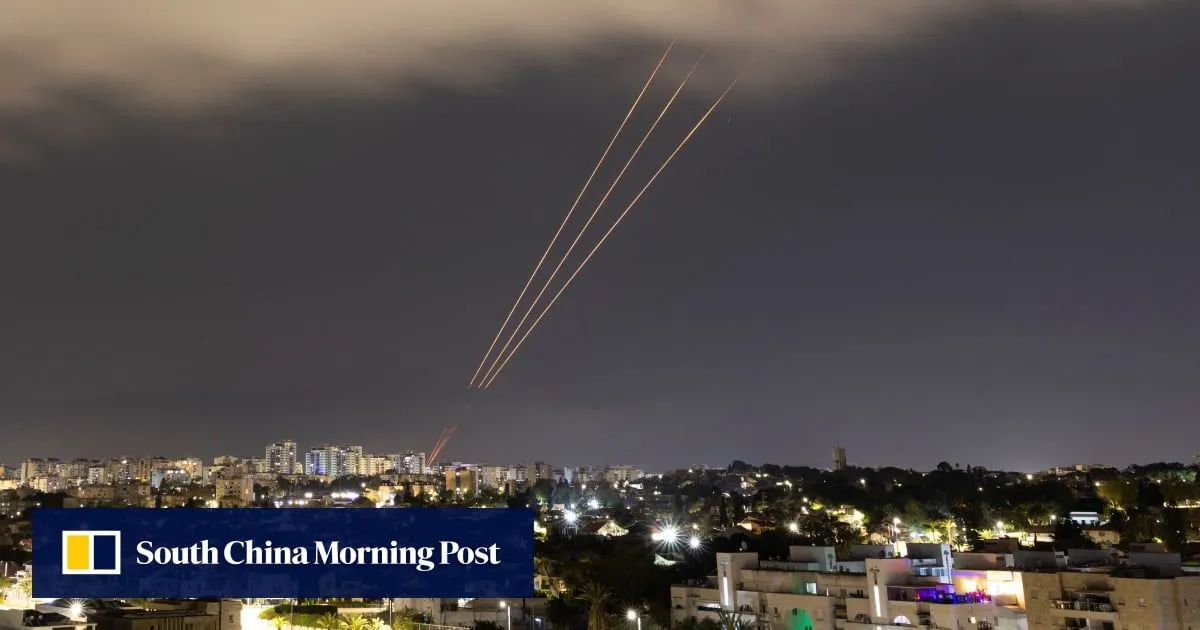
Journal says China should target boost stage, when ballistic missiles are slower, lack manoeuvrability and emit an intense heat signature2-MIN READ2-MIN6 ListenPublished: 6:00pm, 26 Mar 2026Updated: 6:21pm, 26 Mar 2026Beijing should develop an air-based interceptor system as missile threats escalate from Washington and its regional allies, as well as Taiwan and India, a mainland Chinese military magazine has urged, pointing to developments in the Iran war.The war in the Middle East, particularly the “nearly insurmountable challenges” posed by Iran’s ballistic missiles to Israel, is exposing the limitations of existing midcourse and terminal-phase missile defence systems, according to an analysis in the March issue of Defence Review journal.As a result, it suggested, boost or ascent-phase interception by forward-deployed aircraft was now essential. The article proposed deploying fighters and/or drones equipped with air-launched missile interceptors to approach potential enemy missile sites in the “first island chain” and loitering to hunt the ballistic missiles shortly after launch. US says Trump’s China visit delayed until May because of Iran conflictUS says Trump’s China visit delayed until May because of Iran conflictAt the boost stage, ballistic missiles move more slowly, lack manoeuvrability and emit intense infrared heat signatures that are easier for interceptors to track. Additionally, if they were successfully neutralised, any debris or hazardous payload would fall on or near the launch area rather than on the territory of the defending side, thereby minimising collateral damage, the analysis said.“China has long faced substantial missile threats … which currently remain extremely severe,” it said, stressing the need for a “comprehensive, multilayered missile defence network capable of covering all flight phases of incoming ballistic missiles”, referring to the boost, midcourse and terminal stages.It highlighted the United States’ deployment of the Typhon missile system to the Philippines and Japan in recent years, alongside Japan’s planned mass production of the Hyper Velocity Gliding Projectile, a hypersonic glide missile, later this year.Meanwhile, in Taiwan’s arsenal, some indigenously developed systems and some US-supplied weapons, such as the Army Tactical Missile System, were capable of striking targets along the mainland coast, and even deep inland, the report said.
SRCSouth China Morning Post
LANGEN
LEANCenter-Right
WORDS347
ENT11
THU · 2026-03-26 · 10:00 GMTBRIEF NSR-2026-0326-36666
NSR-2026-0326-36666News Report·EN·National Security
What can the Iran war tell China about missile interception?
A Chinese military magazine, *Defence Review*, argues that China should develop an air-based missile interception system targeting the boost stage of ballistic missiles. The analysis, published in March 2026, cites the Iran war and its challenges to Israel as evidence of the limitations of midcourse and terminal-phase defense systems.
Liu ZhenSouth China Morning PostFiled 2026-03-26 · 10:00 GMTLean · Center-RightRead · 2 min
South China Morning PostFIG 01
Reading time
2min
Word count
347words
Sources cited
1cited
Entities identified
11entities
Quality score
100%
§ 01
Briefing Summary
AI-generatedNEWSAR · AI
A Chinese military magazine, *Defence Review*, argues that China should develop an air-based missile interception system targeting the boost stage of ballistic missiles. The analysis, published in March 2026, cites the Iran war and its challenges to Israel as evidence of the limitations of midcourse and terminal-phase defense systems. It suggests deploying fighters or drones equipped with interceptors near potential enemy missile sites to neutralize missiles shortly after launch, when they are slower and easier to track. The article highlights missile threats from the US, its allies, Taiwan, and India as the reason for needing a comprehensive, multilayered defense network. It also mentions US deployments in the Philippines and Japan, Japan's hypersonic missile production, and Taiwan's missile capabilities.
Confidence 0.90Sources 1Claims 5Entities 11
§ 02
Article analysis
Model · rule-basedFraming
National Security
Political Strategy
Tone
Measured
AI-assessed
CalmNeutralAlarmist
Factuality
0.70 / 1.00
Factual
LowHigh
Sources cited
1
Limited
FewMany
§ 03
Key claims
5 extracted01
Taiwan has systems capable of striking targets along the mainland coast.
factual
Confidence
1.00
02
US deployed the Typhon missile system to the Philippines and Japan.
factual
Confidence
1.00
03
China should develop an air-based interceptor system as missile threats escalate.
quotemainland Chinese military magazine
Confidence
0.90
04
Iran's ballistic missiles pose 'nearly insurmountable challenges' to Israel.
quoteDefence Review journal
Confidence
0.80
05
Boost-phase interception by forward-deployed aircraft is now essential.
quoteDefence Review journal
Confidence
0.70
§ 04
Full report
2 min read · 347 words§ 05
Entities
11 identifiedKey playerOppositionContextPositiveNeutralNegative
Organizations1
§ 06
Keywords & salience
10 termsmissile interception
1.00
ballistic missiles
0.90
boost phase
0.80
china
0.70
missile defense
0.70
air-based interceptor system
0.60
iran war
0.60
taiwan
0.50
hypersonic glide missile
0.40
infrared heat signatures
0.40
§ 07
Topic connections
Interactive graph Network visualization showing 51 related topics
View Full Graph Person Organization Location Event|Click node to navigate|Edge numbers = shared articles