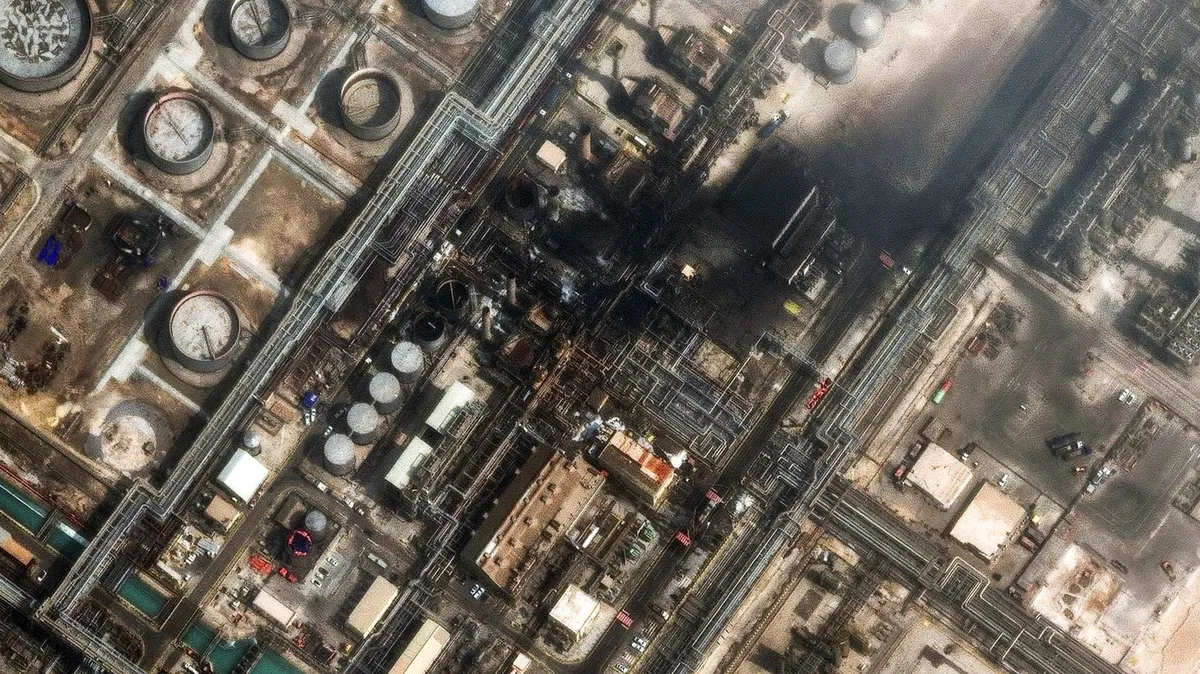
En représailles aux frappes israélo-américaines, l'Iran a visé des sites pétroliers et gaziers dans le Golfe liés à des intérêts occidentaux. Les Etats-Unis et Israël ont également frappé des sites iraniens pour atteindre le régime de Téhéran. La raffinerie de Ras Tanura, en Arabie saoudite,le 2 mars 2026, après avoir subi des attaques de drones iraniens. (PHOTO AFP / IMAGE SATELLITE ©2026 VANTOR) Dans le bras de fer qui oppose l'Iran aux Etats-Unis et Israël, le pétrole et le gaz sont des points sensibles. Au moins 29 sites énergétiques ont été ciblés depuis le début de la guerre au Moyen-Orient, déclenchée le 28 février par les frappes israélo-américaines sur l'Iran. Les attaques de drone et raids aériens ont endommagé des raffineries, des terminaux, des champs pétroliers ou des dépôts d'hydrocarbures dans neuf pays.Après que le plan de paix proposé par Donald Trump a été rejeté par Téhéran, les attaques continuent de pleuvoir sur l'Iran et les pays du Golfe. Grâce à cette carte, visualisez la localisation des sites attaqués depuis le début du conflit, par les Etats-Unis et Israël, ou par l'Iran et ses alliés comme le Hezbollah, ou ses intermédiaires, comme des milices.Le nombre de sites touchés, calculé par franceinfo grâce aux frappes recensées par l'Institute for the Study of War (ISW), est probablement sous-estimé et ne prend pas en compte certains tirs interceptés. Pourtant, "les éclats et les débris provenant de l'interception de missiles peuvent s'abattre sur les installations et les mettre hors service", remarque le chercheur américain Kevin Book, interrogé par l'agence Associated Press. Cité par l'AFP, Fatih Birol, directeur de l'Agence internationale de l'énergie (AIE), a évoqué le 23 mars au moins 40 équipements énergétiques "gravement ou très gravement endommagés".Certaines infrastructures ont été visées plusieurs fois. C'est notamment le cas du complexe gazier de Ras Laffan au Qatar, qui constitue le premier site de production de gaz liquéfié (GNL) au monde. Visé dans les premiers jours du conflit, le site, qui exploite la partie qatarie de l'immense gisement de South Pars, a été de nouveau touché par l'Iran le 18 mars. Le lendemain, les cours du gaz ont flambé et le 24 mars, la compagnie Qatar Energy a déclaré qu'elle n'était plus en mesure d'honorer certains de ses contrats. Ces attaques iraniennes sur Ras Laffan sont survenues en représailles des bombardements israéliens sur le côté iranien du champ gazier de South Pars, qui fournit à lui seul 70% du GNL iranien.Aux Emirats arabes unis, le port de Fujairah a aussi subi au moins quatre attaques iraniennes. Cet acharnement s'explique par le caractère stratégique du complexe de Fujairah, qui permet aux Emirats d'exporter leur pétrole malgré le blocage du détroit d'Ormuz. En effet, ce port abrite le seul terminal pétrolier émirati donnant sur le côté ouest du détroit, encore accessible aux navires marchands. Le 14 mars, une partie de l'activité du port avait déjà été temporairement suspendue à cause des dommages sur le site.Cibler des infrastructures énergétiques lors d'un conflit n'est pas nouveau. Mais l'ampleur des frappes retient l'attention de plusieurs experts. "L'Iran a décidé de mener une guerre de dévastation économique, parce qu'ils savent qu'en s'en prenant à ces infrastructures, ils s'en prennent à l'activité économique dans les pays du Golfe", analyse Myriam Benraad, professeure à l'université d'Exeter et spécialiste du Moyen-Orient. "C'est le levier par excellence pour l'Iran de faire pression sur les Américains", abonde Etienne Marcuz, chercheur associé à la Fondation pour la recherche stratégique.Les Etats-Unis et Israël jouent aussi la carte de l'énergie pour atteindre l'Iran, nourrissant l'escalade du conflit. Dans la nuit du 7 au 8 mars, Israël a frappé plusieurs dépôts pétroliers et une raffinerie à Téhéran. Les explosions ont plongé la capitale dans le noir, sous d'épais nuages de fumée toxique. Attaquer les sites d'hydrocarbures iraniens est une manière d'affaiblir le régime iranien, qui parvenait encore à exporter son pétrole avant la guerre, notamment auprès de la Chine, malgré les sanctions américaines. "C'est aussi une façon de faire en sorte que l'Iran, aussi sur le point économique, quand bien même la guerre prendrait fin, n'ait pas les moyens de se relever économiquement", estime Myriam Benraad.Au-delà de leur impact local, ces attaques "créent des réverbérations assez importantes sur l'économie mondiale dans un monde interdépendant", souligne Myriam Benraad. Les frappes répétées contre les sites pétroliers et gaziers, couplé au blocage quasi-total du détroit d'Ormuz, où transite 20% du pétrole mondial, ont fait grimper en flèche les cours pétroliers, mais aussi ceux du gaz et d'autres produits comme les engrais. Selon les prévisions de l'OCDE, le conflit au Moyen-Orient devrait ainsi affecter la croissance économique et relancer l'inflation mondiale, qui pourrait atteindre 4,2% aux Etats-Unis, contre 2,6% en 2025. En France, l'économie est "percutée" par le conflit, selon l'Insee, qui anticipe une inflation au-delà des 2% "au cours du printemps".Les dommages entrainés par la guerre au Moyen-Orient pourraient aussi perturber pendant plusieurs années l'approvisionnement gazier mondial, dont les infrastructures sont particulièrement longues à réhabiliter. Le 19 mars, le PDG de Qatar Energy a déclaré à l'agence de presse Reuters que les dégâts sur ses sites gaziers nécessiteront trois à cinq années de réparation.Plusieurs installations pétrolières ont aussi connu des interruptions dans leur production. C'est notamment le cas de deux raffineries au Koweït, après des attaques de drone iraniens, selon The Wall Street Journal, mais aussi en Arabie saoudite, où l'activité de la plus grande raffinerie du royaume à Ras Tanura a été suspendue pendant plusieurs jours après des frappes iraniennes.Si la plupart des infrastructures pétrolières continuent de fonctionner, encore faut-il que l'or noir puisse être exporté. En dépit du feu vert iranien pour la navigation des "navires non hostiles" dans le détroit d'Ormuz, le passage stratégique reste en pratique quasi-désert. Comment les déclarations de Donald Trump influencent-elles le cours du pétrole ? Deepfake : une "affaire Pelicot" numérique choque l’Allemagne Fiat contre Renault : quand l’Italie drague l'Algérie Visite de l'hôtel des Bleus à Boston, avant la Coupe du monde Melania Trump escortée par un robot à la Maison-Blanche Une femme chute d'une falaise et se retrouve coincée sur les rochers Flavel raconte son interpellation violente à Noisiel Mondial 2026 : la Nouvelle-Calédonie à deux matchs d'une qualification historique Protoxyde, rodéo urbain : le gouvernement durcit les sanctions Le combat d'une avocate pour les migrants qui ont fui les Etats-Unis Le 5 juillet 2001, Loana remportait la première saison de Loft Story Marseille : Une policière soupçonnée d'avoir vendu des informations confidentielles au grand banditisme Au moins 24 morts après la chute d'un bus au Bangladesh "Elle doit être durement sanctionnée", réagit Sébastien Chenu au sujet de la policière soupçonnée d'avoir vendu des informations au grand banditisme L'ONU qualifie la traite des esclaves africains de "crime le plus grave contre l'humanité" Addiction aux réseaux sociaux : Meta et YouTube condamnés Rupture amoureuse : 1 actif sur 3 utilise ses congés pour s’en remettre
SRCFrance Info
LANGFR
LEANCenter
WORDS1 140
ENT12
FRI · 2026-03-27 · 04:50 GMTBRIEF NSR-2026-0327-38226
NSR-2026-0327-38226News Report·FR·Conflict
Les infrastructures énergétiques, cibles de choix dans la guerre au Moyen-Orient
Depuis le début de la guerre au Moyen-Orient le 28 février, les infrastructures énergétiques sont devenues des cibles majeures. L'Iran, les États-Unis et Israël se sont mutuellement attaqués, visant des sites pétroliers et gaziers dans au moins neuf pays.
Noa CharbogneFrance InfoFiled 2026-03-27 · 04:50 GMTLean · CenterRead · 5 min
France InfoFIG 01
Reading time
5min
Word count
1 140words
Sources cited
4cited
Entities identified
12entities
Quality score
100%
§ 01
Briefing Summary
AI-generatedNEWSAR · AI
Depuis le début de la guerre au Moyen-Orient le 28 février, les infrastructures énergétiques sont devenues des cibles majeures. L'Iran, les États-Unis et Israël se sont mutuellement attaqués, visant des sites pétroliers et gaziers dans au moins neuf pays. Au moins 29 sites énergétiques ont été touchés, incluant des raffineries et des terminaux, bien que le nombre réel puisse être plus élevé. Le complexe gazier de Ras Laffan au Qatar, un site majeur de production de GNL, a été attaqué à plusieurs reprises par l'Iran, entraînant une flambée des cours du gaz et des difficultés pour Qatar Energy à honorer ses contrats. Ces attaques sont survenues en représailles aux bombardements israéliens sur le champ gazier de South Pars en Iran.
Confidence 0.90Sources 4Claims 5Entities 12
§ 02
Article analysis
Model · rule-basedFraming
Conflict
Economic Impact
Tone
Mixed Tone
AI-assessed
CalmNeutralAlarmist
Factuality
0.70 / 1.00
Factual
LowHigh
Sources cited
4
Well sourced
FewMany
§ 03
Key claims
5 extracted01
Qatar Energy declared on March 24 that it was no longer able to honor some of its contracts.
factualQatar Energy
Confidence
1.00
02
The Ras Laffan gas complex in Qatar, the world's largest LNG production site, was hit again by Iran on March 18.
factualnull
Confidence
1.00
03
Fatih Birol, director of the IEA, mentioned on March 23 at least 40 energy facilities "seriously or very seriously damaged."
quoteFatih Birol, directeur de l'Agence internationale de l'énergie (AIE)
Confidence
1.00
04
At least 29 energy sites have been targeted since the beginning of the war in the Middle East.
statisticnull
Confidence
0.90
05
Iran has targeted oil and gas sites in the Gulf linked to Western interests in retaliation for Israeli-American strikes.
factualnull
Confidence
0.90
§ 04
Full report
5 min read · 1 140 words§ 05
Entities
12 identifiedKey playerOppositionContextPositiveNeutralNegative
Organizations2
§ 06
Keywords & salience
10 termsinfrastructures énergétiques
1.00
guerre au moyen-orient
0.90
sites pétroliers et gaziers
0.80
attaques de drone
0.70
pétrole et gaz
0.60
iran
0.60
israël
0.50
etats-unis
0.50
raffineries
0.40
marché du gaz
0.40
§ 07
Topic connections
Interactive graph Network visualization showing 51 related topics
View Full Graph Person Organization Location Event|Click node to navigate|Edge numbers = shared articles