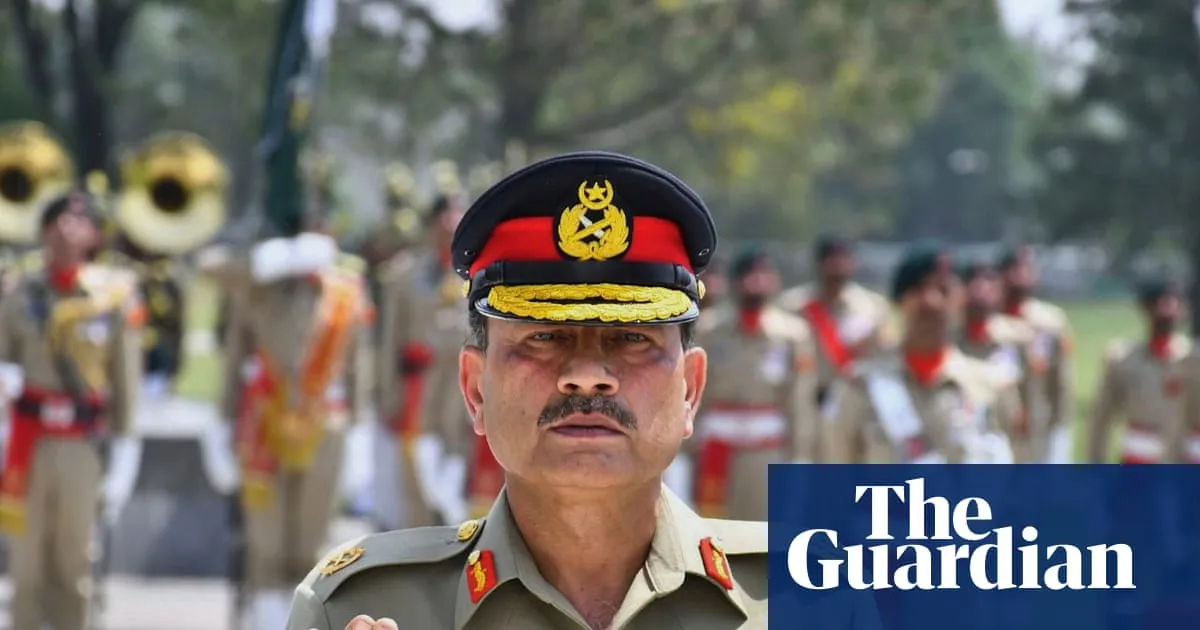
Intensifying Israeli bombing of civilian targets in Iran and an expanding US military force in the Gulf are casting a dark shadow over Pakistan’s hopes of hosting peace talks between Iran and the US.Pakistan is attempting high-wire diplomacy, using its relative neutrality as a country with good relations with Iran and the US, to provide a venue for negotiations. It is not a player in the Middle East and does not host any American military bases, so it does not bring the baggage of other potential regional mediators.Pakistan’s de facto leader, military chief Field Marshal Asim Munir, has the US president’s ear, and Islamabad’s ties with Tehran have dramatically improved over the past couple of years.Both sides have indicated their willingness in principle to talk, according to Pakistani officials. But the conflict is widening, there’s little trust and the stated positions of Tehran and Washington are far apart. Pakistani officials believe the biggest risk to any talks is Israel playing the role of spoiler.Israel bombed two of Iran’s largest steel plants on Friday and civilian nuclear sites, which, Iran’s foreign minister, Abbas Araghchi, said contradicts President Donald Trump’s announcement of a pause in attacks on civilian infrastructure to give diplomacy a chance. Iran also said two universities were hit.Those are just the kind of attacks on non-military and non-regime targets that would derail the talks, Pakistani officials believe.Iran’s core concern is to ensure an end to the war and that there are no future attacks by the US and Israel, said Maleeha Lodhi, a former Pakistani ambassador to the US.“The toughest part is believing Trump’s word. He is not a rational player. He’s completely whimsical,” said Lodhi.A worker with the Iranian Red Crescent Society walks through the rubble of a foreign car repair workshop that was destroyed during a joint US and Israeli attack. Photograph: Majid Saeedi/Getty ImagesTrump insists Iran wants a deal “so badly”, but Tehran says he is “negotiating with himself”.Iran does not just want a ceasefire but a guarantee the war is over. One possibility is for Tehran to retain its hold over the Strait of Hormuz, the vital waterway for the Gulf’s oil and gas exports that Iran has been controlling during the war. That idea was described as unacceptable by the US secretary of state, Marco Rubio, though Trump himself has suggested joint US-Iranian administration of the strait.So far, Pakistan has passed proposals between the two sides, in which they have taken hardline positions. Pakistani officials believe that if Iran and the US sincerely want to reach an agreement, the divide can be bridged.Pakistan’s diplomatic efforts intensified on Saturday, with the country’s prime minister, Shehbaz Sharif, calling the Iranian president, Masoud Pezeshkian, and the announcement the foreign ministers of Turkey, Egypt, Saudi Arabia and Pakistan will hold talks in Islamabad on Sunday and Monday about how to end the war.These four countries are emerging as a new alignment within the Muslim world, packing three of the biggest armies in the region, nuclear weapons and Saudi Arabia’s financial heft. But officials from Saudi Arabia, which has been repeatedly hit by Iran, have privately said that they want the bombardment to continue.Islamabad expects any talks to be indirect, with Pakistani officials shuttling between the US and Iranian delegations in different rooms. Tehran refuses to sit down face-to-face with US officials.Pakistan is nuclear-armed with a large army that could secure a venue for talks, while its air force could provide Iranian officials with an escort to fly in.Iran says Washington is again trying to deceive, having twice bombed them over the past year in the midst of talks. A buildup of US troops in the region suggests peace talks may not be the US’s plan. The Wall Street Journal reported on Saturday that the Pentagon is considering sending 10,000 more soldiers, in addition to 7,000 ground troops already on the way to the Middle East.To build confidence, Pakistan suggested the US be represented by vice-president JD Vance, an idea taken up by Iran. Tehran does not trust the interlocutors they have previously dealt with, Steve Witkoff and Jared Kushner. Vance was reportedly more sceptical of the war.Vance told the “Benny Show” podcast on Friday the US had accomplished most or all of its military objectives, but added: “The president’s going to keep at it for a little while longer to ensure that once we leave, we don’t have to do this again for a very, very long time.”For Pakistan, there is also a further urgency to its peace efforts. Last year, the country signed a defence agreement with Saudi Arabia, which means it could be forced to enter the war on Riyadh’s side. With a long border with Iran and the world’s second biggest Shia Muslim population, after Iran, that is an outcome Pakistan is determined to avoid.
SRCThe Guardian - World News
LANGEN
LEANCenter-Left
WORDS800
ENT12
SUN · 2026-03-29 · 06:00 GMTBRIEF NSR-2026-0329-41699
NSR-2026-0329-41699News Report·EN·Diplomatic
Israeli strikes and US troop buildup put Pakistan’s peacemaker role under pressure
Pakistan is attempting to mediate peace talks between the US and Iran, leveraging its neutral stance and improved relations with both nations. However, escalating tensions, including recent Israeli strikes on Iranian civilian targets and a growing US military presence in the Gulf, are jeopardizing these efforts.
Saeed Shah in IslamabadThe Guardian - World NewsFiled 2026-03-29 · 06:00 GMTLean · Center-LeftRead · 4 min
The Guardian - World NewsFIG 01
Reading time
4min
Word count
800words
Sources cited
5cited
Entities identified
12entities
Quality score
100%
§ 01
Briefing Summary
AI-generatedNEWSAR · AI
Pakistan is attempting to mediate peace talks between the US and Iran, leveraging its neutral stance and improved relations with both nations. However, escalating tensions, including recent Israeli strikes on Iranian civilian targets and a growing US military presence in the Gulf, are jeopardizing these efforts. While both sides have signaled a willingness to talk, deep distrust and conflicting demands present significant obstacles. Pakistan fears that further Israeli actions could derail potential negotiations. Iran seeks guarantees against future attacks, while disagreements persist over key issues like control of the Strait of Hormuz. Pakistan continues to shuttle proposals between the US and Iran in an attempt to de-escalate the conflict.
Confidence 0.90Sources 5Claims 5Entities 12
§ 02
Article analysis
Model · rule-basedFraming
Diplomatic
Conflict
Tone
Mixed Tone
AI-assessed
CalmNeutralAlarmist
Factuality
0.60 / 1.00
Mixed
LowHigh
Sources cited
5
Well sourced
FewMany
§ 03
Key claims
5 extracted01
The toughest part is believing Trump’s word. He is not a rational player. He’s completely whimsical.
quoteMaleeha Lodhi, a former Pakistani ambassador to the US
Confidence
1.00
02
Trump insists Iran wants a deal “so badly”, but Tehran says he is “negotiating with himself”.
factual
Confidence
0.90
03
Israel bombed two of Iran’s largest steel plants on Friday and civilian nuclear sites.
factualIran’s foreign minister, Abbas Araghchi
Confidence
0.90
04
Pakistan is attempting high-wire diplomacy to provide a venue for negotiations between Iran and the US.
factual
Confidence
0.90
05
Both sides (Iran and the US) have indicated their willingness in principle to talk, according to Pakistani officials.
factualPakistani officials
Confidence
0.80
§ 04
Full report
4 min read · 800 words§ 05
Entities
12 identifiedKey playerOppositionContextPositiveNeutralNegative
People5
Organizations1
§ 06
Keywords & salience
10 termspeace talks
0.90
iran
0.80
us
0.80
pakistan
0.80
israeli strikes
0.70
military buildup
0.60
diplomacy
0.60
spoiler role
0.50
middle east
0.50
strait of hormuz
0.40
§ 07
Topic connections
Interactive graph Network visualization showing 51 related topics
View Full Graph Person Organization Location Event|Click node to navigate|Edge numbers = shared articles