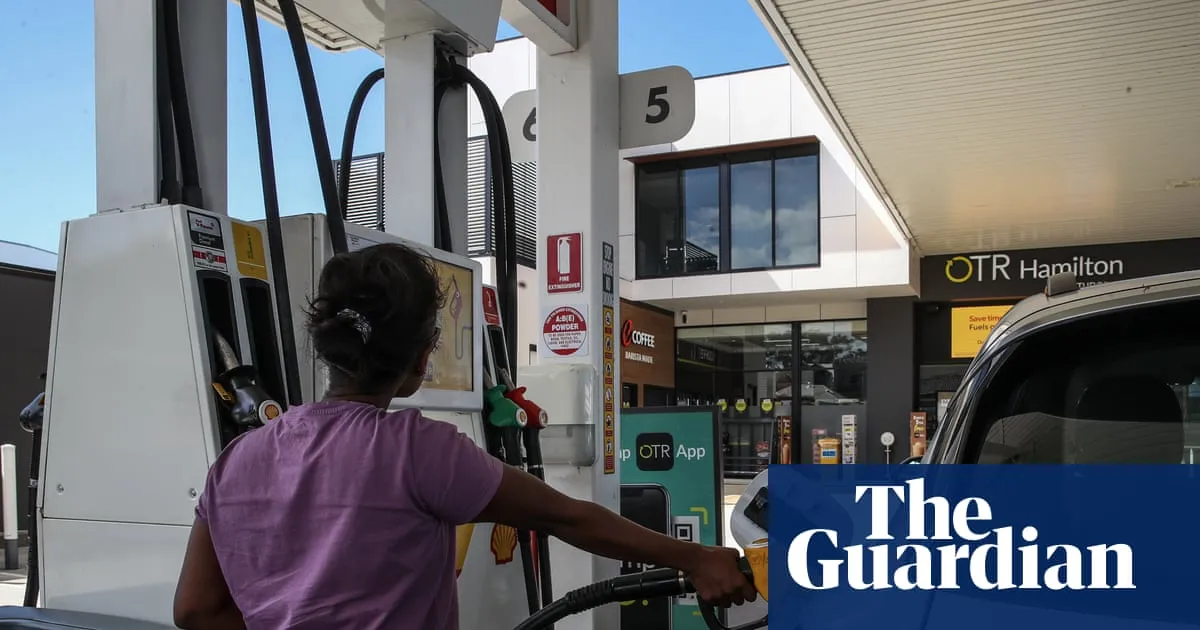
‘The fuel excise cut – to run until 30 June – is smart retail politics, even if it will cost the government $2.55bn in lost revenue and give motorists only limited help at the bowser.’ Photograph: Anadolu/Getty Images View image in fullscreen ‘The fuel excise cut – to run until 30 June – is smart retail politics, even if it will cost the government $2.55bn in lost revenue and give motorists only limited help at the bowser.’ Photograph: Anadolu/Getty Images Analysis Distancing himself from Trump and a badly waged war in Iran might be the smartest move Albanese can make Tom McIlroy The US president thumbs his nose at concerns about the most serious energy crisis in global history. But Australia, like other countries, is paying a high price Get our breaking news email, free app or daily news podcast Gently, about 10 days ago, Anthony Albanese tried to send Donald Trump a message about the escalating war in Iran. In a Hobart radio interview, the prime minister said the US had achieved its original justifications and should bring hostilities in the Middle East to an end. With the war now entering its second month, Albanese tried again on Monday. Louder this time, he said it was time for the US and Israel to move on from heavy bombings. Failing that, he suggested Trump should explain exactly what he planned to do to achieve victory. “I want to see more certainty in what the objectives of the war are, and I want to see a de-escalation,” Albanese said. Announcing new measures to shore up fuel supplies and cut the excise paid on petrol, Albanese told reporters that Iran’s mission to build nuclear weapons had been degraded, along with the country’s conventional missile firepower. The third objective was toppling the brutal regime in Tehran, known for massacring its people, persecuting women and minorities and exporting terror around the world. But, pointing to the difficulty of achieving regime change without a protracted campaign by military forces on the ground, Albanese called on the US president to “clearly” outline his next steps. About the same time as the Parliament House press conference, Trump had bizarrely claimed to reporters on Air Force One that regime change had already been achieved and the Iranians were being “very reasonable”. On both politics and principles, Albanese is right to call out Trump. Despite not properly preparing for the economic and geopolitical disruption, and not giving loyal allies such as Australia any warning about the initial attacks, Trump has thumbed his nose at the concerns of consumers and governments about the most serious energy crisis in global history. Unpopular and badly out of touch, the president lies and exaggerates about the state of the war, seemingly changing his position every hour on just what will happen next. Faced with the predictable blockade of fuel supplies moving through the strait of Hormuz, Trump claimed it was not a problem and suggested renaming the strategic waterway after himself. Here at home, consumers and the federal budget are paying a high price. Now six weeks out from delivering a critical budget package, Jim Chalmers and Treasury bureaucrats are re-running inflation models regularly, revealing increasingly grim numbers each time. The fuel excise cut – starting on Wednesday and set to run until 30 June – is smart retail politics, even if it will cost the government $2.55bn in lost revenue and give motorists only limited help at the bowser. National cabinet’s four-stage plan for fuel security might not solve supply disruptions and growing shortages of petrol and diesel in the weeks to come, but it gives Albanese and the premiers a playbook to work from going forward. Concerned workers and families, including in the regions, might feel less insecure from the plan. Eager to avoid Covid-like panic buying, Albanese said on Monday that Australia is “substantially away” from needing fuel rationing. Since strongly supporting the bombings on day one, Labor and Albanese have taken hits in the polls, and even the most optimistic decision-makers in Canberra concede things are likely to get worse before they get better. Distancing himself, even slightly, from Trump and a poorly executed war in Iran might be the smartest move Albanese can make, even as things get increasingly ugly. Tom McIlroy is Guardian Australia’s political editor Explore more on these topics Petrol prices Anthony Albanese Donald Trump Jim Chalmers US-Israel war on Iran Australian politics Australian foreign policy analysis Share Reuse this content
SRCThe Guardian - World News
LANGEN
LEANCenter-Left
WORDS746
ENT6
MON · 2026-03-30 · 14:00 GMTBRIEF NSR-2026-0330-43679
NSR-2026-0330-43679Analysis·EN·Political Strategy
Distancing himself from Trump and a badly waged war in Iran might be the smartest move Albanese can make
Australian Prime Minister Anthony Albanese has subtly suggested the US should de-escalate its involvement in the Middle East, specifically in Iran. Albanese made these comments in a radio interview approximately ten days prior to the article's publication.
Tom McIlroyThe Guardian - World NewsFiled 2026-03-30 · 14:00 GMTLean · Center-LeftRead · 3 min
The Guardian - World NewsFIG 01
Reading time
3min
Word count
746words
Sources cited
0cited
Entities identified
6entities
Quality score
100%
§ 01
Briefing Summary
AI-generatedNEWSAR · AI
Australian Prime Minister Anthony Albanese has subtly suggested the US should de-escalate its involvement in the Middle East, specifically in Iran. Albanese made these comments in a radio interview approximately ten days prior to the article's publication. He stated that the US had met its initial objectives in the region and should consider ending hostilities. This comes as the US president seemingly disregards concerns about a global energy crisis, impacting countries like Australia. The article suggests this distancing from both Trump and the ongoing conflict in Iran could be a strategically advantageous move for Albanese.
Confidence 0.85Claims 4Entities 6
§ 02
Article analysis
Model · rule-basedFraming
Political Strategy
Conflict
Tone
Mixed Tone
AI-assessed
CalmNeutralAlarmist
Factuality
0.30 / 1.00
Opinion-Heavy
LowHigh
Sources cited
0
No named sources
FewMany
§ 03
Key claims
4 extracted01
The prime minister said the US had achieved its original justifications and should bring hostilities in the Middle East to an end.
quoteAnthony Albanese
Confidence
1.00
02
Anthony Albanese tried to send Donald Trump a message about the escalating war in Iran.
factualnull
Confidence
0.90
03
Australia, like other countries, is paying a high price.
factualnull
Confidence
0.80
04
The US president thumbs his nose at concerns about the most serious energy crisis in global history.
factualnull
Confidence
0.70
§ 04
Full report
3 min read · 746 words§ 05
Entities
6 identifiedKey playerOppositionContextPositiveNeutralNegative
§ 06
Keywords & salience
9 termsiran
0.90
anthony albanese
0.80
war
0.80
donald trump
0.70
us
0.70
middle east
0.60
hostilities
0.60
australia
0.50
energy crisis
0.50
§ 07
Topic connections
Interactive graph Network visualization showing 51 related topics
View Full Graph Person Organization Location Event|Click node to navigate|Edge numbers = shared articles