Two Iranian players who sought asylum in Australia before changing their minds tell their story to Al Jazeera.Mona Hamoudi, left, and Zahra Sarbali play against hosts Australia at Gold Coast Stadium on March 05 [Cameron Spencer/Getty Images]Published On 3 Apr 2026Tehran, Iran – When Iranian footballer Mona Hamoudi boarded the flight to Australia, she held one ambition: to play well at the Women’s Asian Cup.What she could not have anticipated was that the tournament would become, in her own words, “a test of everything; my skills as a player, my patience and my ability to make difficult decisions under enormous pressure”.Recommended Stories list of 4 itemslist 1 of 4The World Cup lineup is complete. These 48 teams are going to North Americalist 2 of 4Iran will play World Cup games in US despite war, FIFA’s Infantino sayslist 3 of 4World Cup risks being ‘stage for repression’ for millions of fans: Amnestylist 4 of 4Iran footballers pay tribute to victims of school strike at start of warend of listHamoudi, a 32-year-old midfielder, was part of the Iranian national squad that travelled to Australia for the competition in early March – a trip that unravelled into one of the most scrutinised episodes in the history of Iranian women’s sport.The squad had remained silent during the national anthem ahead of their Asia Cup opener against South Korea on March 2, two days after the United States and Israel went to war with Iran and killed Supreme Leader Ayatollah Ali Khamenei.Their silence was perceived by some as a protest against the Iranian government and Iran’s state television branded the women as “traitors” – with a presenter saying they had become the “pinnacle of dishonour” and calling for them to be dealt with “severely”.The players sang the anthem at their next two matches but fears for their safety grew further after it was reported in the media that they were being monitored by Iranian government and football officials.Following Iran’s elimination at the group stage after three defeats, five players – Hamoudi among them – claimed asylum and were granted humanitarian visas by the Australian authorities. A sixth player and a backroom staff member also subsequently claimed asylum.But after the rest of the squad left Australia on March 10, five of the seven later reversed course and said they would return to Iran – including Hamoudi.What brought them back to Iran and what came after is a story those players are only beginning to tell.‘Every choice carried consequences’From the moment the squad landed in Australia, Hamoudi says, the atmosphere felt charged. The media monitored every training session, every smile exchanged between players, every word spoken in passing.And the anti-regime Iranian diaspora in Australia added yet another layer of pressure, with their expectations of solidarity and a clear political stance against the government from the players.“I felt that any mistake could become a huge problem,” Hamoudi told Al Jazeera. “Every step had to be thought about twice before being taken.”Amid the stifling pressure and the escalating war in Iran, a question consumed her: should she return home or seek asylum?“This dilemma caused me constant anxiety,” she said, “because every choice carried consequences – for my life, for my family, and for my sporting future.”For Zahra Sarbali, a teammate who also withdrew her asylum claim, the experience was similarly fraught due to the “harassment and constant following from media and social media, the expectations, the pressure from the Iranian-Australian community”.Every step was “under close scrutiny,” Sarbali, also a 32-year-old midfielder, told Al Jazeera.“I knew that any wrong decision could harm the team, the family and the image of the national squad.”Neither player has spoken publicly on what led them to initially claim asylum. When asked by Al Jazeera, both declined to answer on the record.However, both describe the decision to return to Iran as inseparable from a sense of duty; to family, teammates and “national obligation”, rather than a purely free choice made in calm and safety.If the decision to withdraw their asylum applications was difficult, the journey home proved to be its own ordeal.Both players describe the return from Australia as saturated with tension.For Hamoudi, the journey back to Tehran was marked by the fear that the saga would end her football career, or bring severe punishment.She recalls feeling a “a mix of curiosity, astonishment and caution” on her arrival.The media attention that had followed them throughout the tournament only intensified once they were back in Iran. Social media users maintained a running, real-time commentary on their every move, their expressions, their silences.The football federation offered what she described as formal support, public affirmations of national values and statements about the importance of representing Iran positively on the world stage.The players appeared on national television after their return and resumed training as normal, welcomed back into the fold of Iranian football. There have been no reported repercussions from the authorities so far.On March 19, the team were met in Tehran with a hero’s welcome from the public as several thousand people gathered in Valiasr Square, many holding Iranian flags. Giant AI-generated images of the women were projected on a screen, showing them pledging loyalty to the Iranian flag against a backdrop of national landmarks.“My Choice. My Homeland,” read a billboard overhead. When the national anthem was played, all the players sang.Fears remain over future“What happened with the players after their return from Australia is not a normal sports event that can be viewed through the lens of winning or losing,” Maryam Irandoust, a former head coach of the Iranian women’s national team told Al Jazeera.She said these experiences will carry a psychological weight onto the pitch, directly affecting performances in training and in matches.Her concern is as much collective as individual. If players feel targeted or treated unjustly, internal divisions follow and those, in her view, are more damaging to the team’s development than any formal punishment.“The entire team is affected by what happens to any one member,” she told Al Jazeera, adding that “harsh judgement or direct punishment will not solve any problem. It could derail the players’ futures and negatively affect the entire team.”Adel Ferdosipour, a veteran Iranian sports journalist and commentator, told Al Jazeera that Iranian women’s football has never attracted this volume of public attention and intensive media coverage before.He said events have broken out of the sporting frame entirely and become a public affair, compounding the psychological pressure on everyone involved, adding that any punishment of the players could deter future footballers from representing Iran.“If the focus is only on public criticism without providing support,” he warned, “this will set a dangerous precedent affecting any future player”.For both Hamoudi and Sarbali, fear remains over the consequences for their careers and of how their every future action might be interpreted.“I became more aware of the social and political pressures around me,” Hamoudi said, “and I realised the value of family support and national commitment in facing crises”.
SRCAl Jazeera
LANGEN
LEANCenter
WORDS1 154
ENT11
FRI · 2026-04-03 · 07:27 GMTBRIEF NSR-2026-0403-50451
NSR-2026-0403-50451News Report·EN·Human Rights
Iranian women footballers reveal ‘enormous pressure’ of the Asian Cup saga
In March 2026, the Iranian women's national football team traveled to Australia for the Women's Asian Cup. During their first match, the team remained silent during the national anthem, which was perceived as a protest against the Iranian government due to the ongoing war with the US and Israel.
EgabAl JazeeraFiled 2026-04-03 · 07:27 GMTLean · CenterRead · 5 min
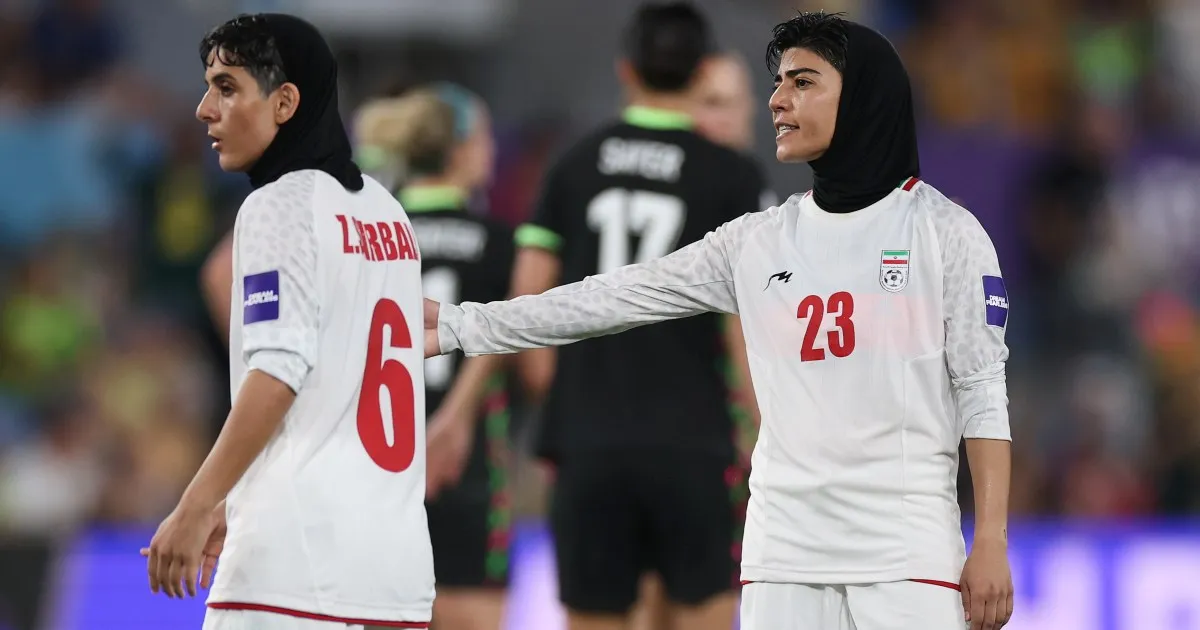
Al JazeeraFIG 01
Reading time
5min
Word count
1 154words
Sources cited
1cited
Entities identified
11entities
Quality score
100%
§ 01
Briefing Summary
AI-generatedNEWSAR · AI
In March 2026, the Iranian women's national football team traveled to Australia for the Women's Asian Cup. During their first match, the team remained silent during the national anthem, which was perceived as a protest against the Iranian government due to the ongoing war with the US and Israel. After the team's elimination from the tournament, several players sought asylum in Australia, citing fears for their safety due to perceived government monitoring and accusations of treason. However, five of the players, including Mona Hamoudi, later reversed their decision and returned to Iran. Hamoudi and another player spoke to Al Jazeera about the "enormous pressure" they faced during the saga.
Confidence 0.90Sources 1Claims 5Entities 11
§ 02
Article analysis
Model · rule-basedFraming
Human Rights
Political Strategy
Tone
Mixed Tone
AI-assessed
CalmNeutralAlarmist
Factuality
0.70 / 1.00
Factual
LowHigh
Sources cited
1
Limited
FewMany
§ 03
Key claims
5 extracted01
Five players claimed asylum and were granted humanitarian visas by Australian authorities.
factualAl Jazeera
Confidence
1.00
02
Iranian state television branded the women as “traitors”.
factualAl Jazeera
Confidence
1.00
03
The squad remained silent during the national anthem ahead of their Asia Cup opener.
factualAl Jazeera
Confidence
1.00
04
Two Iranian players sought asylum in Australia before changing their minds.
factualAl Jazeera
Confidence
1.00
05
Every choice carried consequences.
quoteMona Hamoudi
Confidence
0.90
§ 04
Full report
5 min read · 1 154 words§ 05
Entities
11 identifiedKey playerOppositionContextPositiveNeutralNegative
People3
Locations5
§ 06
Keywords & salience
9 termsiranian women footballers
1.00
asian cup
0.90
political pressure
0.80
asylum
0.70
iran
0.70
national anthem
0.60
humanitarian visas
0.50
australia
0.50
government monitoring
0.40
§ 07
Topic connections
Interactive graph Network visualization showing 51 related topics
View Full Graph Person Organization Location Event|Click node to navigate|Edge numbers = shared articles