China’s investments in North Africa have intensified in 2026, building on long-standing Belt and Road Initiative frameworks while accelerating amid the US-Israeli war with Iran.With 40-50 per cent of China’s seaborne oil imports traditionally passing through the Strait of Hormuz, which is now blocked to most container traffic, Beijing has sought to diversify energy sources away from Gulf Arab states.For more than a decade, Beijing has pursued deeper engagement across the Middle East and North Africa as part of its Belt and Road Initiative, seeking to secure energy supplies and build infrastructure corridors linking Asia to Europe and Africa. Africa-wide engagement in China’s infrastructure initiative hit US$61.2 billion in 2025. This year, however, the scale and urgency of China’s activities in North Africa have been shaped in part by heightened geopolitical instability in the Gulf.China’s economic engagement in North Africa is driven by three main pillars: energy security, infrastructure development and industrial expansion. In 2026, all three have intensified. Algeria has become increasingly important as a supplier of oil and natural gas by leveraging its Opec status and stability for China’s diversification.Accordingly, Chinese state-owned enterprises have expanded into upstream investments, participating in pipeline and liquefied natural gas (LNG) projects. For example, a 2025 agreement between Algerian oil and gas firm Sonatrach and China’s Sinopec has expanded into shale gas exploration on the 36,000 sq km Guern El Guessa II block, aligning with Beijing’s upstream energy push. Chinese firms have received an estimated US$70 billion in Algerian contracts in the past two decades.At the same time, China is not solely focused on hydrocarbons. Renewable energy has emerged as a major area of cooperation, particularly in Morocco. For instance, several recent deals there added green aluminium, solar and wind production through large Chinese state-owned power companies.
SRCSouth China Morning Post
LANGEN
LEANCenter-Right
WORDS294
ENT12
SAT · 2026-04-04 · 21:30 GMTBRIEF NSR-2026-0404-52668
NSR-2026-0404-52668Analysis·EN·Political Strategy
China’s growing North Africa presence a structural challenge for Europe
In 2026, China has significantly increased its economic presence in North Africa, driven by energy security concerns, infrastructure development, and industrial expansion. This intensification builds upon the Belt and Road Initiative and is accelerated by geopolitical instability in the Gulf, specifically the blockage of the Strait of Hormuz.
Bob SavicSouth China Morning PostFiled 2026-04-04 · 21:30 GMTLean · Center-RightRead · 2 min
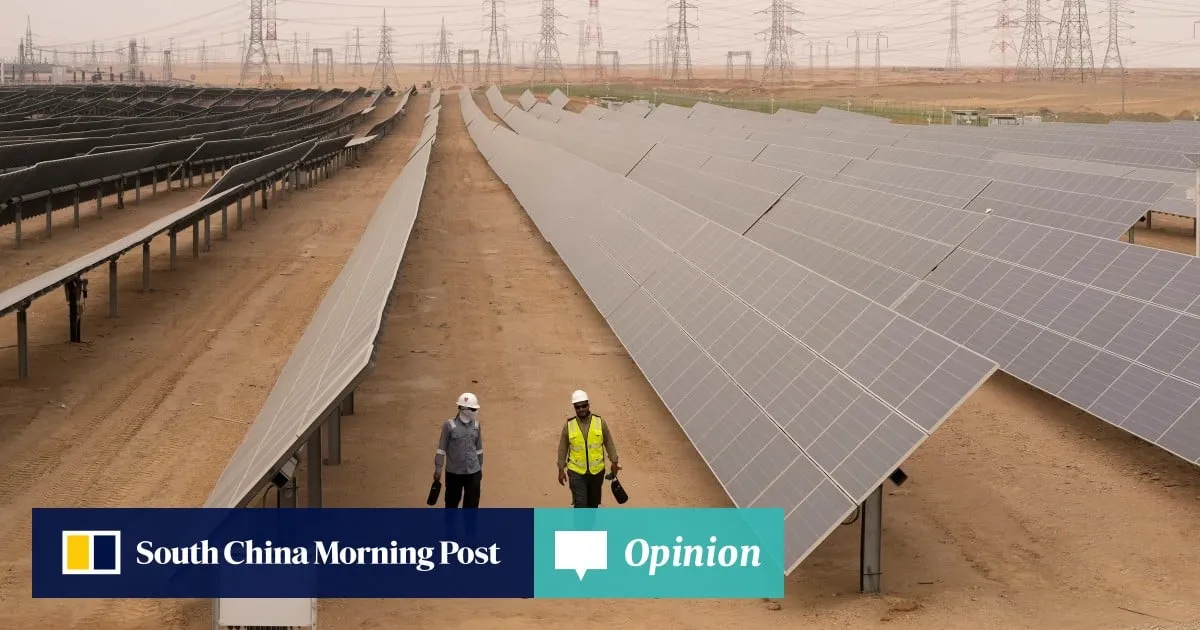
South China Morning PostFIG 01
Reading time
2min
Word count
294words
Sources cited
0cited
Entities identified
12entities
Quality score
100%
§ 01
Briefing Summary
AI-generatedNEWSAR · AI
In 2026, China has significantly increased its economic presence in North Africa, driven by energy security concerns, infrastructure development, and industrial expansion. This intensification builds upon the Belt and Road Initiative and is accelerated by geopolitical instability in the Gulf, specifically the blockage of the Strait of Hormuz. China is diversifying its energy sources, with Algeria becoming a key supplier of oil and natural gas, leading to expanded upstream investments by Chinese state-owned enterprises. Beyond hydrocarbons, renewable energy projects, particularly in Morocco, are also a major area of cooperation, involving large Chinese power companies. China's engagement in Africa-wide infrastructure initiatives reached $61.2 billion in 2025, with an estimated $70 billion in contracts secured in Algeria over the past two decades.
Confidence 0.90Claims 5Entities 12
§ 02
Article analysis
Model · rule-basedFraming
Political Strategy
Economic Impact
Tone
Measured
AI-assessed
CalmNeutralAlarmist
Factuality
0.70 / 1.00
Factual
LowHigh
Sources cited
0
No named sources
FewMany
§ 03
Key claims
5 extracted01
A 2025 agreement between Algerian oil and gas firm Sonatrach and China’s Sinopec has expanded into shale gas exploration.
factual
Confidence
1.00
02
Africa-wide engagement in China’s infrastructure initiative hit US$61.2 billion in 2025.
statistic
Confidence
1.00
03
40-50 per cent of China’s seaborne oil imports traditionally pass through the Strait of Hormuz.
statistic
Confidence
0.90
04
China’s investments in North Africa have intensified in 2026.
factual
Confidence
0.90
05
Chinese firms have received an estimated US$70 billion in Algerian contracts in the past two decades.
statistic
Confidence
0.80
§ 04
Full report
2 min read · 294 words§ 05
Entities
12 identifiedKey playerOppositionContextPositiveNeutralNegative
Organizations2
Locations9
§ 06
Keywords & salience
10 termsnorth africa
1.00
china
1.00
energy security
0.80
belt and road initiative
0.70
infrastructure development
0.70
renewable energy
0.60
geopolitical instability
0.60
oil and gas
0.50
algeria
0.50
industrial expansion
0.40
§ 07
Topic connections
Interactive graph Network visualization showing 51 related topics
View Full Graph Person Organization Location Event|Click node to navigate|Edge numbers = shared articles