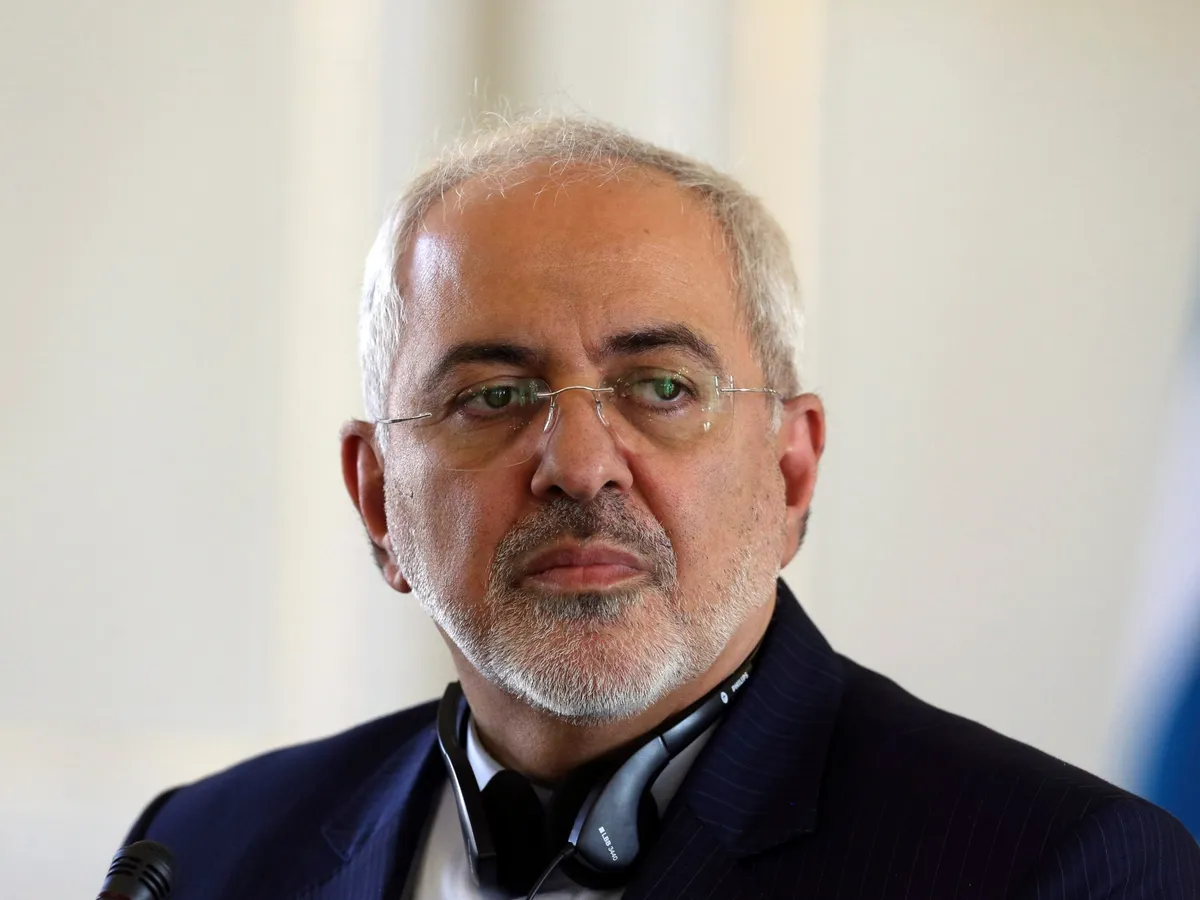
Zarif’s plan proposes limits on Iran’s nuclear programme under international monitoring as well as reopening the Strait of Hormuz in exchange for an end to santions.Former Iranian Foreign Minister Mohammad Javad Zarif [File: Vahid Salemi/AP]Published On 5 Apr 2026Former Iranian Foreign Minister Mohammad Javad Zarif has proposed a roadmap for ending the United States-Israeli war on Iran as tensions escalate across the Middle East.Zarif’s plan was published by Foreign Affairs magazine on Friday and goes “beyond a temporary ceasefire”.Recommended Stories list of 4 itemslist 1 of 4Omani, French and Japanese vessels transit the Strait of Hormuzlist 2 of 4At least one killed at UAE’s Habshan gas facility after intercepted attacklist 3 of 4‘We got him!’: How the US rescued downed airman in Iranlist 4 of 4Kuwait’s power, water plants damaged as Iran keeps attacking Gulf statesend of listThe war, which erupted on February 28 with US-Israeli strikes on Iran, has spread across the Middle East and convulsed the global economy as Tehran attacked its neighbours, claiming to be targeting US assets there and restricting movement of vessels in the Strait of Hormuz.Regional hostilities showed no signs of abating on Sunday, a day after US President Donald Trump said Iran had 48 hours to cut a deal or face “all hell”.Against this backdrop, Zarif’s roadmap said that although Iran viewed itself as successful in the war, prolonging the conflict – while potentially “psychologically satisfying” for Tehran – would only result in further loss of civilian lives and destruction of infrastructure.Iran should, therefore, offer to “place limits on its nuclear program” under international monitoring as well as “reopen the Strait of Hormuz in exchange for an end to all sanctions”, Zarif wrote.Since the war began, Iran has virtually blocked the key waterway, through which one-fifth of the world’s crude oil and natural gas supplies normally pass.Nuclear limits on Iran would include a commitment to never seek nuclear weapons and to blend its entire stockpile of enriched uranium so its enrichment levels fall below 3.67 percent, Zarif said.According to the International Atomic Energy Agency (IAEA) estimates, Iran is believed to have about 440kg (970lb) of uranium enriched to 60 percent, a level at which uranium can be quickly enriched to the 90 percent threshold needed to produce a nuclear weapon.Zarif called Trump’s demand for zero enrichment “fanciful” thinking.Iran should also “accept a mutual nonaggression pact with the United States” in which both countries pledge to not strike each other in the future, the former minister said.The US should also end all sanctions and United Nations Security Council resolutions against Iran, he added.Regional consortiumZarif also outlined potential roles for regional and international actors.He suggested that China and Russia along with the US could help create a regional fuel-enrichment consortium with Iran and its Gulf neighbours at West Asia’s sole enrichment facility with Iran transferring all enriched material and equipment there.Zarif additionally proposed that Gulf states, UN Security Council powers and possibly Egypt, Pakistan and Turkiye should form a regional security framework to “ensure nonaggression, cooperation and freedom of navigation”, including arrangements to guarantee safe passage through the Strait of Hormuz.“To further consolidate peace, Iran and the United States should initiate mutually beneficial trade, economic and technological cooperation,” Zarif added.The Iranian politician said this roadmap would benefit Trump, offering him a “well-timed off-ramp” and an opportunity to claim peace.“Emotions may be high, and each side is boasting about its war-front victories. But history best remembers those who make peace,” he said.The US has presented Iran with a 15-point plan for a ceasefire as Pakistan, Turkiye and Egypt have been trying to achieve direct talks, but there has been no signs of progress on the diplomatic front.What about the Gulf?Officials from Gulf states have responded to Zarif’s proposal, criticising it for overlooking Tehran’s attacks against its neighbours.“Reading M. Javad Zarif’s article in Foreign Affairs ignores one of the core flaws in Iran’s strategy: aggression against its Gulf Arab neighbors,” Anwar Gargash, the diplomatic adviser to the president of the United Arab Emirates, said on X on Saturday.“Thousands of missiles & drones targeting infrastructure, civilians, even mediators, is not strength; it is hubris & strategic failure. The Arab world has seen this before: destruction peddled as victory,” he added.Former Qatari Prime Minister Hamad bin Jassim Al Thani also responded to Zarif’s plan, writing on X on Sunday that he “agreed with much of it” and it took a “clever” approach.Still, he pushed back, stating that the war has “led us all into a path that is more complicated and dangerous” and chiding Iran for its attacks on the Gulf.“You may believe that you have achieved progress in some aspects, and perhaps temporary tactical gains, but the cost was clear: the loss of an important part of your friends in the region, and the erosion of the trust that was built over years,” he wrote.“Today, we need a voice like yours [Zarif’s] merging from within Iran to propose solutions to this war,” he added.
SRCAl Jazeera
LANGEN
LEANCenter
WORDS826
ENT12
SUN · 2026-04-05 · 12:44 GMTBRIEF NSR-2026-0405-53511
NSR-2026-0405-53511News Report·EN·Diplomatic
Iran’s ex-FM Zarif proposes peace roadmap; Gulf points at erosion of trust
Former Iranian Foreign Minister Mohammad Javad Zarif has proposed a peace roadmap to end the ongoing US-Israeli war on Iran, which began on February 28, 2026. Published in Foreign Affairs magazine, Zarif's plan suggests Iran limit its nuclear program under international monitoring and reopen the Strait of Hormuz.
Al Jazeera StaffAl JazeeraFiled 2026-04-05 · 12:44 GMTLean · CenterRead · 4 min
Al JazeeraFIG 01
Reading time
4min
Word count
826words
Sources cited
3cited
Entities identified
12entities
Quality score
100%
§ 01
Briefing Summary
AI-generatedNEWSAR · AI
Former Iranian Foreign Minister Mohammad Javad Zarif has proposed a peace roadmap to end the ongoing US-Israeli war on Iran, which began on February 28, 2026. Published in Foreign Affairs magazine, Zarif's plan suggests Iran limit its nuclear program under international monitoring and reopen the Strait of Hormuz. This would be in exchange for the end of all sanctions against Iran. The proposal comes amidst escalating tensions, including attacks on Gulf states and restrictions on vessels in the Strait of Hormuz. Zarif argues that prolonging the conflict would lead to further destruction and loss of life, despite Iran's perceived success in the war. He suggests Iran commit to never seeking nuclear weapons and reduce uranium enrichment levels.
Confidence 0.90Sources 3Claims 5Entities 12
§ 02
Article analysis
Model · rule-basedFraming
Diplomatic
National Security
Tone
Mixed Tone
AI-assessed
CalmNeutralAlarmist
Factuality
0.70 / 1.00
Factual
LowHigh
Sources cited
3
Well sourced
FewMany
§ 03
Key claims
5 extracted01
Zarif called Trump’s demand for zero enrichment “fanciful” thinking.
quoteZarif
Confidence
1.00
02
Iran is believed to have about 440kg of uranium enriched to 60 percent.
statisticInternational Atomic Energy Agency (IAEA)
Confidence
0.90
03
The war erupted on February 28 with US-Israeli strikes on Iran.
factualArticle
Confidence
0.90
04
Zarif proposes limits on Iran’s nuclear programme under international monitoring in exchange for an end to sanctions.
factualZarif's plan
Confidence
0.90
05
Iran has virtually blocked the Strait of Hormuz since the war began.
factualArticle
Confidence
0.80
§ 04
Full report
4 min read · 826 words§ 05
Entities
12 identifiedKey playerOppositionContextPositiveNeutralNegative
§ 06
Keywords & salience
10 termsiran
1.00
nuclear program
0.90
sanctions
0.80
strait of hormuz
0.80
peace roadmap
0.70
zarif
0.70
us-israeli war
0.60
international monitoring
0.50
enriched uranium
0.50
middle east
0.40
§ 07
Topic connections
Interactive graph Network visualization showing 51 related topics
View Full Graph Person Organization Location Event|Click node to navigate|Edge numbers = shared articles